There is a huge void in Soyinka’s (2021) “Chronicles from the Land of the Happiest People on Earth”. It excludes the Igbo element. Perhaps the Nobel laureate did not want to spark another comparison with the works of his erstwhile lifelong and similarly award-winning rival, Chinua Achebe, of blessed memory. The literati would not have been able to resist using Achebe’s Igbo-dominant repertoire as a mirror. Still, the Nigerian harmonic cannot be whole without an Igbo fundamental. But the music takes many emotional turns in the aftermath. Soyinka’s (2021) silence on the Igbo contemporary experience in modern Nigeria may very well be the masterstroke of his incomplete chronicles. I doubt very much that this is what he would desire or intended. But a literary luminary of his stature must know that the absence of words could be as significant, even more so, than the finest exposition.
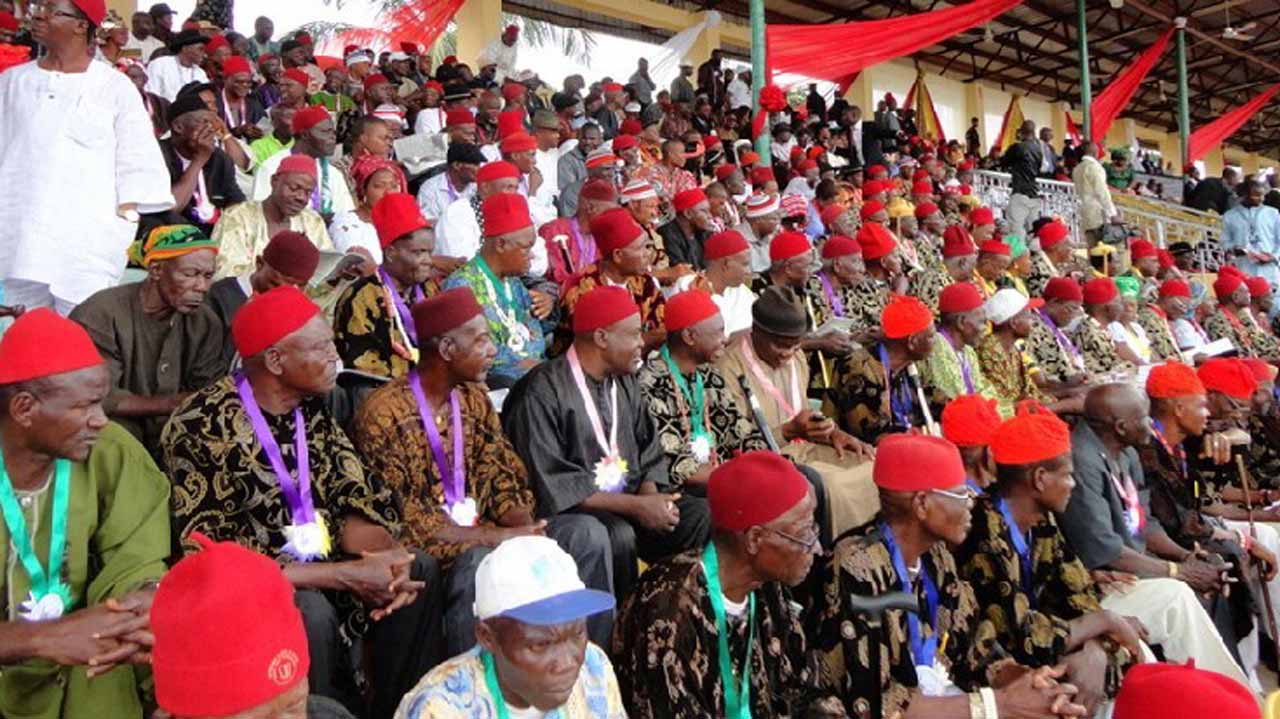
The Igbo experience in Nigeria thus far is a cautionary tale. At the beginning, during British colonialism, the Igbos excelled. They still are; in their private endeavours. But in those heady years, they were the beating indigenous heart of the Nigerian civil service, owing to their earlier embrace of Christianity and Western education. Spread across the north as public administrators, the local populace would over time harbour resentments over the largely Igbo government officialdom so deep that generations after, they remain fresh in memories. The 1966 counter-coup and 1967-70 civil war, in which Igbo natives suffered loss of prestige and many lives at the hands of mostly northern soldiers were a climax of entrenched antipathy over the years. In fact, according to Duke University African and American Studies scholar Samuel Fury Childs Daly in his 2020 book “A History of the Republic of Biafra: Law, Crime, and the Nigerian Civil War“, “many northerners saw Igbos as an exploitative class and suspected that they had larger political designs.”
Read Also: 2023: Why Igbos can’t produce Nigeria’s president – Ogunlewe

Such was the clout of the Igbos in the 1960s that it was the north’s masses that first wanted ‘Araba’ (the Hausa expression for ‘divide’, ‘separate’, ‘secede’) after the first 1966 coup that saw the killing of key northern political leaders like the region’s revered premier, Ahmadu Bello, and Nigeria’s then prime minister, Tafawa Balewa. Why was secession the north’s first instinct after the killings? According to Daly (2020), the face of state authority in the north had hitherto been Igbo. He provides an insightful background viz.
“Anti-Igbo sentiment had been building in the north for some time, and petitions from northerners in the lead-up to 1966 reveal mounting animosity. The presence of Igbos and other easterners in the north’s civil service was a common grievance. Northern ‘indigenes’ resented Igbos for occupying government positions that might otherwise have gone to local people (Daly, 2020).”
“The boom of missionary activity in the east in the early twentieth century led to more and better schools and higher rates of English literacy. This set Igbos up well for jobs in the colonial administration. They found positions throughout Nigeria and, by the time of independence, Igbos occupied some of Nigeria’s highest bureaucratic ranks (Daly, 2020).”
“In the early 1960s, there were so many prospective applicants to the Eastern Region civil service that the region began requiring a university degree. Easterners who did not have this qualification began to go elsewhere. They often found positions in the north, where pressure to ‘indigenize’ the regional administration – still staffed by Europeans, now in the employ of independent Nigeria – was building. In this context, the highest-qualified African applicants were often from the east. As a result, the face of state authority in the north was increasingly neither British nor local, but Igbo (Daly, 2020).”
We have rewarded violence with impunity and prestige for so long in our polity that some do not see any other way to get heard.
History matters. Today, we wish for greater devolution of powers from the federal government to the sub national states. But it was former Nigerian military head of state, Aguiyi Ironsi, the Igbo native who took over after the first 1966 coup who initiated the federal centralisation of power to Lagos in southern Nigeria, the country’s capital at the time. In fact, it was one of the first things he did. As this “shift of power from the states to the federal government threatened the interests of the northern political elite, which feared being marginalized if the distant federal government in Lagos became stronger”, coupled with the fact that “most of [Ironsi’s] advisors were Igbo, and that most of the federal officials and politicians killed in the coup had been northerners and westerners, led many to believe (incorrectly) that the coup had been an Igbo conspiracy to take over the government all along (Daly, 2020).”

Daly’s (2020) enumeration of these sensitive events in our history is succinct and objectively distant. It deserves copious mention. “Northerners registered their protest by lashing out, not at Ironsi but at the Igbos who lived among them as their neighbours,” who worked as “merchants, technicians, professionals, and government employees…in the ‘sabon gari’ (strangers’ quarters)” of their towns, where an entrepreneurial class was also making significant wealth in trade, property, hotels and transport (Daly, 2020). While there had always been the occasional dispute between northerners and their palpably wealthy Igbo co-dwellers “over resources, politics, and religious observance”, the “Igbo’s presence in the north had usually been peaceful until this point (Daly, 2020).” Scores of Igbos were killed in the north with impunity, and according to Daly, seemed to even accelerate after the second 1966 coup by mostly northern military officers.
1966 was a very violent year for a peacetime Nigeria. It was an accurate omen of the darkness to come. When false rumours emerged that northerners had been attacked in Onitsha, southeastern Nigeria, thirty-one soldiers, mostly of northern origin, mutineed in protest on October 1st, 1966, the country’s 6th independence anniversary. The mutiny was successfully put down the next day. But in the intervening period, “the mutineers murdered a group of Igbos boarding a flight at Kano airport in full view of many witnesses, [making it an incident that] would become the most infamous moment of a violent year (Daly, 2020).” The next three years, from 1967 to 1970, would be even more violent still, as a civil war, parallel in its gore by few wars since, would ravage a region and entrench a fissure that remains agape to this day.
Many of the wrongs committed by both sides during the 1967-70 civil war have largely been brushed under the carpet. But such wounds run deep and fester without proper closure. Those who prevailed kept the spoils and have slept with their eyes closed ever since. Such injustice. Such impunity. It was only a matter of time before agitations recur. We have rewarded violence with impunity and prestige for so long in our polity that some do not see any other way to get heard. Still, violence is a vicious path. Today, Igbo secessionists are reportedly killing those of their kinsfolk who oppose them and prefer justice instead. In fact, many Igbos may skip the annual homecoming ritual to their villages for Christmas this year, preferring to stay in places they once fled owing to fear.