Stakeholders at a conference organised by HACEY have called for greater investment in digital literacy, safety, and inclusive education to equip Nigerian girls with the skills and confidence to thrive in a rapidly evolving, technology-driven world.
Held under the theme “Shaping Tomorrow: Girls’ Leadership and Digital Power,” the event brought together adolescent girls, educators, policymakers, and private sector leaders to explore how digital innovation can drive inclusion, leadership, and long-term empowerment for young women across Nigeria.
The conference, which also marked HACEY’s 18th anniversary and the 2025 International Day of the Girl Child, celebrated the transformative potential of young girls to shape society through technology, creativity, and purposeful leadership.
Delivering the keynote address, Victoria Ajayi, group managing director and chief executive officer of TVC Communications, urged the girls to see technology as a tool for transformation. “They saw a problem, they became curious, and they used technology and creativity to solve it,” she said. “That’s how you should use the internet better.”

Ajayi encouraged the participants to take initiative beyond the event. “When you leave here, you have to be determined to make a mark in this digital world. We live in an extraordinary time where a girl with a smartphone and an idea can change the world,” she said.
Read also: Why Nigeria needs responsible digital literacy for students—Experts
A panel session on “Bridging the Gender Digital Divide” featured Ayodele Olojede, division head of retail and SME at Wema Bank, who highlighted the role of digital literacy in economic empowerment. “Exposure to digital platforms and financial literacy is a means to an end — economic empowerment,” she said. “Women need to be economically empowered to make a difference in their communities. That’s why we are intentional about initiatives like ALAT Explore, which introduces teenage girls to digital banking, budgeting, and online safety with parental guidance.”
Rhoda Robinson, executive director of HACEY, emphasised that empowerment also requires structural support. “We need to ensure menstrual hygiene policies are properly implemented in schools,” she said. “Safety must also be prioritised, so girls can attend school and return home without fear of harassment. When girls feel protected, they are better positioned to make the right choices for themselves.”
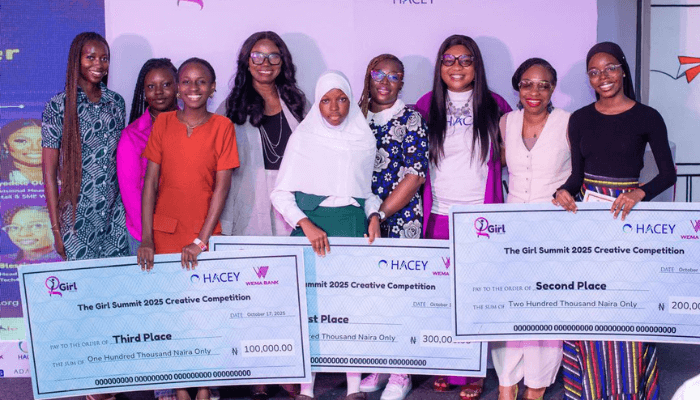
A highlight of the summit was the award ceremony for the top ten winners of HACEY’s national creative competition. 15-year-old Nusaybah Abdulhake, a senior secondary student from Iwerekun Community Senior High School, Lakowe, clinched the top spot with an essay addressing menstrual health stigma, earning a laptop and a cash prize.

Second and third place winners, Khadija Alhassan and Oreoluwa Ogunsola, also received cash prizes. All ten finalists will join HACEY’s Girls’ Advisory Board, gaining access to mentorship and leadership development opportunities.
The conference also marked a major milestone for HACEY, which is celebrating 18 years of championing gender equality, health, and social inclusion across Africa. Through its work, the organisation continues to empower young girls with the skills, confidence, and voice to lead in a digital world.