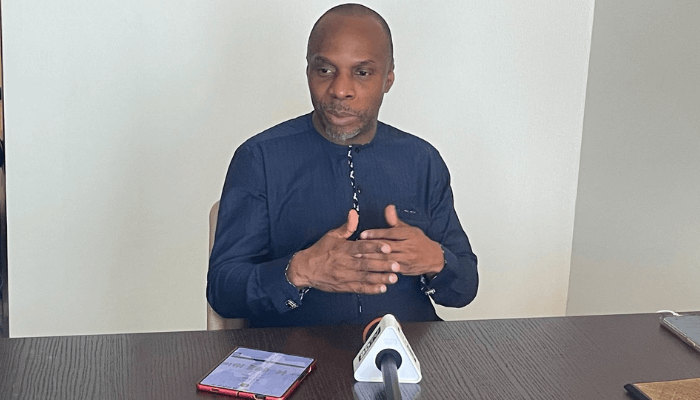
Yemi Kale, Group Chief Economist and Managing Director of Research and International Cooperation at the African Export-Import Bank (Afreximbank), has explained that describing an economy as “stable” does not automatically mean that citizens are free from hardship.
Kale, who is also a former Statistician-General of the National Bureau of Statistics (NBS), was reacting to the debate sparked by recent remarks from Ngozi Okonjo-Iweala, Director-General of the World Trade Organisation (WTO). On August 14, Okonjo-Iweala said President Bola Tinubu must be given credit for stabilising Nigeria’s economy.
In a detailed post at the weekend, Kale clarified that economic stability is primarily a technical term referring to the absence of sharp fluctuations in key macroeconomic indicators such as inflation, exchange rates, and growth.
“When economists says “an economy is now stable”, they usually mean that the economy has reached a point where it is no longer experiencing major fluctuations/ disruptions.

“In practical terms, it suggests Macroeconomic Indicators are Steady; Predictability and Confidence where Businesses, investors, & consumers feel more confident making long-term plans & there are no Immediate Crisis,” he explained
Kale noted that stability often means conditions are not worsening rapidly, but that does not imply living standards have improved. Using inflation as an example, he said a fall from 25% to 12%, if sustained, would be seen as stability.
However, prices would still remain high compared to previous years, leaving citizens struggling with the cost of food, housing, transport, and healthcare.
Read also: Why hardship still persist in Nigeria despite ‘stable’ economy – Yemi Kale
“For eg Inflation falling from 25% to 12% & staying steady might be seen as stability. However, prices may still be very high compared to past years, meaning people continue to struggle.

“Citizens experience the economy differently through cost of food, housing, transport, healthcare, and wages,”
The economist also highlighted the lag effect of reforms, explaining that investors and businesses are often the first to benefit from stability through improved results, while households may wait months or years before relief is felt through job creation, higher wages, or lower prices.
He stressed that while stability is necessary to reverse hardship, it is not sufficient on its own, adding that reforms must hold long enough for their benefits to translate into tangible improvements in people’s lives.
“It can take months or even years before stability eases hardship & translates into job creation,higher wages, or cheaper goods for citizens. Assuming the stability holds long enough(very important),” he said.
The economist noted that, until then, the hardship remains real, immediate, and personal, warning that stability could still reverse, in which case the relief would not materialise.
“So in summary, Economic stability is like stopping a boat from rocking wildly but hardships persist if the boat is still far from shore. For citizens, stability may only mean less new hardship is being added,not that life has become easier yet.
“But the first step to reversing hardship is stability & stopping the bleed. It’s a necessary and not sufficient condition,”
Kale emphasised that his clarification was strictly technical and not political.