Overview and Fallouts from the Nigerian Bar Association Conference Enugu 2025
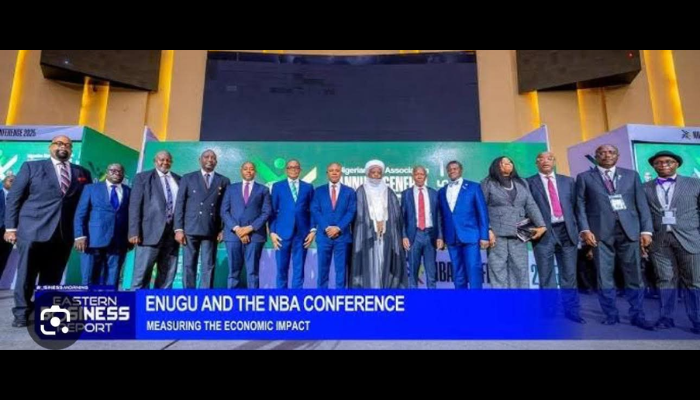
The Nigerian Bar Association (NBA) Annual General Conference (AGC) 2025, held in Enugu from August 22nd to 28th, was a significant event with the theme ‘Stand Out, Stand Tall.’ It attracted over 20,000 legal professionals, notable dignitaries, and international speakers, including South African political leader Julius Malema and former Nigerian President Olusegun Obasanjo (although Obasanjo was absent at the opening, with the Sultan of Sokoto stepping in). Hosted in the “Coal City,” the conference aimed to celebrate legal excellence, promote professional development, and address vital societal issues through intellectual discussion, networking, and cultural experiences. Below is a detailed overview of its main aspects and outcomes.

1. Conference Overview

• Theme and Venue: The theme “Stand Out, Stand Tall” emphasised innovation and resilience in the legal profession. Enugu was chosen for its rich cultural heritage, hospitality, and infrastructure upgrades, such as CNG buses and revamped venues like the Hotel Presidential.
• Attendance: Over 20,000 participants, including lawyers, judges, and policymakers from across Nigeria and beyond. Notable figures included NBA President Afam Osigwe SAN, conference chair Emeka Obegolu SAN, and keynote speaker Julius Malema.
• Key Events:
- Sports Walk: A health walk through Enugu’s major roads kicked off the conference.
- Intellectual Sessions: Discussions covered human rights, good governance, gender inclusivity, alternative dispute resolution, and socio-economic justice.
- Cultural Experience: Delegates enjoyed local delicacies (e.g., abacha, okpa, ofe onugbu) and cultural displays at the “Mammy Market,” highlighting Enugu’s vibrant traditions.
• Logistics and Hospitality: Enugu State Governor Peter Mbah received praise for seamless security, transportation, and accommodations, although some hotels and transport providers exploited attendees with inflated prices.


2. Intellectual and Professional Impact
• Keynote Address: Julius Malema’s speech set an inspiring tone, focusing on social justice and economic freedom in Africa.
• Sessions and Topics: Delegates engaged in rigorous dialogues on:
- Access to Justice: Strategies to Bridge Gaps in Legal Representation.
- Insecurity and Governance: Solutions for Nigeria’s security challenges.
- Gender Inclusivity: Promoting Women’s Roles in Leadership and Law.
- Alternative Dispute Resolution: Reducing Court Congestion through Mediation.
• Professional Development: The conference offered networking opportunities, continuing education, and updates on legal trends, reinforcing ethical standards and innovation in the profession.
3. Fallout and Criticisms
Despite its successes, the conference faced several controversies:
• Prominence of Politically Exposed Figures: Senior lawyers, such as Dr. M.O. Ubani SAN, criticised the excessive focus on celebrities and politicians (e.g., Dino Melaye and Osita Chidoka), arguing that it undermines respect for seniority and the professional hierarchy at the bar.
• Ethical Concerns: The incarceration of Barrister Bright Ngene, a lawmaker-elect from Enugu South, cast a shadow. Ubani and others urged Governor Mbah to exercise clemency, emphasising that delayed justice for Ngene could tarnish the conference’s legacy.
• Economic Exploitation: Attendees reported price gouging by hotels and transportation services, highlighting the need for more robust consumer protections during large-scale events.
• Absence of Obasanjo: Former President Obasanjo’s no-show, despite being announced as chair, was seen as a logistical oversight; however, the Sultan of Sokoto effectively filled the role.
4. Positive Outcomes and Legacy
• Regional Showcase: The conference challenged negative perceptions of Eastern Nigeria, highlighting Enugu’s safety, hospitality, and economic potential.
• Infrastructure Development: Participants lauded Governor Mbah’s investments in transportation (CNG buses), tourism, and security, as a model for future host cities.
• Call for Justice: The spotlight on Barrister Ngene’s case spurred appeals for judicial reform and executive clemency, underscoring the legal community’s role in advocacy.
• Benchmark for Future Conferences: The event was compared to the 2019 Lagos Conference for its scale and organisation, setting a high standard for the 2026 Rivers State edition.
The NBA Enugu 2025 Conference was a resounding success both intellectually and socially, strengthening professional unity and highlighting Eastern Nigeria’s potential. However, issues such as ethical prioritisation, respecting seniority, and advocating justice revealed areas needing improvement. As the NBA prepares for Rivers State 2026, balancing innovation with tradition will be crucial to maintaining the profession’s integrity and influence. The conference’s lasting legacy may depend on resolving Barrister Ngene’s case and responding to calls for inclusivity and accountability.

2. IBADAN, THE LAND-GRAB CAPITAL OF THE WORLD.
To HRM, Oba Rasheed Adewolu Ladoja.
Kabiyesi, I have been a lifelong admirer of your selfless, generous and astute leadership. Land grabbing has become a nuisance in Ibadan.
All sorts of laws and structures had been established with remarkably minimal results, perhaps due to a lack of probity in the right places.
The suburbs and the urbanising communities are a hotbed of land conflicts and impunity.
There are professional land grabbers who are well known and are referred to as Ajagungbales. They perfunctorily disobey court rulings and plunder other people’s private property at will.
A rich man enters any land he fancies, and a house grows overnight—police, courts, etc. For years, no real justice will come. The Ajimobi government signed the anti-land-grabbing law into effect, with minimal outcome.
Elements of the police are hand in glove with land grabbers, and I honestly think these land grabbers are mere fronts for crooked police officers.
Kabiyesi, as a citizen of the world, you are aware of the damage that insecurity of life and property can cause to development.
Please, sir, let Ibadan remember you as the man who rescued the land for its owners. Many of these people took loans from cooperative societies in the hope of putting up a small house for their retirement.
Land grabbers would come in. When the frustrated landowners confront them, the police will arrive in a few minutes, battle-ready. On the other hand, the same police would drag their feet until eternity if the landowners made a complaint.
There are just too many examples.
Kabiyesi, please act. Save Ibadan land from the land thieves.
3. Only 1% of Nigerians have an international passport.
According to the latest data, approximately 51% of Americans hold a valid U.S. passport, enabling them to travel internationally. This equates to over 171 million valid passports in circulation.
Roughly 76% of UK residents hold a valid British passport
That amounts to approximately 45–50 million people, depending on population estimates. This high proportion highlights the UK’s vibrant international travel scene, particularly with connections across Europe and the Commonwealth.
Canada’s population in 2024 was approximately 39 million. An estimated 66–68% of Canadians held a valid passport. That means roughly 25.7 to 26.5 million Canadians possessed a valid travel passport in 2024.
By 2025, roughly 1.5 million Nigerians will have a valid international passport. That represents fewer than 1% of the population, which is estimated at over 225 million.
Why So Low?
Several factors contribute to this
– High cost of obtaining a passport relative to the average income
– Limited access to passport offices, especially in rural areas
– Bureaucratic delays and inefficiencies in processing
– Low travel demand, as many Nigerians do not travel internationally for work or leisure
They tell you that not many people have passports abroad. However, you have a smartphone, but it’s not smart enough to utilise AI to gather information.
4. Anger over New Passport Fees
Nigerians expressed their frustration over the new passport fee in various ways. One such way was through a table that compared the cost of a passport to the minimum wage.
*Minimum wage vs passport fee by country*
Top Economies
United States:
Minimum wage: USD 1,160
Passport Fee: USD 165 (14%)
China (Shanghai):
Minimum wage: CNY 2,690
Passport Fee: CNY 120 (4.5%)
Japan:
Minimum wage: JPY 178,880
Passport Fee: JPY 16,000 (8.9%)
Germany:
Minimum wage: EUR 1,986
Passport Fee: EUR 70 (3.5%)
India:
Minimum wage: INR 3,560
Passport Fee: INR 1,500 (42%)
United Kingdom:
Minimum wage: GBP 1,954
Passport Fee: GBP 94.50 (4.8%)
France:
Minimum wage: EUR 1,766.92
Passport Fee: EUR 88 (5.0%)
Canada:
Minimum wage: CAD 2,840
Passport Fee: CAD 260 (9.2%)
Brazil:
Minimum wage: BRL 1,518
Passport Fee: BRL 257.25 (17%)
African Countries:
Nigeria (from Sept 1, 2025):
Minimum wage: NGN 70,000
Passport Fee: NGN 100,000 (143%)
South Africa:
Minimum wage: ZAR 4,606
Passport Fee: ZAR 600 (13%)
Egypt:
Minimum wage: EGP 7,000
Passport Fee: EGP 450 (6.4%)
Algeria:
Minimum wage: DZD 20,000
Passport Fee: DZD 6,000 (30%)
Morocco:
Minimum wage: MAD 3,269
Passport Fee: MAD 500 (15.3%)
Kenya:
Minimum wage: KES 15,201
Passport Fee: KES 7,500 (49%)
Ghana:
Minimum wage: GHS 544.50
Passport Fee: GHS 350 (64%)
This comparison highlights the disparity and the financial burden that passport fees can impose relative to the minimum wage across different nations.