
Please consider Senator Nwaebonyi. SOS? GoFundMe?

End of corruption in Nigeria? TWO TAKES.
A. NOT THERE YET, SIR
1. President Tinubu’s Claim

• During an official visit to Brazil in August 2025, President Tinubu declared that his reforms, including the removal of fuel subsidies and liberalisation of the foreign exchange market, had eradicated corruption in Nigeria. He stated:
The reforms I’ve undertaken since taking office in Nigeria have been highly impactful. I can be proud of that. It was initially challenging, but the results are now beginning to show. It’s becoming more evident to the people. We have more funds for the economy… no more corruption.
• He argued that these reforms curbed currency speculation, boosted government revenues, and created a more competitive economy.
2. Public and Expert Reactions
• Widespread Criticism: Tinubu’s claim faced significant backlash on social media and among political analysts. Many Nigerians criticised him for being disconnected from reality, citing ongoing corruption scandals, economic struggles, and persistent graft within his administration.

• Specific Allegations: Critics pointed to:
o The appointment of ministers with unresolved allegations of corruption.
o The lack of prosecution of officials, such as the former Minister of Humanitarian Affairs, who was accused of embezzling funds but only received a suspension.
o Judicial corruption and the utilisation of anti-corruption agencies to pursue opposition figures rather than truly fighting corruption.
• Economic Context: Although Tinubu’s reforms have boosted government revenue (e.g., FAAC disbursed ₦12.08 trillion between January and July 2024), they have also led to inflation, a devalued naira, and increased poverty, with 129 million Nigerians living below the poverty line.
3. Fact-Checking and Corruption Perceptions
• OCCRP Controversy: A viral claim that Tinubu was ranked the “third most corrupt person globally” by the Organised Crime and Corruption
Reporting Project (OCCRP) has been debunked. While Tinubu was among the top five nominees due to public nominations, the OCCRP clarified that this was not an official ranking of corruption levels.
• EFCC’s Position: The Economic and Financial Crimes Commission (EFCC) has not supported Tinubu’s claim. Instead, it has pointed out ongoing issues, such as frivolous lawsuits and injunctions that hinder corruption investigations.
4. Contradictory Evidence
• Persistent Corruption: Reports indicate that corruption remains systemic, with issues like contract fraud, diversion of funds, and intimidation of anti-corruption agencies
• Youth Criminalisation: The prevalence of cybercrime, kidnapping, and other illicit activities among youth is partly attributed to corruption within the political class 1.
President Tinubu’s claim that corruption has ended in Nigeria is primarily viewed as exaggerated and misleading. While his reforms may have improved government revenue, corruption persists institutionally and socially. Public perception and expert analyses contradict his assertion, emphasising that Nigeria continues to face significant challenges related to corruption. For lasting change, stronger institutional integrity, accountability, and genuine judicial independence are needed.
B. A RANGE OF OPINIONS
• Nigerians have expressed a range of opinions about President Tinubu’s claim that corruption has been defeated in Nigeria:
• Some acknowledge the seriousness with which Tinubu’s administration is pursuing corruption through institutions like the EFCC, noting recent suspensions and prosecutions of officials involved in corrupt practices. They praise efforts to recover stolen assets and channel funds into critical infrastructure projects, seeing it as a positive shift towards accountability and transparency.
• Others are sceptical or critical, highlighting the complex history of corruption in Nigeria and questioning whether the anti-corruption fight under Tinubu is genuinely independent or politically motivated. Some Nigerians fear that fighting corruption could alienate political allies or that the measures could be more about political vendettas than genuine reform.
• Social media and public commentary include sharp criticism and disbelief, suggesting the claim of “no more corruption” seems exaggerated or disconnected from everyday realities. Some prominent critics have publicly challenged the president’s assertion, reflecting ongoing distrust in government institutions.
• Legal and institutional support for Tinubu’s claims is evident through statements by government officials, such as the Attorney-General, who emphasise a rule-of-law approach and an ongoing commitment to fighting corruption, despite political defections or pressures.
• In summary, Nigerians’ reactions range from cautious optimism and support for Tinubu’s anti-corruption drive to strong scepticism and criticism of the claim that corruption has been defeated in the country. The discourse underscores the entrenched challenges in combating corruption in Nigeria.
Ezekwesili’s charge to lawyers
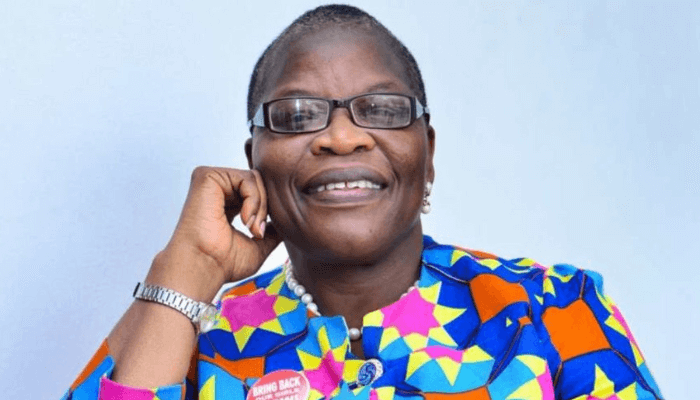
Dr. Oby Ezekwesili, former Nigerian Minister of Education and prominent economic policy expert, delivered a powerful address at the 2025 Nigerian Bar Association (NBA) Annual General Conference in Enugu.
Upholding Professional Integrity and Ethical Standards
Ezekwesili urged lawyers to protect the integrity of the legal profession and avoid trading it for financial or political gain. She warned against allowing the profession to be dominated by “lousy politicians” whose actions could harm current and future generations. She emphasised that lawyers, as “the best minds any society could have,” must reject prebendalism (where public offices are exploited for personal gain) and prioritise the long-term health of the institution over short-term rewards.
Role of Lawyers in Ensuring Accountability and Governance
Ezekwesili called on lawyers to demand better governance and accountability from political leaders. She described lawyers as the “heartbeat of professionalism” and urged them to provide “guardrails for the behaviour of the political class.” This includes evaluating politicians and ensuring that the rule of law is upheld to safeguard national development.
Condemnation of Political Corruption and Shortcuts to Wealth
She decried the perception that politics is a shortcut to wealth, labelling it an “anomaly.” Ezekwesili stressed that Nigeria must return to rewarding hard work rather than political opportunism. She warned that any profession rewarding corrupt behaviour cannot claim to care about the future
Ezekwesili’s address was a call to action for lawyers to reclaim their role as guardians of integrity and justice. She emphasised the need for ethical leadership, sound economic policies, and unwavering accountability to combat corruption and promote sustainable development in Nigeria.