As the festive season heats up and demand for poultry reaches a fever pitch, farmers are caught between a rock and a hard place.
Skyrocketing production costs—driven by rising feed prices, energy expenses, and supply chain disruptions—have pushed many large-scale poultry farms to the brink. Industry experts warn that unless swift interventions are made, the industry could see a wave of farm closures, leaving holiday tables emptier and pockets lighter.
Isaac Iordye, CEO of Franbensac Integrated Farms and Farm Manager at BADAU Agricultural Services in Adamawa State, shared concerns that poultry farming is no longer the profitable venture it once was, adding that 60 percent of profit is lost due to high production costs.
The steep rise in prices for essential raw materials such as poultry feed (which makes up 75 percent of farming costs), day-old chicks (DOCs), drugs, and vaccines has significantly strained the sector. This financial pressure is threatening the sustainability of poultry farms across the country.

A young poultry farmer, Gbenge Alfred, expressed concerns over the escalating insecurity in the region, along with rising production costs and the poor quality of inputs, such as day-old chicks and feed, which have become significant barriers to the growth of his poultry farm.
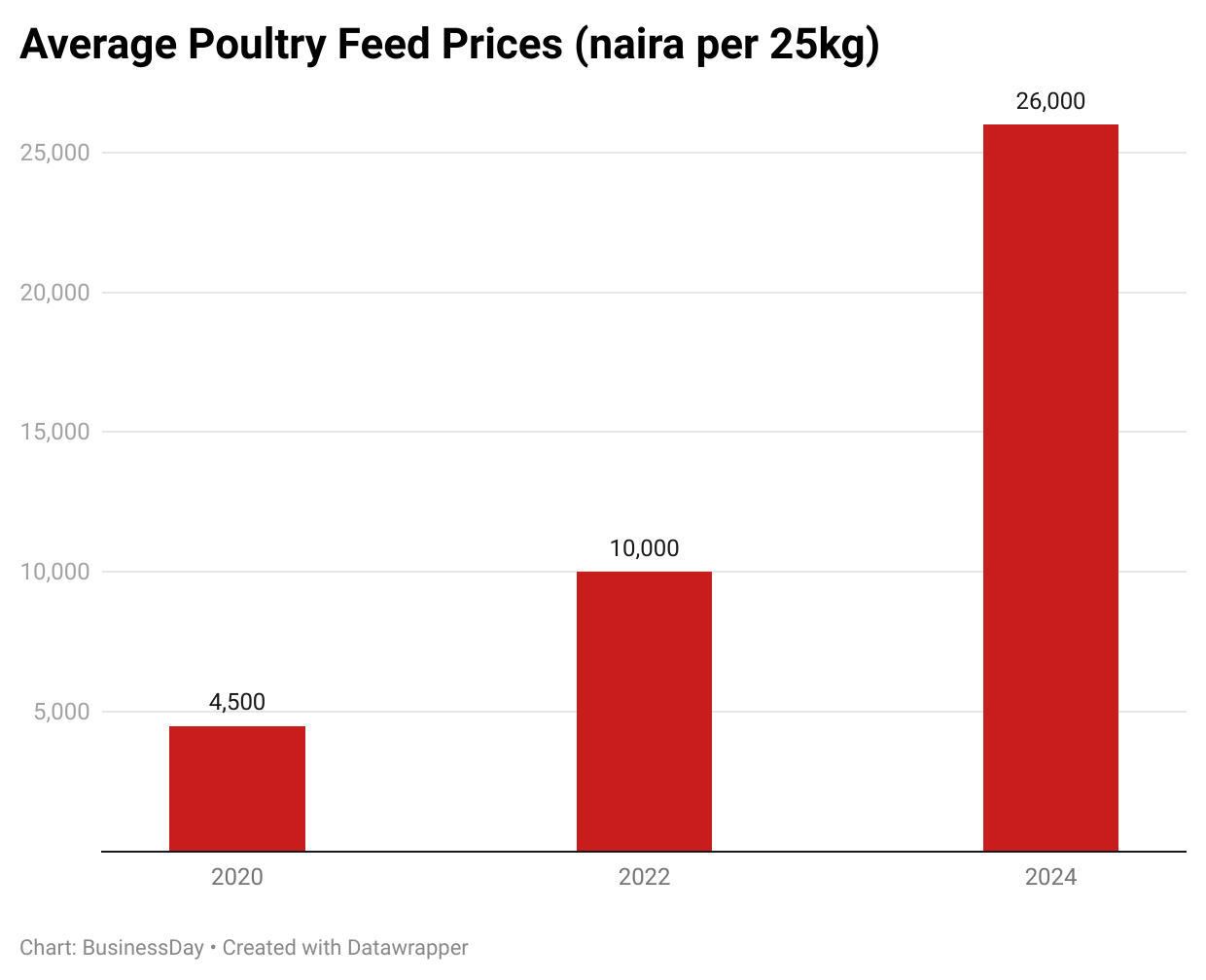
He highlighted that between 2019 and 2020, a 25kg bag of poultry feed was priced between ₦3,500 and ₦4,500. However, by 2024, the cost of the same 25kg bag of feed has surged to ₦26,000.
In 2023, the Poultry Association of Nigeria reported that the increasing costs of raw materials had led to the closure of over 30 percent of poultry farms in the country, while large farms experienced a 50 percent reduction in production capacity.
The situation remains unchanged, with the association recently using its social media platform to announce that, without support from relevant authorities, they would have no choice but to raise the prices of their products, especially eggs. As of now, a crate of eggs is being sold for almost ₦10,000, a significant increase from ₦3,000 in 2022.

Maximizing profits in 2025
Experts assert that in the poultry business, the quality of inputs directly impacts outputs. Moving forward, they emphasize the need for monitoring and regulating the prices and quality of raw materials, such as feed, drugs, and day-old chicks.
Low-quality feed, in particular, negatively affects the quality of both eggs and birds, resulting in slower bird growth and reduced egg production. This inefficiency leads to increased costs, higher profit losses, and lower overall yields, making it harder to achieve the desired standards.
Gbenge Alfred argues that persistent insecurity in the country must be addressed to enable farmers to cultivate essential food crops like soy and maize for feed production.
Experts suggest that adopting agricultural innovations such as dry season farming and the use of early and extra-early seed varieties can help reduce competition for these vital crops, ensuring a more stable supply of maize and soy.
According to Dwight D. Eisenhower: “Farming looks mighty easy when your plow is a pencil and you’re a thousand miles from the corn field“. Addressing the challenges of poultry farmers is key to ensuring sustainability in the poultry sector.