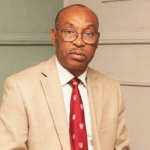
Vice President Kashim Shettima on Monday called on African sovereign wealth funds to shift decisively from fragmented national efforts to collective action rooted in bankable projects, transparency, and trust — key pillars, he said, would unlock long-term global capital into the continent.
Speaking at the 4th annual Africa Sovereign Investors Forum (ASIF) in Abuja, Shettima told an influential gathering of policymakers, sovereign fund executives, and development financiers that the continent cannot afford to squander the opportunity to convert its demographic and resource advantages into sustained economic transformation.
“Africa is not a continent of risk. It is a continent of returns, of resilience, and of resolve,” Shettima said.
But to unlock that potential, he argued, the region must present investable opportunities that meet international standards of bankability and governance. “Let us develop bankable pipelines that attract not only African capital but long-term global capital,” he urged, echoing a growing view that Africa’s growth will only scale through well-structured, de-risked, and transparent investments.

The speech came at a time when African sovereign wealth funds are increasingly being asked to move beyond their traditional roles as fiscal stabilisers to become engines of development. Institutions like Nigeria’s own Sovereign Investment Authority (NSIA), the event’s host, have begun pivoting toward catalytic investments in healthcare, infrastructure, renewable energy and agriculture.
Shettima praised the NSIA’s evolution, calling it “a credible, transparent, and high-performing sovereign wealth fund, demonstrating that African institutions can match global standards in governance, innovation, and impact.”
He said such models should be replicated across the continent, not only for their economic impact, but for their ability to build trust — the most underpriced asset in African finance.
“Let us commit to the highest standards of governance, transparency, and accountability, because trust is the bedrock of investment,” he said pointedly.
The vice president’s emphasis on trust resonated with delegates against the backdrop of persistent investor wariness about regulatory unpredictability, currency volatility, and weak enforcement regimes across much of the continent.

Global institutional capital, particularly from pension funds and insurance groups, remains cautious about emerging and frontier markets unless credible domestic institutions can guarantee rule-based systems and clear exit mechanisms.
To counter this, Shettima emphasised the role of ASIF — a pan-African platform designed to unify the voice and strategy of sovereign investors — as a venue for collaboration, not just conversation.
“This platform represents a decisive shift from parallel action to collective ambition,” he said of ASIF’s newly launched investment platform, a co-investment vehicle intended to pool capital and scale up participation in cross-border, high-impact projects.
“By pooling capital, harmonising standards, and jointly investing… we are reshaping the global investment narrative,” he said.
Observers say the move signals a recognition that isolated sovereign funds cannot alone meet the scale of Africa’s financing needs, especially in sectors like infrastructure and climate resilience that require hundreds of billions in investment over the next decade.
With global capital increasingly guided by ESG criteria and long-term impact, Shettima made the case for Africa’s sovereign funds to lean into their dual role as both commercial investors and development actors.
“The choices we make today, the institutions we build, and the partnerships we forge will determine whether we rise to the promise of this century,” he said in closing. “Let this meeting in Abuja be remembered not only for the ideas shared but for the actions sparked.”
“Let it mark a new chapter where Africa’s sovereign wealth funds are not just custodians of wealth, but architects of transformation.”