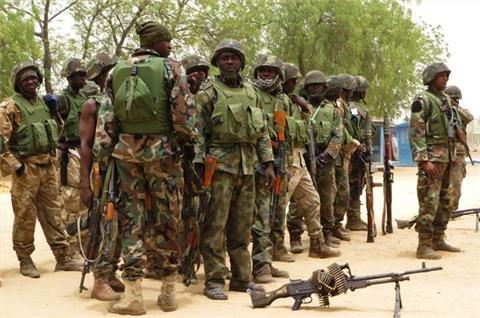
The Senate will on Wednesday debate a motion seeking an upward review of the salaries and conditions of service of members of the Nigerian Armed Forces and other security agencies.
The motion, titled “Urgent Need to Increase the Minimum Wage and Improve Conditions of Service for Members of the Nigerian Armed Forces and Other Security Agencies”, is sponsored by Senator Ali Ndume (Borno South).
In a draft of the motion obtained by BusinessDay in Abuja, Ndume urged his colleagues to consider that Section 217(2) of the 1999 Constitution (as amended) mandates the Armed Forces to defend Nigeria’s territorial integrity and perform other security duties essential to national stability.
He noted that while the consolidated salary structures for uniformed services;such as the Consolidated Armed Forces Salary Structure (CONAFSS) and related allowances were designed to reflect the risks associated with military service, they have failed to keep pace with the country’s rising cost of living.

“The current minimum monthly wage for junior personnel in the Armed Forces ranges between ₦50,000 and ₦60,000, depending on rank,” Ndume stated, adding that the amount is “grossly inadequate in light of current economic realities, inflationary pressures, and the rising cost of living in Nigeria.”
Ndume further lamented that the meagre pay has left many officers and men facing financial hardship, overstretch, and attrition.
He also cited the high cost of essential goods, accommodation, transportation, and schooling, which has further strained the families of deployed personnel.
Drawing comparisons with other African countries, Ndume said, “In Ghana, the entry-level pay for a private soldier is equivalent to about ₦180,000 per month; in South Africa, the basic pay for enlisted personnel starts at about ₦250,000 monthly; in Egypt, junior enlisted officers earn between ₦230,000 and ₦280,000 monthly; and in Kenya, a private earns about ₦200,000, excluding operational allowances.”
According to him, “the current wage level in Nigeria does not reflect the magnitude of sacrifices made by our troops and has the potential to further dampen morale.”

Read also: Senate approves life imprisonment for child rapists
The Borno lawmaker therefore urged the federal government to work with relevant agencies to “review and substantially increase the minimum wage and overall salary structure of the Nigerian Armed Forces in line with current economic realities.”
He also called on the Senate Committees on Defence, Army, Navy, and Air Force to liaise with relevant ministries to determine realistic remuneration benchmarks for different ranks, while recommending a periodic review of military salaries every three years “to maintain parity with inflation and international standards.”