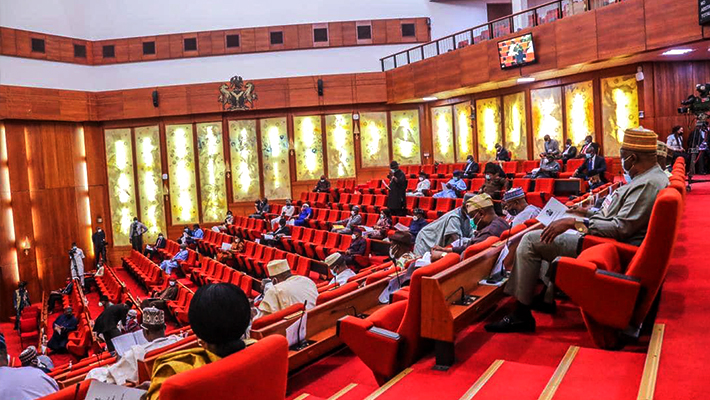
When the Senate reconvenes on September 23, it will not only be lawmakers dusting off files and shaking hands after a long recess.
It will also be reopening the legislative theatre where the drama of Senator Natasha Akpoti-Uduaghan’s suspension is threatening to become the main act, with the Nigeria Labour Congress (NLC) already warming up the streets, the courts waiting in the wings, and political parties taking positions as though this were a dress rehearsal for 2027.
Natasha, who represents Kogi Central on the platform of the People’s Democratic Party (PDP), has been on a six-month suspension since March 6. Her offence? A fiery altercation with Senate President Godswill Akpabio, which the chamber described as “unparliamentary conduct.”
For many senators, it was the classic case of a rookie lawmaker picking a fight with the referee.

Read also: Womanifesto condemns Senate’s refusal of Akpoti-Uduaghan from return to chamber
Her suspension has been anything but quiet.
While her seat has remained empty, her pen has been busy.
From her first letter demanding reinstatement to subsequent reminders, Natasha has insisted that the Senate lacks the constitutional power to gag an elected lawmaker for that long.
Just on Thursday, her lawyer fired off yet another notice, threatening fresh legal action against the upper chamber if she is not allowed to resume when plenary reconvenes.

The Senate, however, appears in no mood to bend.
Acting Clerk of the National Assembly, Dr Yahaya Danzaria, calmly poured cold water on Natasha’s expectations, affirming in a letter that her suspension “remains in force until the Court of Appeal makes a pronouncement.”
In legislative English, that was the equivalent of “see you in court.”
But the matter has gone beyond the courtroom.
The NLC has raised the stakes, vowing to mobilise protests and possibly strike if the Senate continues to keep Natasha out.
The NLC also described it as “a cynical ploy that reveals a sinister agenda to silence dissent, crush opposition, and manipulate the judiciary as a tool of political persecution.”
Joe Ajaero, president of the NLC, said: “This action, led by Senator Akpabio, constitutes a gross abuse of power that shames the hallowed chambers of the National Assembly and spits on the collective will of the people of Kogi Central who elected Senator Akpoti-Uduaghan.
For an institution already struggling with low public trust, the optics are grim.
Nigerians may endure many things, but they rarely forgive politicians who appear to play personal politics while citizens battle rising prices of rice and garri.
Read also: Natasha: PDP free to issue any statement – Senate Spokesperson
The case against Natasha
To be fair, Natasha is not without blemish in this saga. Even some of her sympathisers quietly admit that her confrontation with Akpabio was badly timed and poorly handled.
Senate rules are clear about decorum, and Natasha’s fiery exchanges gave her opponents just the ammunition they needed.
For lawmakers accustomed to hierarchy and deference, her approach was like wearing stilettos to a football pitch, bound to cause a slip.
Some senators privately argue that her suspension, though heavy-handed, was necessary to preserve order.
If you let one person shout down the Senate President without consequence, you’re inviting chaos.
This chamber runs on respect, not rowdiness.
Yet, Natasha has equally compelling arguments in her corner.
Six months of suspension, critics say, is not just punishment, it is political overkill.
For her constituents in Kogi Central, it means half a year without representation in a chamber that makes life-and-death decisions on budgets, bills, and oversight.
Her PDP colleagues have rallied behind her, describing the suspension as “unconstitutional and oppressive.”
The African Democratic Congress (ADC) has also weighed in, insisting that the Senate is setting a dangerous precedent of silencing opposition voices.
The parties may not agree on much these days, but on Natasha’s case, they are united: the punishment doesn’t fit the crime.
Read also: Senate blocks Natasha Akpoti’s return pending appeal court ruling
The Senate’s calculus
Still, the Senate appears determined to stand its ground.
For Akpabio and his allies, backing down now would signal weakness and invite further dissent.
This is not about Natasha alone; it’s about whether the Senate can enforce discipline. If they cave under pressure, tomorrow it will be someone else, and soon the chamber becomes a place of disorder, they have argued.
To the Senate leadership, their stance had always been that the suspension is not a personal vendetta but a necessary line in the sand.
The chamber is betting that time, and perhaps the courts, will vindicate its stance.
The real test, however, is whether the Senate can sustain this posture in the face of escalating pressure.
With the NLC threatening protests, PDP and ADC stoking the flames, and Natasha herself vowing more legal fireworks, the chamber risks being painted as anti-democratic.
If public opinion tilts further against it, the Senate may find its institutional pride colliding with political reality.
There is also the danger of distraction. The resumption week was supposed to focus on urgent issues: constitutional amendments, security reforms, and oversight of the executive.
Instead, much of the spotlight may be consumed by Natasha’s empty seat and the noise around it.
For a Senate eager to prove relevance in Nigeria’s governance, that is a costly diversion.
It is perhaps typical of Nigerian politics that while citizens debate the price of tomatoes, their lawmakers are locked in a gladiatorial contest over who shouted at whom.
But jokes aside, the stakes are real. Labour unrest, legal battles, and partisan bickering over Natasha’s suspension could harden into a national crisis of confidence in the Senate.
Read also: Where is Natasha?
The road ahead
As plenary resumes, all eyes will be on whether Natasha storms the chamber, daring security and sergeant-at-arms to stop her or whether she stays back to fight another day in court.
For Akpabio and the Senate, the challenge is to enforce discipline without being seen as muzzling democracy.
For labour, opposition parties, and civil society, it is about testing how far the people’s will can push an institution that often seems insulated from public opinion.
One thing is certain: Natasha’s suspension has grown far bigger than Natasha. It has become a referendum on the Senate’s ability to balance discipline with democracy, authority with accountability.
Whether the Red Chamber sustains its stance or bows to pressure may shape not only the months ahead but the very image of the Tenth Senate in history’s ledger.
And so, as senators file back into the red chamber, the nation waits to see whether they will act as statesmen or gladiators.
Either way, the show promises to be riveting, and Nigerians, weary as they are, will be watching with popcorn in hand.