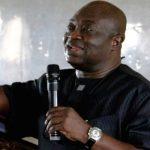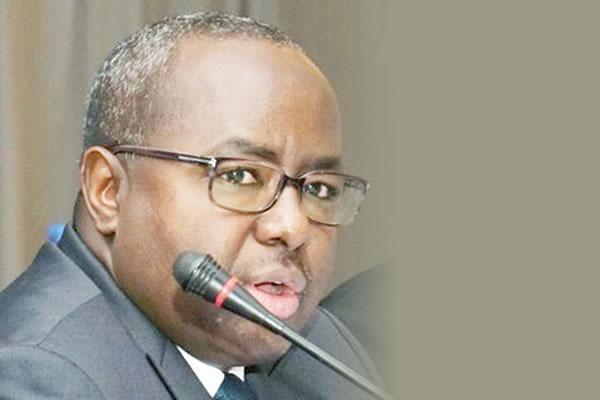
Mounir Gwarzo, director-general of the Nigeria Securities and Exchange Commission (SEC) has embarked on a major push to end the growing problem of unclaimed dividends of equity market investors estimated at N80 billion at the end of 2015.
This will be achieved using electronic dividends that are paid directly into investor bank accounts, which can be either savings or current.
The SEC is driving the E- dividend move in collaboration with the Central Bank of Nigeria (CBN), committee of Heads of Bank Operations, institute of capital market registrars and the Nigeria interbank settlement system, to ensure that all dividends are now to be paid into bank accounts of investors that have completed the electronic dividend registration.
The DG and his team embarked on a road show yesterday in the major markets and commercial areas of Lagos to sensitise the public on how to enroll for electronic dividends.

“E-dividends will be a major game changer for the market and very critical in ending the problem of unclaimed dividends,” Gwarzo told BusinessDay in an interview. “The reception we have received from the investing public has been very positive, because they can see that if they don’t come to us, we the regulators, will come to them. “The four-day robust public enlightenment programme on E-Dividend registration in Lagos began on Monday February 8th, 2016 and will culminate in a town hall meeting, today, Thursday 11th February 2016 at the Muson Centre.
Gwarzo told BusinessDay that the E-dividend push was part of a series of programs aimed at building back retail investor confidence in the market. Domestic investors accounted for 46.2 percent or N880 billion in transactions in 2015 according to data from the Nigerian Stock Exchange (NSE).
Of the amount, domestic retail investors were responsible for N382.7 billion in transactions, equivalent to 43.4 percent, with domestic institutional investors making up the rest. Other programmes of the SEC to boost market confidence include the inauguration of the Capital Market Master Plan Implementation Council (CAMMIC), launching of the National Investor Protection Fund (NIPF) and inauguration of its board, as well as the unveiling of the SEC Corporate Governance Scorecard for public companies.
The new reforms being championed by the SEC should enable Nigeria’s capital markets move to the next growth phase, by engendering investor confidence, as well as attracting new listings, Gwarzo said.
Nigeria’s first Corporate Governance Scorecard for public companies is a tool for the assessment of corporate governance practices, and was developed with support from the International Finance Corporation (IFC).

The setting up of a National Investor Protection Fund (NIPF) and inauguration of the NIPF Board will mean that Nigeria is now among only a few countries with a national investor protection fund to compensate investors for pecuniary losses, arising from bankruptcy, negligence or malfeasance by a non-broker/dealer capital market operator.
A Board composed of seven members to be chaired by the SEC director-general will oversee the NIPF.
The programmes are all directly linked to the 10-year capital market master plan, which the SEC began implementing last year.
The SEC director-general, Gwarzo, who heads the leading market regulator in Africa’s biggest economy, has consistently made it clear that his main agenda for the capital market is implementing the master plan. The SEC under Gwarzo has been proactive in engendering confidence in capital markets since he resumed office this year.
In May, the SEC suspended three subsidiary companies of the BGL Group: BGL Asset Management Limited, BGL Capital Limited and BGL Securities Limited from all Capital Market activities. It also recently suspended Stanbic IBTC Bank’s N20.4 billion ($102.51 million) rights issue, pending the “resolution of enquiries from certain regulatory bodies.
The SEC has also moved to enforce regulation on new minimum capital requirement for Capital Market Operators (CMOs) to protect the investing public.
The vision of the ten year master plan is “ to be Africa’s modern, efficient and internationally competitive market that catalyses Nigeria’s emergence as a top 20 global economy, reflecting an all encompassing ambition intended to lay a strong foundation for growth.”
PATRICK ATUANYA