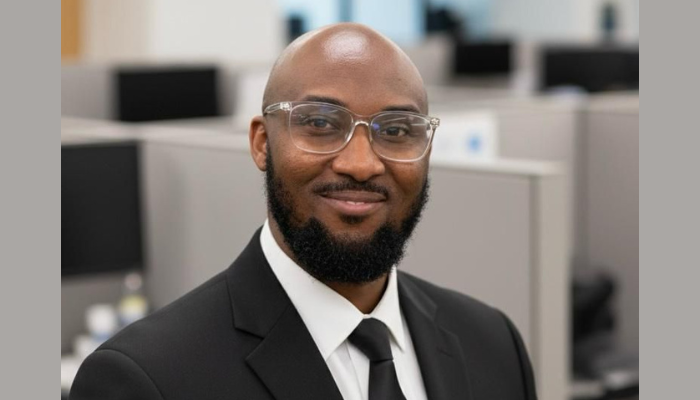
As artificial intelligence (AI) becomes increasingly embedded in education systems around the world, one Nigerian academic is advancing a distinctive model that blends technology with the arts to prepare future teachers for a digital future.
Stephen Emmanuel Abu, a doctoral researcher in Instructional Technology at the University of Alabama, is promoting an approach that uses music, theatre, and storytelling to teach AI concepts in ways that build both technical skill and ethical awareness.
With more than ten years of experience as an educational technologist, Abu’s work focuses on the intersection of AI, virtual reality (VR), and STEM education. However, he says his central goal is to ensure that education remains rooted in creativity and social context. “My mission is to bridge the gap between academia and industry through cutting-edge research in the design and development of evidence-based technological solutions,” he said. “I believe in preparing graduates who will not just be users of AI, but critical and creative thinkers in this space.”
Abu’s research journey has taken him across continents, but his motivation remains grounded in Nigeria’s educational realities. Having grown up in a country where infrastructure challenges slow down technology adoption, he recognises the barriers teachers face in embracing digital tools. At Alabama, his doctoral research focuses on developing AI-driven VR simulations for mechanical engineering students, designed to strengthen metacognitive skills. He is also creating an AI competency programme aimed at improving workplace literacy among undergraduates.

“This is about future-proofing education,” Abu said. “AI is reshaping every sector. We need graduates who don’t just know how to use the tools but can think critically, ask ethical questions, and adapt AI to local contexts. That starts with teacher preparation.”
One area of Abu’s research involves training pre-service teachers through what he calls arts-integrated AI literacy. Rather than relying on lectures, he introduces AI tools into creative exercises. Trainees compose songs, act out plays, and build stories with AI assistance. “Imagine the difference between passively listening to a lecture on AI versus composing a song or scripting a play with AI’s help,” he said. “Teachers in our research described it as refreshing, fun, and even challenging in new ways. They weren’t just absorbing abstract concepts; they were weaving them into creative projects.”
In one study, student teachers used platforms such as Soundraw and Boomy to generate music loops. Others used InVideo and Synthesia to produce short digital storytelling performances. Through these activities, they learned concepts such as prompt engineering and algorithmic bias by experience rather than theory. “They felt personally invested—they had a stake in the story they were telling or the music they were composing,” Abu said.
Abu believes that while technical skill is important, the ethical dimension of AI literacy is fundamental. “Operating an AI tool is just the tip of the iceberg,” he said. “If teachers don’t learn to question AI outputs—Is this information reliable? Could there be bias?—then we’re setting them and their students up for problems.” He argues that teachers must act as ethical gatekeepers as AI becomes part of learning environments.
He adds that developing countries such as Nigeria face distinct implementation challenges. “Rolling out arts-integrated AI literacy programmes nationwide is not feasible overnight,” he said. “Many teacher training colleges still struggle with electricity, internet access, or even enough computers.” He proposes starting with regional hubs that can pilot and adapt the model to local conditions before expanding it nationally.

Abu also points to the adaptability of Nigeria’s performing arts traditions. “Storytelling and drama are part of our culture. Even without full internet access, trainees can role-play how an AI works or use basic offline tools,” he said. However, he stresses that investment is needed. “The government, private sector, and NGOs must step up. Solar-powered ICT labs, subsidised data for education, partnerships with telecoms—these are the kinds of interventions that can make nationwide rollout possible.”
For Abu, AI education in Nigeria must also reflect local values and realities. “AI is not culturally neutral,” he said. “If an AI tool generates biased or foreign-centric outputs, teachers must help students question it. Did the AI ignore Nigerian history? Did it fail to understand our languages? These are opportunities for critical learning.”
He calls for stronger collaboration among policymakers, universities, and industry players. “The government must move beyond strategy documents to actual implementation,” he said. “Universities should embed AI across curricula, not just in computer science, while teacher councils can update professional standards to include AI competencies.”
Abu believes Nigeria’s young population and creative traditions can help the country become a leader in AI-driven education. “AI literacy must become as universal as basic literacy,” he said. “If we do this right, Nigeria won’t just catch up—we could leapfrog. We can prepare a generation of teachers and students who see AI not with fear, but with creativity, confidence, and cultural awareness.”