



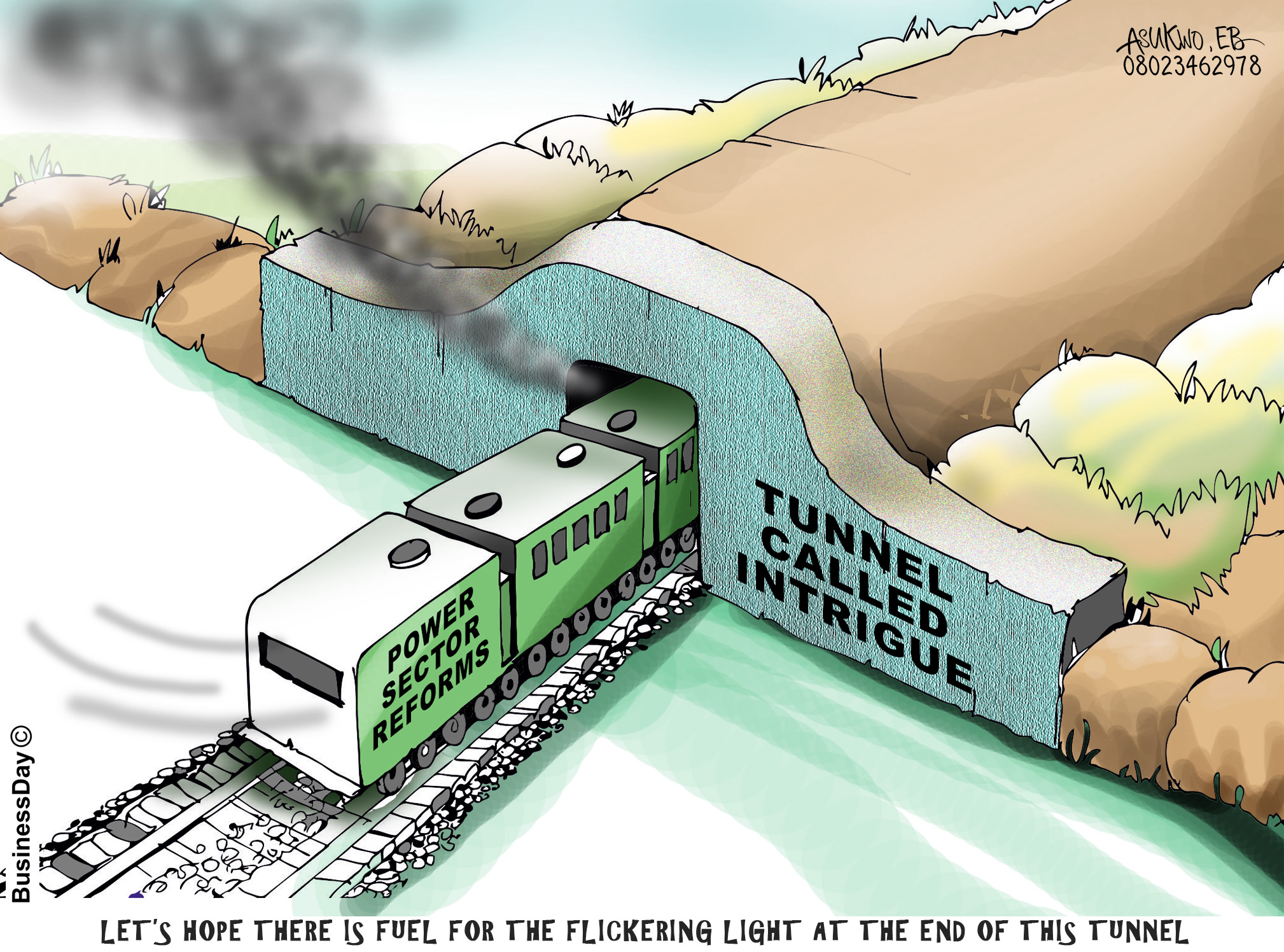
Summary: While Nigeria’s leaders have cycled through bold promises and billion-dollar interventions since 1999, the power sector remains a national shame—barely generating 4,000 megawatts for over 200 million people. Across the border, peer nations like Egypt, South Africa, and even Algeria have flipped the switch, lighting up homes and powering industries with capacities that dwarf Nigeria’s output. In real terms, Nigerians get just 20 watts per person—less than a light bulb—compared to 750 watts for South Africans.
For Maryam Yusuf (not her real name), a mother of four who runs a provision store in Gbagada, a vantage point in Nigeria’s commercial capital, the dream of constant power supply has been alive since the dawn of democracy in 1999.
“I spend more on petrol than anything else,” she says, fanning herself in the sweltering afternoon heat. “Now they say the electricity subsidy will go, and we must pay more. But more for what? For darkness?”
Her question echoes a nationwide frustration. Despite Nigeria’s immense energy resources—including 200 trillion cubic feet of gas, vast rivers for hydropower, and abundant sunshine for solar—the country still struggles to provide one of the most basic necessities of modern life.
For 25 years, successive governments have promised to fix Nigeria’s epileptic power supply. Instead, Nigerians today spend over N4 trillion annually on self-generation through petrol and diesel-powered generators, according to World Bank estimates. Meanwhile, billions of dollars have vanished into a black hole of power sector reforms that have yielded little light.

Read also: Running on Empty: Electricity sector reform and Nigeria’s national security imperative
A timeline of broken promises
From President Olusegun Obasanjo to President Bola Tinubu, each administration has made grand pledges to solve the electricity puzzle.
Obasanjo’s government (1999–2007) launched the National Integrated Power Project (NIPP), investing over $16 billion in new power plants and infrastructure. Many of those projects stalled, were underutilised, or poorly executed. In 2007, then-President Umaru Yar’Adua inherited the mess, promising to declare a national emergency on power. His untimely death cut that ambition short.
President Goodluck Jonathan’s era (2010–2015) was the most ambitious: he privatised the power sector in 2013, selling off state-owned generation and distribution companies. The hope was that private capital would fix what public bureaucracy could not. However, poor due diligence and politicised sales led to the emergence of weak, debt-laden players unable to make meaningful improvements.

President Muhammadu Buhari’s administration (2015–2023) introduced various intervention programmes, such as the Siemens-backed ‘Presidential Power Initiative.’ Yet Nigerians are still waiting to feel the impact, as households and businesses continue to rely heavily on petrol, diesel, or solar for electricity.
Now, under President Bola Tinubu, Nigerians are watching again—and waiting. But time is running out, and so is patience.
Subsidy: A broken system
Nigeria generates an average of 4,000 megawatts for over 200 million people—roughly the same amount South Africa generates for a quarter of that population. The sector remains plagued by poor infrastructure, underinvestment, gas supply constraints, and regulatory inefficiencies.
For years, subsidies have papered over these cracks.
On April 3, the Nigerian Electricity Regulatory Commission (NERC) scrapped subsidies for Band A customers—those receiving 20 hours of supply daily. Tariffs jumped from N68 to N225 per kilowatt hour.
According to NERC, Band A customers comprise 1.9 million—or 15 percent—of Nigeria’s 12.82 million electricity consumers. Customers in Bands B through E, who receive less power, are not affected yet.
Despite the new N225/KWh tariff, electricity subsidies continue to balloon.
Power Minister Adebayo Adelabu disclosed during a meeting with Generation Companies (GenCos) that the government owes about $857 million to GenCos and another $1.3 billion to gas suppliers. The 2024 subsidy budget is pegged at N450 billion—far below the estimated N2.9 trillion actual cost of subsidies this year.
Critics say the system is fundamentally broken. Adelabu emphasised the urgent need to end subsidies to stabilise the sector and encourage full liberalisation.
The World Bank agrees. In its latest report, it described Nigeria’s electricity subsidy as ‘wasteful and regressive,’ warning that it undermines broader economic reforms—including the removal of petrol subsidies and foreign exchange liberalisation.
The push now is to end electricity subsidies altogether—forcing consumers to pay the real cost of power and, in theory, spurring efficiency and investment.
Winners and losers

In theory, the federal government, power generators, and investors stand to gain. With cost-reflective tariffs, the burden of electricity subsidies will shift off the national budget, while GenCos and DisCos will be better positioned to recover investments and grow revenues.
Some private sector players have already expressed renewed interest in building gas plants, solar farms, and distribution infrastructure.
“Liquidity challenges had left GenCos unable to secure loans or maintain infrastructure,” says Sanni Bello, chairman of Mainstream Energy Solutions and the Association of Power Generating Companies (APGC).
“Without urgent intervention, the entire power ecosystem could collapse.”
Kola Adesina, chairman of Egbin Power and First Independent Power Limited, echoes the urgency:
“This is a national emergency. Everything hinges on power—industries, homes, hospitals. We cannot afford to let the sector fail.”
But for ordinary citizens and small businesses, the change is a bitter pill.
“I just got a bill for N200,000 this month,” says James Okafor, a Band A resident in Abuja. “I live in a two-bedroom flat with my wife and two kids. We barely use the AC. This is crazy.”
Even those promised 20 hours of power say the supply remains unreliable.
“Sometimes we get 12 hours, sometimes less. But the bill doesn’t go down,” Okafor adds. “If I’m paying for constant power, give me constant power.”
In Kano, persistent outages triggered a standoff between the Kano Electricity Distribution Company (KEDCO) and the Manufacturers Association of Nigeria (MAN).
According to Aliyu Mahadi, secretary of MAN’s Challawa chapter, poor electricity supply to the Challawa industrial cluster has caused major financial losses for member businesses.
The situation is worse in rural and peri-urban communities, where the national grid is virtually non-existent. In Makoko, an informal settlement in Lagos, most residents rely on car batteries, candles, and small solar panels. For them, cost-reflective tariffs are almost irrelevant—they’re off-grid, off-policy, and off the radar.
Can subsidy removal guarantee 24-hour power?
The government insists that ending subsidies is essential for long-term progress, citing examples like Egypt and India, which improved power supply after difficult reforms.
But experts warn that subsidy removal alone won’t fix the sector. Nigeria must tackle a host of structural issues—from weak transmission lines and gas shortages to corruption and regulatory bottlenecks.
“Removing electricity subsidy is not a silver bullet,” says Ayodele Oni, energy lawyer and partner at Bloomfield Law Practice.
“The government already pays the difference to GenCos and DisCos. Removing the subsidy just means the government keeps more money. What’s needed is market discipline, investment by DisCos, bill payment enforcement, service-reflective tariffs, adequate metering, and reduced electricity theft—possibly through creative franchising.”
Adetayo Adegbemle, executive director of PowerUp Nigeria, says the failure to activate the Power Consumer Assistance Fund (PCAF) by Q1 2025 represents a major setback in resolving Nigeria’s electricity liquidity crisis.
“With subsidies ballooning to N200 billion monthly and GenCos receiving only 39 percent of their invoices as of December 2024, the sector risks deeper instability,” Adegbemle says.
“However, this delay need not spell collapse. A combination of adaptive policies, stakeholder collaboration, and accelerated reforms can still steer the sector toward recovery.”
Damilola Adebowale, a senior energy analyst at a tier-one bank, agrees that subsidy removal alone won’t result in reliable supply.
“It must be accompanied by serious infrastructure investments and accountability,” she says.
The World Bank has echoes that view, urging the government to reinvest subsidy savings into power infrastructure—especially in underserved areas.
Nigeria Trails Peers in Per Capita Electricity Capacity

Nigeria’s power woes become even starker when compared to peer nations. Countries like South Africa and Egypt generate significantly more electricity, despite having smaller populations.
South Africa’s generation capacity exceeds 50,000 MW, and Egypt’s is over 60,000 MW. In contrast, Nigeria has an installed capacity of about 12,522 MW, but the national grid struggles to deliver just over 4,600 MW.
A deeper look reveals Nigeria’s dramatically low per capita electricity availability.
South Africa leads with an available capacity of 48,000 MW serving a population of 64 million, translating to a per capita capacity of 750 Watts. Egypt follows with 50,000 MW for its 116.5 million citizens, yielding 429 Watts per person. Algeria and Morocco also demonstrate considerably higher per capita figures with 395 and 268 Watts respectively.
In contrast, Nigeria, with an available capacity of 4,606 MW for a population exceeding 232 million, languishes at a mere 20 Watts per capita.





