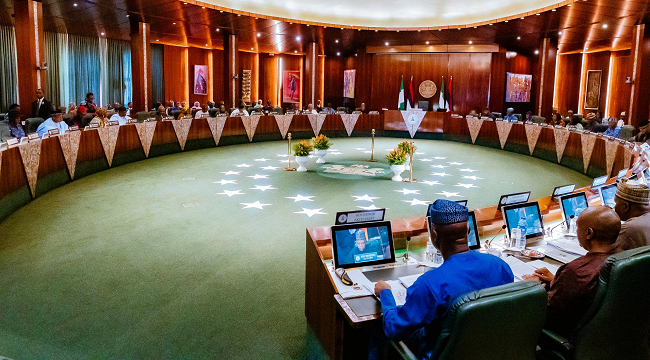
The four-month long National conference that is about winding off appears to have been saddled with too many issues such that there has not been enough time to really explore certain areas, yet far-reaching decisions were taken. We have seen the conference delve into core issues of economic restructuring of the country; issues akin to those thoroughly dealt with by the 2009 Vision 20-20-20 assembly which worked through several well structured thematic groups.
In my opinion the present National Conference should have concentrated only on matters of political restructuring including constituent issues and such other related political matters as, for instance, the entire ramification of the person of the Nigerian president. This is why the recommendations on rotational presidency and the creation of additional 18 states are indeed important.
For the recommendation for a rotational presidency, though the details of the context are yet sketchy, we must all appreciate the fact that it has to be seen how such a system will move Nigeria forward. The pertinent issues are numerous. Firstly, there is no correlation between rotational presidency and the competency of a man or woman as president. Secondly how is a rotational presidency going to support a proper federal structure? Lastly and perhaps most importantly, there does not seem to be a positive correlation between rotational presidency and weak federating states, the latter which, as many have argued would be the outcome of a Nigeria with multiplicity of states.
A polity of rotational presidency with a strong central government, the latter which we have today is only suggestive of a system where persons from different geo-political zones are invited to superintend large parties where a national cake is shared irrespective of whether such a cake is baked or not. In other words, for such a rotational system to be relevant, it must be such that the federating units must be very strong in themselves while at the same time, the central government will be very weak where there would be no spoils of office that are of a matter-of-life-and-death dimension.

Thus for such a polity to be meaningful, there must be near 100 percent control of their own resources by the states. The constitution will be mainly of residual clauses, with little or no concurrent issues beyond perhaps, matters of infrastructure and police, while exclusive areas would be those of defence, armed forces, arms and ammunition, atomic energy, foreign affairs, war and peace, citizenship and all other such areas associated with the exclusive list in a true federalism all over the world.
Although some have argued that strong federating units may not be possible in a Nigeria with a multiplicity of states. The National Conference recommends 18 additional states which will bring the number of states to 54. In straight line arithmetic, this will average a state at three million persons if we put Nigeria’s population at 160 million and above. Although these units may appear small, we must bear in mind that of the 58 countries in Africa, 18 are populated by less than three million people each. And these countries include some relatively viable ones such as Gambia with one of the best health delivery systems in Africa and, together with its “roundabout” neighbour Senegal, are the most visited countries in West Africa. Others include Gabon, Lesotho, Botswana (with a very viable livestock agricultural sub-sector), Equatoral Guinea, Guinea Bissau, Mauritius, Cape Verde, and so on.
But this is not quite the arithmetic, because with states like Lagos and Kano accounting for over ten million persons each, one wonders how many such states would be carved out of states like Lagos and Kano. Whichever way this is to be done, the important thing is that some of these African countries have shown that relatively small populations can be great and viable autonomous units if they are well organised. To this extent, it is indeed possible to have viable small federating units in Nigeria if the states, as small as they may be, are given the requisite autonomy to operate within a proper federal system.
For so many years, advocates of a strong central government in Nigerian-style federalism have argued that such a system is the only way to guarantee even development of the different zones in the larger entity called Nigeria. However, such advocates accept the present day structure where a few cities such as Lagos, Kano, Abuja, Port Harcourt and a few others have all the paraphernalia of good living, while the rest of the country are in squalor.
But if the federating states are allowed to develop at their pace, they will not only enjoy the autonomy and its attendant free space which a country like Gambia enjoys that enabled it organize itself appropriately, it will also enjoy the liberty of free movement of capital and market from all the other parts of the larger Nigeria; a scenario which trans-border restrictions would deny Gambia for instance. In other words to this extent, a proper federalism among small autonomous units would be a win-win situation for Nigeria. Indeed if nothing else, Nigeria should be able to achieve an appropriate structure of political geography and allocation of power that will pull the nation from the present doldrums of a large country where people look at a central government that is only good for appropriation and expropriation, to a system where people will only aspire to the centre to serve, while at the regions or federating units, creativity and enterprise would be the order. A power structure along these suggested lines would do the magic.

Chuba Keshi