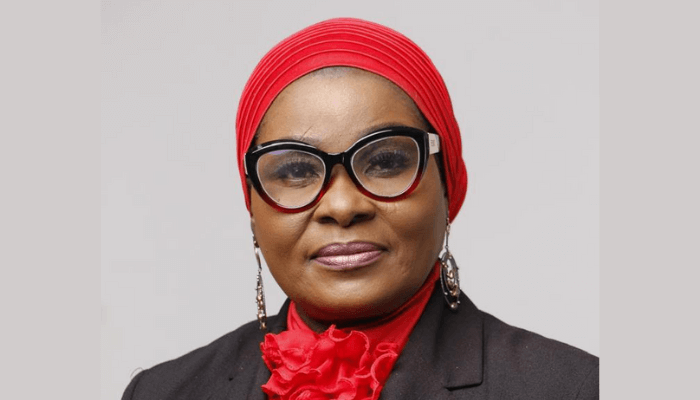
Rotarian Olanrewaju Kuburat Lawal, a chartered accountant and director of finance in the Lagos State Ministry of Economic Planning and Budget, is not new to leadership or service. She now wears a new hat as president of the Rotary Club of Ikeja, the foremost club in Rotary International District 9111.
In this exclusive interview with Taofeek Oyedokun, Lawal shares how her early days as a Rotaractor in the late 1980s shaped her passion for community service, the unique identity of her club, and her plans to expand Rotary’s reach through vocational empowerment, microcredit schemes, and digital visibility. She also addresses misconceptions about Rotary, offers insight into balancing multiple leadership roles, and reveals the legacy she hopes to leave behind: a Rotary that does more, reaches farther, and touches lives deeply. Excerpts
Can you give us a summary of your profile?
My name is Olanrewaju Kuburat Lawal. I work with the Lagos State Government as a director of finance and accounts. I’m a chartered accountant, married with children. I graduated from the University of Ife, now Obafemi Awolowo University, and I’m also an alumnus of ICLED Business School. I am currently serving as the president of the Rotary Club of Ikeja.

Your Rotary journey started as a Rotaractor in 1989 before joining the Rotary Club of Ikeja in 2015. Can you tell us about your journey as a Rotarian?
Yes, I started as a Rotaractor in 1989 at the Rotaract Club of the University of Ife; it was academic-based. Back then, clubs were either academic or community-based. We were young, but Rotary taught us the importance of service to humanity. Despite our limited resources, we always pooled what we had to carry out projects in communities around Ife, like Ifewara and even as far as Ilesha.
Sometimes, we partnered with nearby Rotary clubs for more impact. That experience prepared me for the journey back into Rotary years later. In 2015, I joined the Rotary Club of Ikeja after the club visited LASUTH to empathise with patients. At that time, I was the director of finance at the hospital and part of the management team that received them. That encounter reminded me of my Rotaractor roots, and I decided to come back.
The Rotary Club of Ikeja turns 58 in August, yet you’ll be the second female president come Sunday, July 27. How does that make you feel?
It’s a positive development. I just happen to be the second female president. We have other female Rotarians in the club, and I believe that after my tenure, we’ll see even more women in leadership roles. We are growing steadily and inclusively.

It is obvious that your club is male-dominated. What steps are you taking to bring in more women?
It’s definitely on our agenda this Rotary year to grow our membership and encourage more female members to join. However, we want individuals who share our vision, regardless of gender. So while we’re open to bringing in more women, we’re focused on attracting those genuinely aligned with Rotary’s ideals.
What makes the Rotary Club of Ikeja a unique club and differentiates it from other clubs in District 9111?
The Rotary Club of Ikeja is the first club in our district. We are known as a leadership training-ground club. The club prepares members to take on leadership roles wherever they find themselves, whether at work or in the community. It’s a place where human capital is developed.
We also have a strong network of accomplished individuals, and eminent Nigerians like Past District Governor Prince Julius Adelusi-Adeluyi; the Osile of Oke Ona, Egbaland, Oba Adedapo Tejuoso, also a past district governor; Past President Chief Michael Ade-Ojo; Past President Chief Olusegun Osunkeye; and Past Assistant Governors Samuel Bolarinde and Olabintan Famutimi are members of our club. You meet and learn from these people who have excelled in their professions. This mix of mentorship, networking, and service makes it a fulfilling experience. And when it comes to community service, we go all out to ensure our impact is felt.
What are some of the major projects and plans you’ve lined up for the Rotary year during your tenure as president?
We’ve already begun some impactful projects. We had a microcredit scheme empowerment early this month for the market men and women of Obada Market, Isolo, where we gave loans to traders. Once repaid, the loans go to a new set of beneficiaries; it’s a revolving scheme. We have been doing this for decades.
We also maintain a long-standing relationship with the NAFOWA Vocational Training Centre. We donate equipment to their graduates. This year, we provided sewing machines, hairdressing kits, and cooking equipment, and we supported ten of their graduates.
Last year, our club donated a vocational building to Ikeja Junior High School. This year, we plan to equip it for skills training in barbering, electrical work, fashion design, catering, and more. This will help students acquire skills while still in school, empowering them for the future.
“We also ensure good publicity for every project. Our public relations team is always on the ground to document and share what we do, not for self-promotion, but to let others know what we are doing and to attract partnerships. It helps other communities reach out to us for similar interventions.”
This July is the Maternal and Child Health Month, and we visited the Primary Health Centre Ojodu. We engaged mothers on childcare best practices and donated items like baby formula and other essentials. We also plan to install a water-generating facility in a community soon. These are just a few of the projects for the Rotary year.
How do you plan to engage the community and promote Rotary’s intervention programs as president?
Rotary doesn’t believe in randomly distributing aid. We always conduct needs assessments, and some communities write to us outlining their needs. Based on this and the resources available, we determine how to help.
We also ensure good publicity for every project. Our public relations team is always on the ground to document and share what we do, not for self-promotion, but to let others know what we are doing and to attract partnerships. It helps other communities reach out to us for similar interventions.
How do you envision your club’s growth and impact in the next year?
Rotary Club of Ikeja already has a strong legacy, and we intend to build on it. A key focus this year is to enhance our visibility, especially online. We want a strong social media presence that reflects our activities and encourages more engagement. Anytime we meet, we want people to see us and understand what Rotary stands for.
As a chartered accountant, how will your career influence your leadership in Rotary?
Rotary Club of Ikeja is a club of professionals, and financial management is crucial. As a chartered accountant, I’ll ensure due process is followed in all financial matters. We already have a budget for the year, and every expenditure will align with it.
We’ll conduct monthly reviews and share reports with the club so members are fully aware of our financial position. There will be complete financial transparency. I understand the implications of mismanagement, so everything will be done by the book.
The Rotary presidency seems like a full-time job. How do you plan to balance this with your role as a director in the Lagos State Civil Service and as a mother and wife?
It’s about structure and planning. Rotary is designed in such a way that you work with a capable board of directors. With proper delegation, time allocation, and clear boundaries, it’s all manageable.
Also, I’m not just a mother; I’m a grandmother. My children are grown, and they, along with my husband, are fully supportive of my Rotary work. They assist me when needed, so everything is in order.
Some people believe Rotary is elitist or even cult-like. What would you say to those with such misconceptions?
That’s a wrong notion. This is the age of information. All anyone needs to do is to visit myrotary.org to learn more. More importantly, you are free to fellowship with Rotary clubs, and if you are in Lagos, you can join us every Monday by 1pm at Lagos Airport Hotel.
Rotary is not a cult or an elitist club. Yes, we have members from different professions, but it’s not about status. It’s about service. Some support with money, others with talent or time. It’s a collaboration of people who genuinely care about humanity.
Money alone cannot do everything. It takes different forms of contributions to make Rotary work. The belief that it’s a fetish or elite group is completely false.
What legacy do you want to leave as president of the Rotary Club of Ikeja?
I want to leave behind a Rotary Club that not only impacts lives but continues to do more, one that takes up peace initiatives, promotes love, and builds strong communities.
I want us to create a Rotary where people feel free, safe, and supported. A place where we make people happy. That’s the legacy I want to leave: a Rotary that truly serves and uplifts humanity.