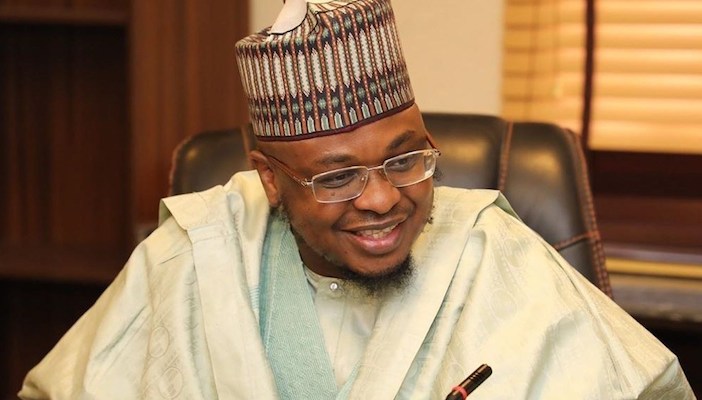
When Isa Ali Pantami was inaugurated as the minister of ICT on August 21, 2019, there was some form of relief by a segment of the industry that finally, ICT was going to be manned by a man with significant qualification and experience in the sector.
Pantami is not a new face in the ICT sector. A graduate of Harvard and MIT, Pantami lectured at Abubakar Tafawa Balewa University in Information Technology before joining the Islamic University of Madinah as head of Technical Writing in 2014. He was later appointed as director-general/CEO of the National Information Technology Development Agency (NITDA) where he was until his ministerial nomination.
For many stakeholders, the appointment of Pantami was a huge step-up from the previous occupant of the office of the minister of ICT, Abdur-Raheem Adebayo Shittu, a lawyer who had no background and prior experience in ICT.
On the back of positive industry endorsement, Pantami was out to impress starting with a change of name for the ministry. In October 2019, the government approved a new name, Ministry of Communications and Digital Economy. As the industry applauded, the new minister of communications and digital economy was turning his attention to the National Broadband Plan, which would eventually be launched in January 2020.

The year 2020 did not quite began on a positive note for the telecommunication industry in view of the move by about 14 states to increase the Right of Way (RoW) fees for fibre cables. Addressing the right of way charges increase and three other policy steps were some of the defining moments of Pantami’s stewardship for the telecoms sector in 2020.
N145 Right of Way
In January 2020, 14 states including Lagos, Kano, Anambra, Ondo, Cross River, Kogi, Osun, Kaduna, Enugu, Adamawa, Ebonyi, Imo, Kebbi, and Gombe moved ahead with plans to jerk up the cost of RoW for telecoms infrastructure.
This was despite entreaties from the minister to the governors in December 2019, to stick with the N145 agreed by the National Executive Council (NEC). A guideline issued by the Federal Government in 2012 pegged chargeable access for laying of ICTSP ducts and cables at N145 per linear metre and N20 per linear metre as annual maintenance access fee.
At the time, the mobile broadband penetration rate was at 38.49 percent and a hike in RoW could possibly derail any projection the government had planned for 2020. Pantami met with the governors later in January and some of them agreed to reverse the hike.
However, it was not until May that a few of them began to comply starting with Ekiti State. Others who complied include Kaduna, Anambra, Plateau, Kwara, Katsina, and Imo states.
Unfortunately, Lagos and the rest of the states continue to charge higher fees for RoW.

National Broadband Plan 2020-2025
The new National Broadband Plan 2020-2025 is arguably the biggest achievement of the Pantami administration in the telecoms sector in 2020. Notwithstanding, the plan came on the heels of the failure to successfully implement the entire provisions of the previous national broadband, which timeline ended in 2018.
In the new plan, the ministry raised the mobile penetration target from 30 percent to 70 percent. Achieving that plan depends mostly on the policies the minister formulates to incentivise operators and potential investors in the market.
With the harmonisation of the RoW still hanging in the balance, it is unlikely operators will be willing to deploy massive capital to build infrastructure at the moment. Also, the NCC is yet to release the N200 billion counterpart funding, which was promised to operators and which they anticipated will be released this year.
N17bn USSD debt owed by banks
While the telcos were waiting for Pantami’s diplomacy on states to yield fruit in reducing fees for RoW, another storm was brewing in August 2020.
During a virtual conference hosted by the Association of Telecommunication Companies of Nigeria (ATCON) in August, Garba Danbatta, executive vice-chairman/CEO of the NCC, declared that commercial banks in Nigeria have accumulated N70 billion in total debts owed to telecom operators through the use of Unstructured Supplementary Service Data (USSD).
Danbatta said the final settlement of the issue would be achieved through a tripartite agreement among the lenders – the Central Bank of Nigeria and the telecoms regulator.
It would be recalled that in October 2019 – barely two months after Pantami was appointed – operators like MTN had threatened to begin charging users N4 for every USSD transaction.
Following public outrage, the CBN ordered the telcos to rescind the plan given its implications for financial inclusion. The CBN’s position was supported by Pantami who also issued a statement requesting the suspension of the charges following further engagement with the stakeholders.
In February, Danbatta promised expeditious handling of the matter. However, the NCC’s declaration of N17 billion could be an indication that tackling the matter is not going as planned. Surprisingly, there has not been any public response from the commercial banks on the N17 billion accrued debt. Hence, a resolution of the impasse between banks and telcos could drag into 2021.
‘Stop sale of SIM cards until audit’
Following Nigerian Senate summons on the increasing use of multiple SIM cards for kidnapping, Pantami on Wednesday, December 9, directed the telcos including MTN Group, Airtel Africa, Globacom, and 9Mobile to suspend the sale of SIM cards while authorities audit their compliance with registration guidelines.
The directive, which came with no timeline, brought uncertainty in the telecoms sector.
On Thursday, December 10, shares of MTN and Airtel were affected. For MTN, the shares declined by as much as 8.6 percent in Johannesburg, the most in almost seven months, before paring the decline to 5 percent later in the day. The shares of MTN Nigeria on the Nigerian Stock Exchange fell 0.8 percent in Lagos. Airtel Africa fell by 1.2 percent in London.
Investors said they were afraid that among other things, the directive would impede the telcos’ ability to generate revenue, at least for the period the audit would last. Experts say this will be insignificant should the audit be concluding within a window of one week. But if it drags longer, the telcos face a serious quagmire.
‘Link NIN to SIM or be blocked in 2 weeks’
Just when the operators thought they had seen it all, Pantami came up with another directive on December 16.
According to the directive, all network operators were to block subscribers who are not registered on the government identity project in two weeks – ending December 30.
The ministry has now added another three weeks to the deadline for subscribers without NIN who are yet to link their NIN to mobile lines, and six weeks extension for subscribers without NIN from December 30, to February 9, 2021.