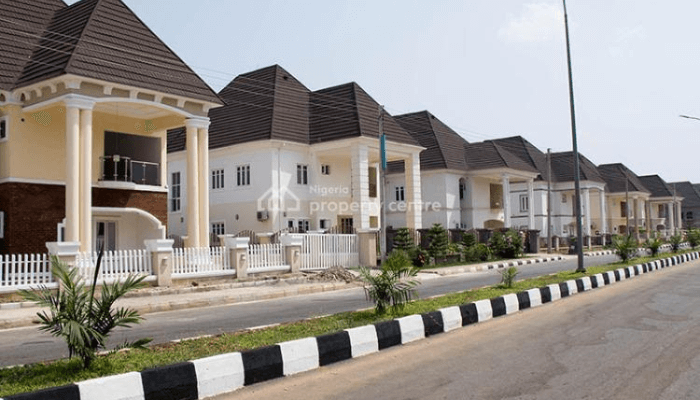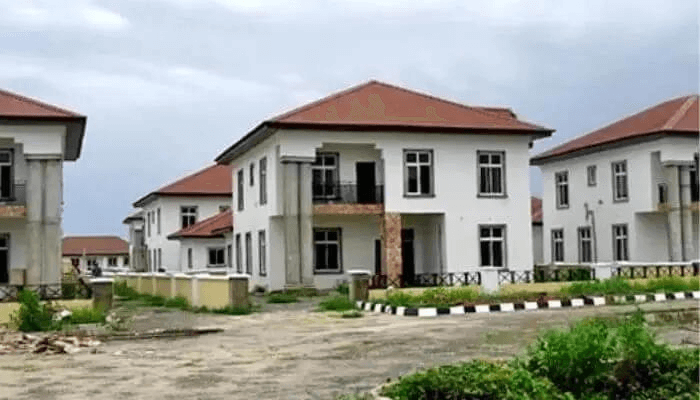
BusinessDay survey of the real estate performance in Lagos state for the year 2018 revealed that the hospitality and retail sub-sectors improved in the review period while the commercial office space lagged.
The relative stable exchange rate and improved consumer purchasing power in 2018 led to the rebound in the retail market of Nigeria’s business hub, as compiled from a report by Jones Lang LaSalle (JLL), an American professional services and Investment Company with specialty in real estate.
The low base effect coupled with a stronger occupancy rate in the hotels and hospitality arm of the state’s real estate sector prompted the encouraging performance for the sub-sector. The commercial office market on the other hand was not able to follow suit owing to low demand for office space.
Lagos state with about 23.42 million population, about the same population size as Ghana led other states in Internal Generated Revenue at N196.4 billion in H1’18, a 17 percent increase when compared to N168.02 generated in H1’17. This makes the centre of excellence the state hub of trade and economy in Nigeria.

Analysis of the Chicago-based firm’s report revealed that Lagos state offices has commercial office stock of about 371,000 square metres (investment grade) and has vacancy rate of about 40-50 percent.
“Overall, the office market in Lagos continued to struggle in the first three quarters of 2018. This is evident in the high vacancy rate and the rental reversions that were recorded. The vacancy rate was slightly lower this year, recording a decline of about 5 percent compared to the same period last year,” JLL said in its 2018 report.
A survey showed that in the previous year, many retail developments, including Royal Gardens Mall (29,441m²) and Palms Mall (40,000m²) expansion, were put on hold due to the high building costs which have since been in a decline.
Speaking on Lagos retail market, JLL measured Lagos shopping malls investment grade to be 232,000 square metres with rent rate of about $1,913 for 400- 850 square metres per annum.
The services and investment company said although retail centres in Lagos witnessed declining footfalls in the past year, “this has improved given the stabilisation of the exchange rate and improved consumer purchasing power due to easing inflationary pressures.”

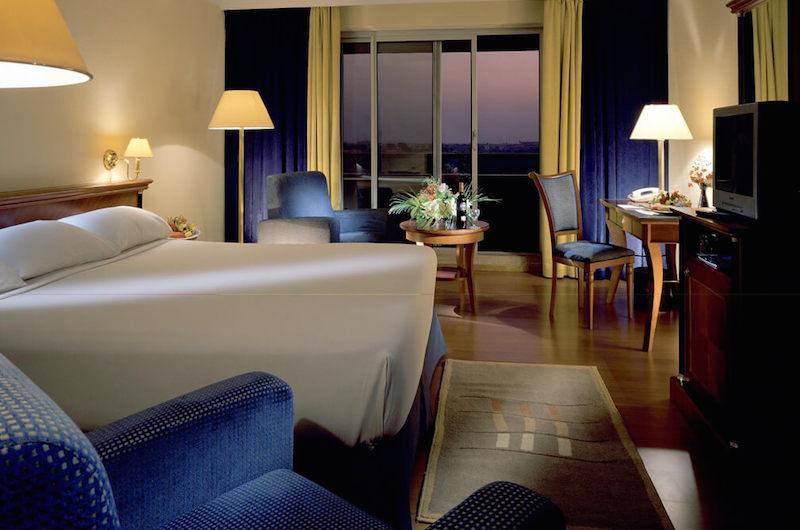
The report also mentioned that Lagos state hotel supply accounts for an estimated 35 percent of room stock in the country, with an estimated 52 percent of the supply being unbranded. Occupancy rate, according to JLL has improved from 50 percent in 2017 to 55 percent in 2018, with Average Daily Rate (ADR) on an upward trend (N49,021 in 2018 as against N46,845 in previous year).
Lagos state has more concentration of people with “discretionary” spending power of at least US$5,500 (N1.98 million) per annum than 46 other countries in Africa. Premium consumers are people, who after spending on necessities like rent, food and school fees, still have at least N1.98 million left over to spend on what are considered luxuries like vacations, entertainment, or even buy a second car.
“Nigeria alone has 10 mega cities among the top 50 urban consumer markets in Africa. The mega-city of Lagos alone has a larger consumer class than all but six African countries,” Fraym, a geospatial data company said in its report titled; Finding the Dynamic African Consumer.
Commenting on the hospitality industry in Lagos state, JLL said in its report that the market has seen a relatively strong recovery during the past twelve months, albeit off a low base, with most hotels reporting stronger occupancy.
“The challenge for the sector is that hotels have had to shift their contracted room rates from US/$ to Naira, which given the subsequent weakening of the Naira to US/$, has put significant pressure on room rates in US Dollar terms and profitability,” JLL said.
The firm however projected stable outlook for the commercial office sub-sector and forecasted same also for the retail market.
The future performance of the states’ hospitality sector is expected by the firm to be positive regardless of the forth coming election.
“The outlook for hotel and hospitality is positive, with the recovery expected to continue through 2018 despite the country gearing up for elections in early 2019. While the outcome of these elections will shape the recovery trend beyond this point, we still expect positive momentum through 2018 and into 2020,” JLL concluded.
Endurance Okafor