…Weathers civil war, economic storms
…Battles deepening mutual mistrust
…Social cohesion still a mirage
On Wednesday, October 1, 2025, a radio presenter greeted his many fans and listeners with ‘Which Way Nigeria?’, a song released in 1984 by Sonny Okosun, a late musician.

The song, which underscored a sense of directionlessness that still defines Nigeria’s political landscape after 65 years, also set the mood for the usual calls and commentaries by the listeners. But the listeners’ views were mixed, with more seeing no reason to celebrate that day, especially as the government cancelled the colourful parade, which many look forward to on Independence Day.
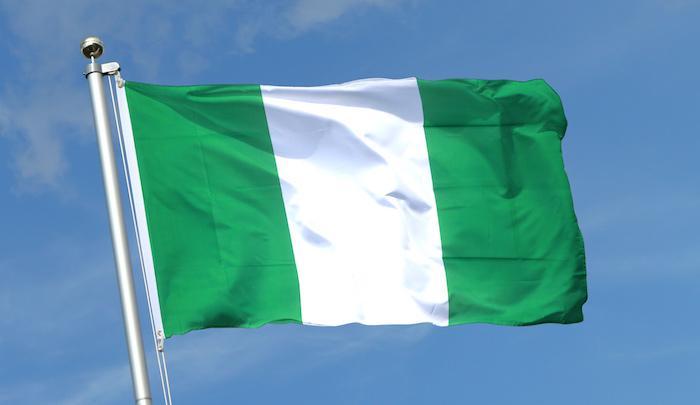
But away from the less cheers of October 1, 2025, the positive energy of the over 40,000 people, who gathered at the Lagos Race Course (now Tafawa Balewa Square) in October 1, 1960 to witness the lowering of the Union Jack and the raising of Nigeria’s new green–white–green flag, still speaks volumes on hope for the country.
As some observers have noted, the country may have seen more challenges in the six and half decades of her existence, but it is not all negative for these past years.
In the 65 years of independence, Nigeria, according to some observers, has faced legions of socio-economic and political adversities, especially a terrible civil war at the infancy, a number of economic recessions, political and social upheavals, religious riots and deepening trust deficit.
Also in the last 65 years, social cohesion has remained a scarce commodity in the country as it battles ethnic divisions and dangerous rhetoric from people of various ethnic hue, the observers pointed out.

Read also: Nigeria@ 65: Doctors flee as citizens shoulder healthcare burden
But their excitement is that the country has continued to trudge on despite her many challenges.
“No African country, even across the world, will still be standing for 65 years with all the challenges Nigeria has faced and is still facing,” Andrew Osaghele, an assistant director at a federation government parastatal, said.
“I think, those who call us ‘Giant of Africa’ are seeing what we citizens do not see. We are truly a giant that has refused to go down despite the persistent attacks”.
Toeing the same lane, Olumide Ibidapo, economist and academic, noted that in 65 years, Nigeria has survived eight economic recessions, yet still standing.
“From our first recession in 1967, we have had others in 1975, 1978 and 1981. But our worst have been the 2016 and 2020 recessions, yet we survived them. We have reasons to celebrate, at least, being together at 65 and still pushing harder. It is not all about negative things,” Ibidapo said.
Though Nigeria lost its place as the largest economy in Africa to South Africa, and falling further to the fourth position, Ibidapo assured that the country will regain its continental economy leadership position soon.
“South Africa is just the largest economy in Africa by nominal GDP, by the time the reforms of the current administration start yielding results, Nigeria’s economy will pick up and we will rise again. Don’t forget, we have fallen on that rating before and also regained it. We will rise soon,” he noted.
Looking back at the country in 1960, Simon Pam, a Kaduna-based serial investor, noted that even the colonial masters will commend the strides achieved since then, especially in infrastructure.
“There was no Abuja in 1960. Every visitor commends the city’s beautiful landscape, serenity, sense of organisation, more civilized style and security.
“So, let’s be proud of something and not always complaining when outsiders are even envying what we look down on,” Pam said.
Read also: At 65, ‘As e dey sweet them, e dey pain us’
Pam, a Vom, Plateau State-born hotelier, manufacturer and an agro-entrepreneur, insisted that Nigeria has recorded remarkable growth in her 65 years nationhood, just that the rate has not been as fast as many desired.
“You cannot say that Nigeria is stagnant for 65 years. I used to live in Lagos, when my father was serving in the army and I know how things have changed for good now.
“Just go to Banana Island or Lekki, which used to be all swam till Eleko, the development will amaze you. Then, Eko Atlantic City is rising to become the future capital of Africa. It is twice the size of Victoria Island and the cranes have been raising the skyscrapers there.
Let’s be hopeful for our country and do our part,” Pam urged.
Citing example with Kaduna State, he noted some governors are doing even better than the president.
“Since Uba Sani took over, insecurity has declined tremendously in Kaduna State without the huge budget spent in the past by Governor El-Rufai. The federal government should learn from him.
“I learnt that the Oyo, Abia and Enugu governors are doing well. These are good leadership example to cheer for in our 65th independence,” he said.
For Kenneth Orhue, a youthful returnee, the job opportunities in the country are huge draws for the diaspora.
Orhue, a software engineer, who works with a tier-1 bank, argued that if the country is that bad, in terms of unemployment and insecurity, why are other nationals trooping in good numbers.
“Forget about the minimum wage, the plum jobs are here in the country, even in government agencies.
“We don’t see such opportunities, but the Lebanese, Chinese and especially Indians, are seeing and taking advantage of them,” he said.
“I see many of them at Dangote Group, Globacom, Airtel, Lafarge, Indomie and name them. Why are they here if the country is not making any stride?
Read also: Nigeria at 65 – a ‘Retirement’ from old ways?
“It is our wrong notion that everything good is abroad and also hope that foreigners are the ones to fix the country that are keeping some people down in the country. The country is rising, let’s rise with it, that is why I returned from the UK and I don’t have any regrets living and working here.”
Orhue points to the Lagos and Abuja modern rails as infrastructure to commend, expand to reach more passengers and replicated across cities in the country.
For Chijoke Umelahi, an Abuja-based lawyer, the major challenge the country is facing is just leadership, which, if sorted, the prosperity that will envelope the country, will be tremendous.
In the 65 years, Umelahi noted that Nigeria has witnessed some of the best leaderships in Africa, especially in the First Republic when founding fathers like: Nnamdi Azikiwe, Obafemi Awolowo, Ahmadu Bello, Tafawa Balewa, Michael Okpara, among others, led by example.
“I urge those who are critical about leadership in Nigeria to check the feats of the premiers of the various regions then. They were all focused on developing their regions, across human capital, infrastructure, industrialisation and they harnessed resources in their regions to fund their developmental needs,” the former Abia lawmaker said.
“So, the lack of leadership today is just due to the rot in the system that has been institutionalised, especially among the political elite.
“I think, one agenda the government should pursue, that should be the only promise during election campaigns should be genuine commitment to fight corruption. Whoever does that successfully, will become the leader of Africa because many are looking up to Nigeria.”
Samuel Onikoyi, a Nigerian diaspora and academic, thinks that at 65 years, a man has reasons to celebrate and more also a country that has seen more than 65 major challenges since her existence.
“All may not be good now, especially the economy, but 65 years is not a just. It comes with children and for some, grandchildren too.
“What we need is to look back on our mistakes and learn a lesson or two, to avert such repeating. We can learn from other countries of the world that gained independence in the 50s and 60s, that are also far ahead of us in developmental indices. Complain cannot help now, but joint action from everyone,” Onikoyi admonished.
However, he noted that the above does not mean that the government should not be accountable to the people, but finding a way to make things work should be the goal.
“I think that Nigerians should canvas for the supremacy of the constitution, for strong institutions to fight corruption and electoral fraud and for justice and fairness for every citizen, no matter the tribe, religion or social status.
“If we get these in place, Nigeria will lead the world in less than 65 years because the potential is amazing,” Onikoyi concluded.