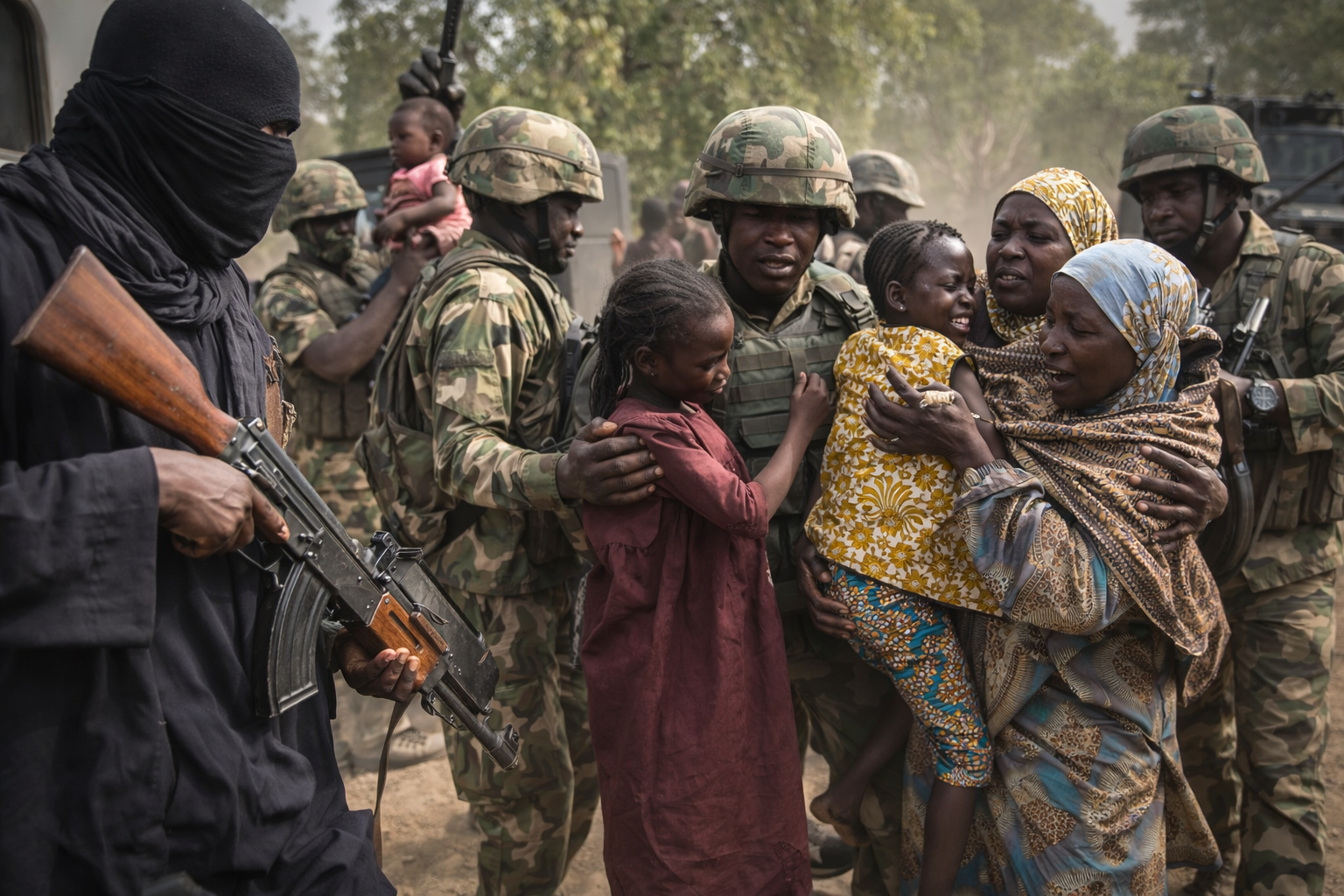
Nigeria has become tragically fluent in the choreography of mass abductions. The recent return of the last batch of pupils and teachers from St. Mary’s Catholic School, Papiri in Niger State, followed the familiar script, with headlines assuring the public that no child remained in captivity. Similar stories emerged from Kebbi, where abducted schoolgirls were freed, and from Kwara, where 38 worshippers regained their liberty.
But “released and reunited with their families” is not an ending; it is the opening line of a new and often lonelier struggle. When policy stops at the point of rescue, Nigeria quietly abandons survivors to navigate trauma, stigma, and unsafe schools with almost no structured support. Rescue makes for good television; the long road to recovery is where serious governance begins.
The images of smiling children on buses and parents clutching their loved ones are powerful and necessary. However, if we measure success only by the number of people brought home, we miss the deeper obligation of the state: to ensure that those bodies, minds, and communities can heal and learn in safety.
Nigeria has lived this cycle for more than a decade. Chibok and Dapchi were global wake-up calls, yet UN agencies still flag glaring gaps in protection and long-term support for abducted children and their communities. Even where the Federal Government has earmarked funds (such as the ₦1.85 billion rehabilitation package for rescued Chibok girls) implementation is treated as an exception rather than a national standard. Children and adults emerging from captivity cannot simply be dropped back into their families and classrooms. Trauma does not vanish just like that.

Accounts from Papiri underscore the ordeal: beatings for making a sound, hiding from aircraft, and days on dirty river water, older children blindfolded and tied. These experiences leave scars that demand more than a handshake and a staged photo-op. The promise of medical checks during the handover in Minna was welcome, but such measures should be routine, properly funded and audited, not improvised at the last minute.
Survivors need confidential medical screening, including sexual and reproductive healthcare, nutritional support, and immediate protection from re-traumatisation — no parading for cameras, no coercive interviews, no sensationalist coverage that treats their pain as spectacle.
Global best practice from UNICEF and trauma-informed education frameworks stresses early, dignified care anchored in safety, trust, and agency. Experts in Post-Traumatic Stress Disorder (PTSD) and child and adolescent mental health must form part of the first response and stay engaged over time, ensuring survivors are assessed, stabilised, and supported before and after they return home.
Crucially, care cannot end after a few days. Captivity rewires how children process fear, memory, and trust. Without sustained support, many disengage from school, develop chronic symptoms, or internalise shame and stigma, especially where sexual violence occurred. Research on school attacks in Nigeria shows girls fearing classrooms, parents withdrawing children, and families buckling under debt, shame, and social pressure.
Structured counselling, family therapy, peer-support groups, and carefully managed school re-entry plans are essential for at least six to twelve months. Governments should fund mobile mental-health teams. Healing takes time; public policy must be patient enough to match that timeline.

Education continuity is another urgent front. Rescue is meaningless if children never feel safe enough to learn. UNICEF’s monitoring of the Minimum Standards for Safe Schools shows that only about a third of assessed schools in 10 states have early-warning systems; safe infrastructure and hazard preparedness remain weak. The Papiri abduction has renewed calls for practical measures like stronger perimeter security, basic access control, and improved real-time communication.
Governments should conduct rapid safety assessments for every receiving school within two weeks of a major incident, and implement layered security. The Chibok programme’s blend of tuition, accommodation, medical care, and psychosocial support offers a template that should be adapted, localised, and scaled with transparent budgets and measurable outcomes, instead of being treated as a one-off gesture.
Community dialogues are vital to prevent stigma, especially for survivors of sexual violence, and to rebuild trust between citizens and the state. Justice processes must be survivor-friendly: statements taken once, with legal and psychosocial support present, and evidence gathered in ways that do not force survivors to relive their ordeal for the convenience of bureaucracy or the media. When the justice system becomes another source of harm, families retreat, and impunity deepens.
Ultimately, the only sustainable “aftercare” is robust before-care. Safe-school engineering, trained school-based management committees, and conflict-risk mapping are not luxuries; they are far cheaper than ransom-fuelled kidnappings that shut schools and shrink futures. Security responses must be intelligence-led and accountable; investigations into notorious cases should translate into doctrine, training, and resourcing, not just talking points.
Nigeria may have shown that it can mobilise to secure releases of kidnapped victims. The next test is whether it can mobilise with equal urgency to secure recovery: of body, mind, classroom, and community. Rescue is the start line, not the finish tape. If we let the story end at “reunited”, we script a quiet, cruel sequel. If we invest in healing, safety, and learning, we write a different ending — one that honours courage, restores dignity, and keeps every child in school.