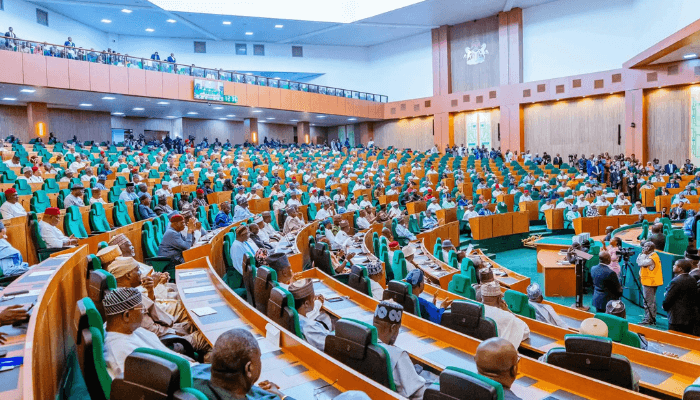
The House of Representatives has approved a revised ₦48.3tn 2025 Appropriation Act and extended its implementation to March 31, 2026.
The House, during plenary session on Tuesday, approved the repeal and re-enactment of the 2025 Appropriation Act, revising the total size of the budget from ₦54.99tn to ₦48.32tn.
The extension is aimed at ensuring the release and utilisation of at least 30 percent of capital allocations, a target President Bola Tinubu said had been consistently undermined by delayed cash releases and weak execution capacity.
The revised 2025 budget authorises expenditure of ₦48,316,242,591,785 from the Consolidated Revenue Fund of the Federation. This comprises ₦3.65tn for statutory transfers, ₦14.32tn for debt service, ₦13.59tn for recurrent non-debt expenditure, and ₦16.77tn for capital expenditure and development fund contributions. The spending authority will now cover the period ending March 31, 2026.

The House also approved changes to the 2024 budget year, endorsing the repeal and re-enactment of the ₦43.56tn 2024 budget.
The re-enacted 2024 budget authorises total spending of ₦43,561,041,744,507, including ₦1.74tn for statutory transfers, ₦8.27tn for debt service, ₦11.27tn for recurrent non-debt expenditure and ₦22.28tn for capital expenditure and development fund contributions, for the year ending December 31, 2025.
Presenting the committee’s report, Abubakar Abubakar, chairman of the House Committee on Appropriations, said the revised figures and extended timelines were intended to address persistent weaknesses in capital budget implementation.
He said the adjustments would help MDAs plan more effectively and reduce the incidence of abandoned or delayed projects caused by late fund releases.

The approvals followed the request by president Bola Tinubu in a letter dated December 18, which was read during plenary by the Speaker of the House,
In his letter to the National Assembly, Tinubu described the request as part of broader fiscal reforms designed to strengthen planning, execution and accountability in public spending. He said the proposed adjustments were necessary to align budget implementation with current fiscal realities and to restore credibility to the budgeting process.
Tinubu, argued that extending the life of the 2025 budget would help break the cycle of multiple budgets running concurrently, a problem that has complicated fiscal management in recent years. He said the proposed approach would ensure that capital releases are better aligned with project timelines and execution capacity across government agencies.