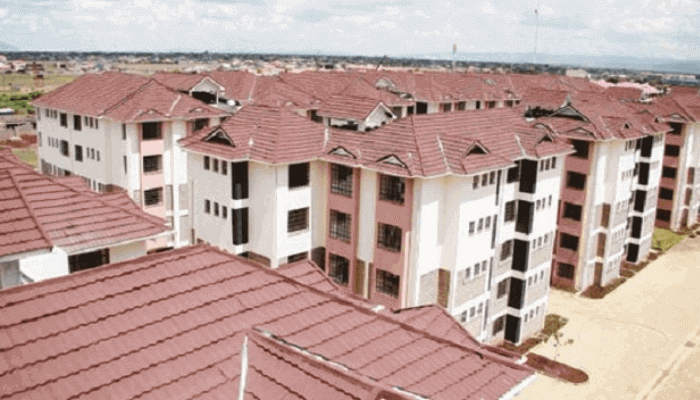
On incremental basis, concerns are mounting over regulatory oversights and safety of investments that could trump the boom which short-let properties are recording across Nigerian cities, notably Lagos, Abuja and Port Harcourt.
Clear regulation is absent unlike what obtains in developed markets where short-term rentals are taxed, registered, and monitored. In Nigeria, this segment of the rental market largely operates in a grey zone.
Emmanuel Chiedu, an estate surveyor and valuer, notes that many operators neither pay hospitality taxes nor comply with safety and zoning laws, stressing that this lack of structure exposes the sector to potential government crackdowns and investor- losses if sudden regulations are introduced.
Chiedu pointed out that recent incidents have further amplified the need for oversight, adding that there have been reports of security breaches, property vandalism, and criminal activities linked to short-let apartments.

“Without standardized background checks or property management protocols, both hosts and guests face risks that could easily spiral out of control,” he said, suggesting that state governments, particularly in Lagos and Abuja, should introduce policies that balance profitability with accountability.
He suggested further that registration and licensing of short-let operators, safety inspections, and taxation frameworks should be implemented to formalize the sector, adding that a centralized digital registry could help track operators, ensure compliance, and protect consumers.
“For investors, collaboration with professional property managers can help maintain standards, manage risks, and protect their investments in the long term,” insisting that without clear regulations, this thriving market could easily tip into chaos.
Short-let properties have, undoubtedly, opened new frontiers for real estate investors, creating jobs and stimulating local economies.
For many property owners, short-lets have redefined real estate profitability. The rising demand which it enjoys is driven chiefly by the influx of tourists, business travellers, and digital nomads, with which it offers flexibility and quick returns.

The attraction to these properties stems from the fact that they generally offer facilities like 24-hour Internet access, 24-hour power supply and water, air conditioning, fully furnished, access to Digital Satellite Television (DSTV), Closed Circuit Television for security, standby security guards, parking spaces, sporting facilities, car hire and laundry services.
Statistics from research conducted by Precedence shows that global serviced apartment market size accounted for $126.88 billion in 2024, grew to $143.04 billion in 2025 and is projected to surpass around $420.89 billion by 2034, representing a healthy Compound Yearly Growth Rate (CAGR) of 12.74 per cent between 2024 and 2034.
Similarly, data from the BuyLetLive 2024 Nigeria Property Price Index Report shows that the short-let market has recorded impressive rent increases in the last 24 months, explaining that, in 2023, it recorded 12.95 percent price rise which rose to 46.4 percent in 2024, representing over 200 percent increase.
BusinessDay findings show that demand is so high now that people rent apartments and purposely furnish them for short-lets because, according to them, the amount they make on a weekly or monthly basis triples the amount realisable from the yearly rent.
Basil Ovie, an estate manager, explained to BusinessDay that a decent two-bedroom flat in the Magodo area of Lagos, on average, goes for about N1.8 million or N2 million, while a two-bedroom short-let in same location goes for between N65,000 and N70,000 per day. “If you have a client that could pay for a month, you can imagine the income you get,” he said
Ovie affirmed that many discerning investors are taking advantage of the boom to diversify their investment portfolio with high-yielding luxury assets converted to short-let apartments.
In Lagos, short-let apartments offer return on investment (ROI) in highbrow locations like Ikoyi, Ikeja Lekki, Omole Phase 1, Victoria Island, Surulere, Yaba and Banana Island. In some of these locations, one-bedroom short-let apartment commands an average daily rate of N110,000, giving a yearly revenue of N26 million per unit.
In some locations in Abuja, one-bedroom short-let apartment with a kitchen and 24-hour power supply goes for N180,000 per day, a two-bedroom N80,000 to N130 000 while a three-bedroom per day unit can be N280,000 to N300,000, depending on the location.
In Port Harcourt, the average price of short-let apartments is N120,000 daily. Prices also depend on locations and facilities offered in the apartments. Also, in Ibadan, prices of short-let apartments range from N60,000 to N160,000 per day depending on sizes, location and features.