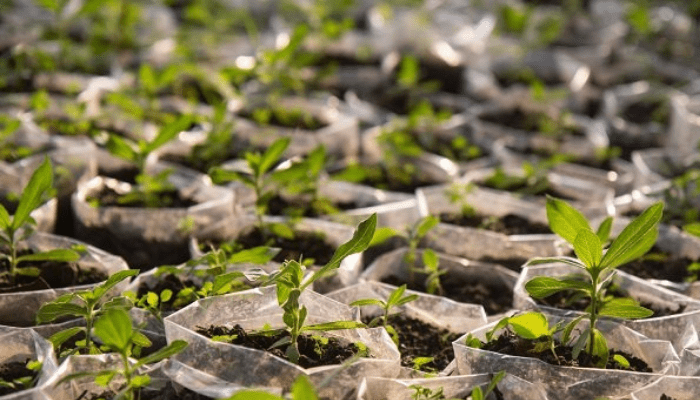
A tree can feed a family, protect a home, and educate a child. Reforestation is social development in green disguise.
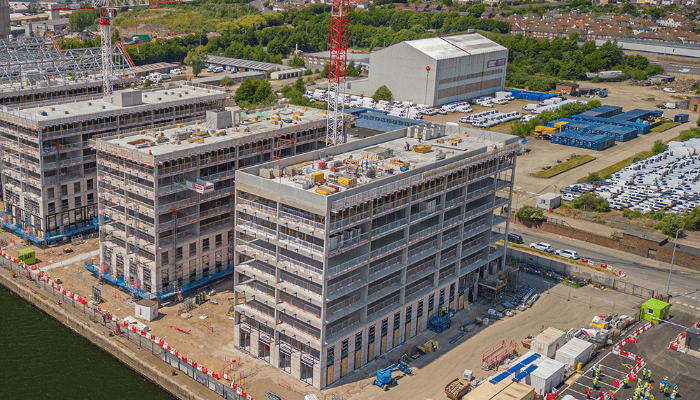
When we talk about infrastructure in Nigeria, our minds instinctively go to roads, power plants, schools, hospitals and broadband cables. These are visible, concrete, and politically tangible assets. Yet one of the most powerful forms of infrastructure underpinning community wellbeing, livelihoods and resilience is often overlooked because it does not look like steel or cement. It looks like trees.
Reforestation, when designed intentionally, functions as social infrastructure. It supports livelihoods, protects homes, stabilises health outcomes, strengthens social cohesion and creates intergenerational opportunity. In many rural and peri-urban communities, trees quietly deliver what governments and markets struggle to provide at scale.
At the most basic level, trees feed families. Fruit trees, agroforestry systems and community woodlots contribute directly to household nutrition and income. Mango, cashew, oil palm, moringa and plantain trees are not just ecological assets; they are productive economic units. For smallholder farmers and forest-edge communities, access to trees can mean diversified income streams, reduced food insecurity and protection against seasonal shocks.

In Nigeria, where climate volatility increasingly disrupts farming cycles, reforestation integrated with agriculture helps stabilise yields. Trees improve soil fertility, reduce erosion and regulate microclimates. This is not environmental idealism; it is practical risk management for rural economies. A tree planted today can be the difference between a family selling assets during a drought or surviving with dignity.
Trees also protect homes. Flooding, desertification and erosion are no longer abstract climate risks; they are daily realities across Nigeria. From gully erosion in the South-East to advancing desert margins in the North, environmental degradation destroys homes, roads and community assets faster than public budgets can replace them. Forest cover acts as natural defence infrastructure, slowing water runoff, stabilising soils and buffering communities against extreme weather.
When trees are removed, communities pay the price through collapsed houses, washed-away farmlands and displacement. When trees are restored, they provide protection that no concrete wall can replicate at a comparable cost. Reforestation, therefore, is not just climate action; it is disaster risk reduction and community protection rolled into one.
Health outcomes are another quiet dividend. Trees improve air quality, regulate temperatures and reduce heat stress, which is a growing public health concern in urban and rural Nigeria alike. Shaded environments reduce respiratory illnesses, improve mental well-being and create safer spaces for children and the elderly. In communities without reliable access to healthcare, prevention through healthier environments becomes even more critical.
There is also a powerful education link. When reforestation projects are community-driven, they often create employment opportunities that keep children in school rather than on the streets or farms. Income from forest-based livelihoods can pay school fees, while tree-planting initiatives themselves become platforms for environmental education and skills development.

In some communities, schools are built or rehabilitated as part of reforestation benefit-sharing arrangements. In others, young people are trained in nursery management, monitoring, digital mapping and sustainable land use. The forest becomes a classroom, and sustainability becomes a lived experience rather than a theoretical concept.
Critically, reforestation strengthens social cohesion. Community forests require collective governance, which includes agreements on land use, benefit sharing, protection and monitoring. When done right, they rebuild trust, empower local leadership and give communities a shared stake in long-term outcomes. In a country where social fragmentation is a growing risk, projects that incentivise cooperation and shared stewardship are invaluable.
From an ESG perspective, this reframes how businesses and policymakers should view reforestation. Too often, tree planting is treated as a peripheral CSR activity or a carbon-offsetting afterthought. But when aligned with community needs, reforestation delivers measurable social returns alongside environmental gains.
For companies, this is an opportunity to invest in assets that reduce social risk across their value chains. For governments, it is a cost-effective complement to overstretched social infrastructure budgets. For development partners, it is a scalable model for inclusive growth and climate resilience.
However, not all reforestation delivers social value. Poorly designed projects that exclude communities, ignore land rights or focus solely on monoculture plantations can do more harm than good. Social infrastructure requires participation, equity and long-term thinking. Trees must be planted with people, not just for carbon metrics.
As Nigeria navigates climate pressures, economic uncertainty and demographic growth, we must expand our definition of infrastructure. Roads and power matter, but so do forests that feed families, protect homes and educate children. Reforestation is not a luxury or a nice-to-have. It is social development in green disguise, and truly, reforestation is one of the smartest investments we can make in the future of our communities.
Sarah Esangbedo Ajose-Adeogun is the founder and managing partner at Teasoo Consulting Limited, a foremost ESG consulting firm. She is a former Community Content Manager at Shell Petroleum Development Company and served as the Special Adviser on Strategy, Policy, Projects, and Performance Management to the Government of Edo State. She is also the host of the #SarahSpeaks podcast on YouTube @WinningBigWithSarah, where she shares insights on leadership, strategy, and sustainable growth.