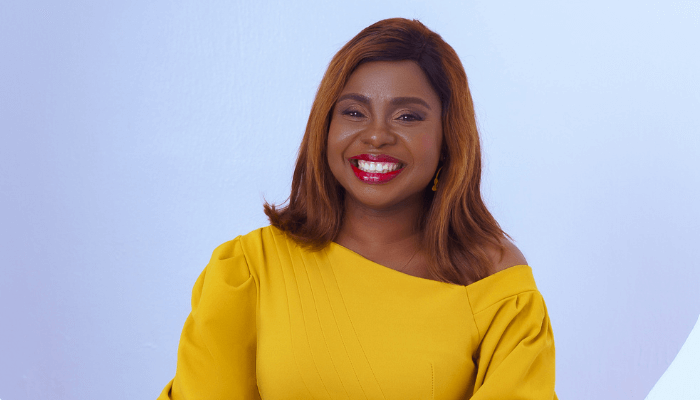
Adedolapo Osuntuyi is a social impact leader, education equity advocate, and founder of Dolly Children Foundation, a nonprofit committed to transforming the future of underserved children through access to quality education, teacher training, and community. With over 15 years of experience, she has impacted 23,000+ children, trained 2,500+ teachers.. A YALI Fellow, published author, and Education Champion (African Humanitarian Awards 2025), Osuntuyi is passionate about breaking cycles of poverty and ensuring that no child is left behind. She is also the convener of the Edufuture Conference and actively works at the intersection of policy, education, and social justice across Africa.
Osuntuyi’s father’s childhood story has been a deep source of inspiration for her. He was fortunate to benefit from the free primary education introduced by Chief Obafemi Awolowo in the Western Region; an opportunity that changed the trajectory of his life. Hearing those stories growing up, opened her eyes to the life changing power of access; hence the inspiration behind ‘Dolly Children Foundation’. In this interview with IFEOMA OKEKE-KORIEOCHA, she takes us through the journey of 16 years in the foundation, the success stories and aspirations for the future.
This April marks 16 remarkable years of Dolly Children Foundation. Looking back, what was the original inspiration behind founding this initiative?
The original inspiration came from witnessing, first-hand, the heartbreaking realities of children growing up without access to quality education especially in underserved communities. My father’s story, growing up as a brilliant child who couldn’t go to school due to poverty, stayed with me. I realized there were still thousands of ‘little Simeons’ out there, whose dreams were being cut short not because they lacked potential, but because they lacked opportunity. I knew I had to be part of the solution.

How has the foundation evolved over the last 16 years—from your initial goals to the reality of today?
We began with a simple goal: to support a few children in staying in school. Sixteen years later, Dolly Children Foundation has grown into a dynamic, multi-faceted organization driving real change at the grassroots. What started with tuition and scholarship support has now expanded into literacy programs, after-school enrichment, mentorship, skills training, school refurbishment projects, and holistic support for children and their families—including mothers. Today, we operate in multiple communities, offering integrated programs that empower not just children, but also the women who raise them. We’ve also launched the Edufuture Conference, now a premier platform for education innovation, advocacy, and action in Africa. Through this initiative, we bring together policymakers, educators, and change makers to accelerate progress toward SDG 4 (Quality Education), SDG 10 (Reduced Inequalities), and SDG 17 (Partnerships for the Goals).
While the scale of our work has grown, the core of our mission remains unchanged: to ensure that every child regardless of background has the opportunity to learn, grow, and thrive.
With over 23,000 children reached, what would you say are the most defining success stories or metrics that reflect the foundation’s impact over the years?
Every child’s transformation is a story worth telling. But I’m especially proud of children like Fathia, who was at risk of dropping out but is now thriving in school, thanks to a sponsor who believed in her. Or Pamilerin, who we supported all through primary school and recently wrote her WAEC and NECO. Beyond numbers, these stories reflect real, lasting impact. Reaching over 23,000 children isn’t just a metric, it’s a movement of hope.

What are some memorable turning points or challenges in these 16 years that significantly shaped the growth of Dolly Children Foundation?
One turning point was when we decided to run a free-tuition school for children in hard-to-reach communities. It was a leap of faith that required serious fundraising and restructuring. Another challenge was navigating the COVID-19 pandemic, which forced us to rethink how we deliver impact remotely. But through every challenge, our resilience and the unwavering support of our team and partners kept us going.
Your partnership with organisations like OPay Digital Services Limited and Gamaliel & Susan Onosode Foundation has expanded your reach. How do such collaborations enhance your mission and sustainability?
Collaborations like these bring not just resources, but new energy, innovation, and reach. With OPay and Gamaliel & Susan Onosode Foundation, we were able to scale the Back -to-School Project and support more children. Partnerships help us stay accountable, amplify our impact, and ensure sustainability. They remind us that we’re not alone – there are many others committed to building a better future for children.
The foundation’s story has personal roots especially linked to your father’s childhood experiences. Could you shed light on how this shaped your passion for child empowerment?
Absolutely. My father’s childhood story has been a deep source of inspiration for me. He was fortunate to benefit from the free primary education introduced by Chief Obafemi Awolowo in the Western Region; an opportunity that changed the trajectory of his life. That initiative gave many children in his community, including him, their very first chance to sit in a classroom. Hearing those stories growing up opened my eyes to the life changing power of access. It made me realise that when education is made available and accessible, even at the most basic level, it can ignite possibilities and transform generations. That realisation is what fuels my passion to ensure that no child is left behind simply because of where they were born or what their family can afford.
You were recently recognised with the African Humanitarian Award as an ‘Education Champion.’ How does this recognition affirm your journey and fuel your next steps?
Receiving the African Humanitarian Award as an ‘Education Champion’ was both humbling and deeply affirming. For me, this work has never been about recognition; it’s a response to a higher calling and a deep, personal desire to positively impact lives, especially those of children who would otherwise be forgotten by the system. So, the award wasn’t just a celebration of my efforts; it was a powerful acknowledgement of the collective dedication of every volunteer, donor, partner, and child who dared to believe in the power of education. It reminded me that the world is watching, and that the seeds we plant no matter how quietly are growing. This recognition fuels my resolve to go even further, to speak louder for the voiceless, and to ensure that quality education becomes a reality for every child, not a privilege for a few.
As you celebrate 16 years of impact, what are the next big dreams or aspirations for Dolly Children Foundation?
The dream is to scale our impact nationally and regionally, to adopt more underserved schools, expand our scholarship and mentorship programmes, and build a fully equipped learning hub. We also want to push policy conversations around last-mile learning and educational equity. Ultimately, the goal is to close the gap, one child and one community at a time.
In what ways are local communities actively involved in your programmes, and how do you ensure that your interventions remain culturally relevant and sustainable?
Community inclusion is at the heart of what we do. We engage local leaders, parents, caregivers and even the children themselves in designing and implementing our programmes. By listening first, we ensure our interventions are rooted in the community’s context. This bottom-up approach helps us build trust, promote ownership, and ensure long-term sustainability.
What message do you have for donors, partners, and volunteers who have stood with you over these 16 years and what would you like new supporters to know?
To our long-standing supporters: thank you for being the wind beneath our wings. Your belief in our mission has made this journey possible. To new supporters, we welcome you on board. You’re not just giving to a cause; you’re joining a family of changemakers rewriting the stories of children who once had no chance.
Lastly, what advice would you give to young changemakers in Nigeria who want to build enduring impact-focused organisations like yours?
Start with passion, but build with purpose. Be consistent. Lasting impact takes time and patience. Surround yourself with people who believe in your vision, and never underestimate the power of starting small. Every meaningful movement begins with a single, bold step. Above all, stay connected to the people you’re trying to serve. Let their voices, needs, and realities shape your solutions because true and lasting change doesn’t come from the top down; it grows from the ground up.