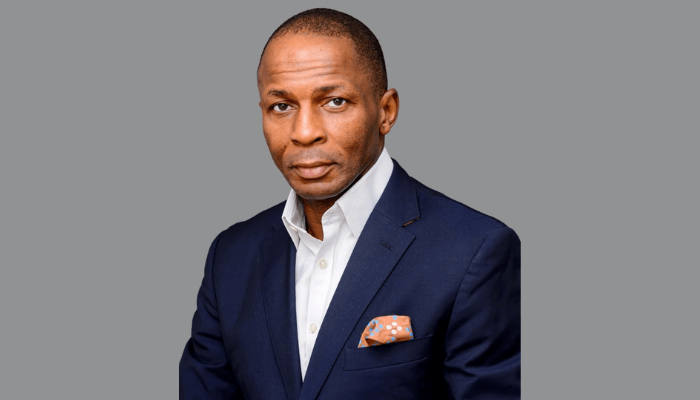
With the growing awareness and demand of end users coupled with the complexity of modern infrastructure, there is an increasing need for facilities management to adopt global best practices in Nigeria or, if such best practices are not achievable, at least adapt them to suit our peculiar circumstances.
From a practitioner’s understanding, facilities management has to do with people, process, place and technology. It integrates all these to make a built environment ideal and a place of comfort for those who use it. The built environment may also enjoy the benefits of longevity and value appreciation.
Every infrastructure is designed for a particular purpose, and this determines the kind of maintenance required to keep it in excellent condition despite natural wear and tear. For instance, a hotel is a place guests come to stay, attend an event or visit for relaxation.
It must, therefore, be in such condition that those who make use of it can enjoy the facilities provided. It will be unacceptable if electricity is unstable, the a/c system malfunctions, the toilets have no constant water supply, and the environment is generally untidy.

Read also: FM as a strategic planning function (Infrastructure maintenance with Tunde Obileye)
To achieve strong growth and best practice, the activities of facilities management practitioners ought to be regulated as is done with most other professions like law, accountancy, medicine, architecture and engineering, to name a few. This includes adhering to minimum acceptable ethical, moral and professional standards.
Currently, this is not the case as such standards exist only on paper without FM practitioners being held accountable for their professional actions. Oftentimes, health and safety considerations are ignored with vendors, contractors, artisans, FM staff wearing slippers instead of safety boots in designated areas.
Legislation is required to create a robust landscape for the practice of FM. Few legislations exist, such as the Factories Act, Environment Impact Assessment (EIA) Act and more recently Facilities Management and Maintenance Law of Lagos state.
However, more work is required to deepen the regulation and practice of FM in Nigeria, including advocacy and policy-making. To this extent, the Institute of Workplace and Facilities Management (IWFM) is starting a webinar series on Ethics and Standards. What obtains now is that most FM professionals carry on, believing that they understand what to do.

Legislation and regulation will make it mandatory for existing and prospective FM professionals to acquire the necessary training, skills and apply a code of conduct. For the moment, a high percentage of people still don’t have the competence and skill set to practice in this industry.
Read also: 2025: Time for FM practitioners to push boundaries
As a result, many FM professionals end up creating more problems for clients when assigned tasks. With the necessary framework in place, professional misconduct can be handled according to laid-down rules and guidelines
My strong view is that we have to evaluate what we do, determine if it meets global best practice, if not, aim to achieve it or at the minimum set an achievable standard that gives customer satisfaction. We need to look outside our local environment and adopt what other countries that have done so well in this industry. The ISO 410001-2018 will also be very useful.
The growth of the industry requires collective effort from all stakeholders, including the government, private sector operators and the industry practitioners. It will require educating people to know about the FM industry in order to understand what it entails.
To develop and grow the industry, I believe it is time we start defining the criteria for standards and best practices for existing and prospective practitioners in facilities management.