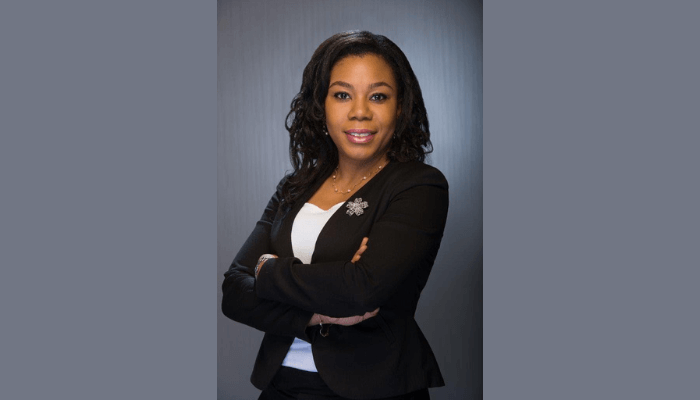
Boyede Adebanjo is the Director, Beehive School Nigeria, a long-standing, family-owned educational institution in Ikeja, Lagos, known for its commitment to academic excellence and holistic child development. At the helm of its new era is Boyede Adebanjo, a finance executive turned education leader, now serving as the Director of Beehive School.
She represents the second-generation leadership of the school, succeeding her mother, who founded and led the institution for over three decades. Her transition into this role marks not just a generational milestone but a strategic evolution in the school’s mission to raise future-ready children.
With a professional background that includes over 20 years of executive leadership in finance and strategy roles across the UK and Sub-Saharan Africa, Boyede Adebanjo brings a global perspective and a fresh vision to education. She holds a BSc in Economics and Accounting, an MBA from the Manchester Business School, and is a Fellow of both the ACCA (UK) and ICAN (Nigeria). Under her leadership, Beehive School is redefining what it means to educate children in the 21st century, integrating critical thinking, global exposure, digital literacy, and character development into the fabric of everyday learning.
In this interview with IFEOMA OKEKE-KORIEOCHA, she speaks on her transition from corporate finance to education, vision for raising children who are globally aware, emotionally intelligent, and future-ready and what second-generation leadership looks like in a legacy institution amongst others.

What inspired you to transition from a successful finance career to education leadership?
My journey into educational leadership was deeply personal. My mother had run the school for many years with love, dedication, and a meticulous eye for detail. When she fell ill, I stepped in part-time to support her. During that time, observed how the little things she would instinctively manage, that made the school warm, nurturing, and special were overlooked. This stirred something in me. I began to see the school not just as a place of learning, but as a space where destinies could be shaped, where children could be grounded in values, confidence, and excellence. What began as a temporary support turned into a calling. I made the life-changing decision to resign from my job and fully take on the leadership of the school. We began the process of repositioning it with a stronger structure and renewed vision. Since then, it has been my greatest joy to nurture young minds and build an institution that prepares children not just academically, but holistically, for life. My motivation has always been to make a difference, to contribute to a generation of children raised with love, purpose, and high standards. What started as a family legacy has become a life mission, and I’m grateful for the journey.
How do you think your finance background has influenced your approach to education?
I have a professional background in financial services, having worked in both the United Kingdom and Nigeria. My training as a chartered accountant gave me a strong foundation in discipline, structure, and corporate governance skills I never imagined I would one day apply to early childhood and primary education. My background has significantly shaped my approach to education: I practice data-driven decision making, Risk management and strategic planning and a business mindset in administration. We also place an emphasis on Financial literacy for staff and pupils.
What were some of the biggest challenges you faced in making this transition?

I stepped into educational leadership within an already established institution, one rich in history, traditions and low staff turnover. Taking on such a role required humility and patience. I had to earn trust, particularly from longstanding staff. I didn’t come in trying to change everything overnight. Instead, I observed, I listened, and I made it clear that I was not there to impose, but to serve, to build on what was working and quietly challenge what wasn’t. My journey in educational leadership has been one of quiet resolve, deep listening, and consistent integrity. I’ve never been the loudest in the room, but I’ve learned that leadership isn’t about volume, it’s about vision, values, and the ability to bring others along, often from behind the scenes. On a lighter note, another challenge I faced was the change in what work looked like on a daily basis in finance versus in education. Suddenly I moved around much more and had more human interaction. Less time on the laptop, getting lost in figures. I soon swapped high heals for more comfortable shoes to help solve this particular challenge.
What does it mean to be “future-ready” in today’s rapidly changing world?
As a school leader, being “future-ready” means preparing myself, the learners and the school community to thrive in a world that is constantly evolving socially, technologically, and economically. By embracing life-long learning, prioritizing skills over rote knowledge, leveraging technology responsibly, leading with vision and flexibility and building resilient, ethical citizens.
How do you think schools can best prepare children for the challenges and opportunities of the 21st century?
Schools can best prepare children for the challenges and opportunities of the 21st century by broadening their focus beyond academics to develop well-rounded, adaptable individuals who can think critically, solve problems creatively, and navigate an increasingly complex world with empathy and confidence. We do this by teaching for transfer and not just tests, embedding 21st century skills into the curriculum, creating safe, inclusive spaces for expression, encouraging innovation and curiosity and building resilience and character. A school cannot do it alone. Building strong home-school-community partnerships ensures students are supported holistically, academically, emotionally, and socially.
What role do you think emotional intelligence, global awareness, and digital literacy play in shaping future-ready children?
Emotional intelligence, global awareness, and digital literacy are no longer “nice-to-haves” — they are foundational pillars for shaping future-ready children. Together, they equip young people to thrive in a world that is connected, diverse, and
constantly evolving.
Emotional Intelligence: A child who can navigate social situations, handle setbacks, and work well in teams will always stand out, no matter the profession or environment.
Global awareness: nurtures compassion and cooperation which are essential traits for solving the world’s biggest problems.
Digital literacy: children must not only be tech-savvy but tech-wise. Creating, not just consuming digital content. It’s about preparing students to lead and innovate in a digital world while staying grounded in values and critical thinking.
How do you see Beehive School evolving under your leadership, and what are some of the key initiatives you’re driving?
Under my leadership, I see Beehive School continue to evolve its future-focused, values-driven learning community. One that nurtures not just academic excellence, but also character, creativity, and global readiness. We are focused on creating a more
inclusive and supporting environment for pupils with diverse learning differences. Through intentional teaching of critical thinking, collaboration, digital literacy, and communication, we’re preparing students for real-world challenges and opportunities. Integrating STEAM-based learning and hands-on projects as well as using Digital tools purposefully to enhance creativity and problem-solving. We are increasing investment in Teacher Growth and Innovation by creating a
continuous professional development platform that will help teachers on the growth journey. And finally expanding global connections for the school community.
What are some of the most significant changes you’ve made to the school’s curriculum or approach since taking over as Director?
Since taking over as Director, several key changes have been introduced to align Beehive School with the demands of a rapidly changing world. One of the most significant shifts has been the strengthening of our global partnerships. Through our affiliation with the Cambridge International Programme, our partnership with the African Leadership Academy, and our membership of the Global Schools Forum network, students and teachers now benefit from broader global exposure, diverse learning perspectives, and opportunities that stretch their thinking beyond local boundaries. We’ve also expanded our STEAM offerings, placing a stronger emphasis on coding, robotics, and hands-on innovation. This not only sparks creativity but builds essential skills such as analytical thinking, experimentation, and design thinking. Equally important, we’ve been intentional about infusing critical thinking and problem-solving into every part of our curriculum. These skills are no longer confined to one subject or lesson; they are now a thread that runs across how we teach, assess, and engage students. Together, these initiatives are helping to shape a generation of confident, curious, and globally-minded learners who are ready to lead and thrive in the 21st century.
How do you balance the school’s legacy and tradition with the need for innovation and modernisation?
Balancing legacy with innovation is one of the most delicate and important responsibilities of school leadership — and at Beehive School, we see it as a strength rather than a tension.
Honouring the Legacy: Our school has been built on strong values, deep community roots, and a commitment to excellence. These traditions provide a solid foundation — a sense of identity and continuity that we are proud to preserve. We continue to uphold the ethos that has shaped generations of learners: discipline, integrity, and a culture of care.
Embracing Innovation Thoughtfully: At the same time, we recognise that preparing children for the future requires constant reflection and evolution. So we:
● Modernise our teaching methods while keeping the heart of education intact. Introduce STEAM, coding, robotics, and global perspectives without losing sight of character and foundational learning.
● Blend traditional values with 21st-century skills, ensuring our students are both grounded and globally competent. We maintain a Culture of Intentional Growth. Rather than change for its own sake, we pursue intentional innovation — guided by our mission, informed by global best practices, and shaped by the needs of today’s learners. The goal is not to replace tradition, but to build upon it, so that Beehive School remains relevant, resilient and respected for generations to come.
What are some of the unique challenges and opportunities that come with being a second-generation leader in a legacy institution?
Being a second-generation leader in a legacy institution like Beehive School is both a deep honour and a profound responsibility. I didn’t just inherit a title, I grew up alongside the school. I’ve seen it evolve from its early years, witnessed the sacrifices and vision that built it, and internalised its core values long before stepping into a leadership role. Now, as both a leader and a past parent whose children also attended Beehive, my connection to the school is personal, generational, and deeply rooted. One of the unique challenges is balancing emotional legacy with objective leadership. There’s a natural pressure to preserve what was built not just in structure, but in spirit. At the same time, I must lead with clarity, courage, and a willingness to innovate, even when that means rethinking old systems or making difficult decisions. There’s also the challenge of earning credibility not just as the founder’s successor, but as a capable leader in my own right. While the legacy opens doors, it also comes with high expectations and constant comparisons.
But the opportunities are just as powerful. My lived experience gives me a rare insight into the soul of the school — its heartbeat, its history, and the hopes it was built on. That perspective allows me to lead with authenticity and empathy. I also have the opportunity to build a bridge between generations — honouring the past while ushering in a future that reflects today’s realities and tomorrow’s possibilities. From expanding global partnerships to embracing digital learning and reimagining our approach to teaching and leadership, I see this moment as a unique turning point — and I’m grateful to be part of it.
How do you think your mother’s legacy and vision for the school have influenced your approach to leadership?
The legacy of my mother, Latifat Barbara Dosunmu, is at the heart of everything I do at Beehive School. She was deeply passionate about education — not just as a profession, but as a calling. She lived and breathed it, and her belief in the potential of every child was evident in the way she led the school, and the way she raised us at home. What I carry most from her is her commitment to nurturing a growth mindset. She never saw children — or even staff and parents— as fixed in their abilities. She believed in progress, not perfection. That belief shaped the culture of Beehive from the very beginning and continues to guide how I lead today. Her passion taught me that education is deeply personal and transformational. That conviction grounds my decisions and priorities as a leader. Her ability to see and nurture the ‘invisible strengths’ in people especially those who didn’t always stand out — has influenced how I engage with students, staff, and families.
Most of all, her vision showed me that a school can be both rigorous and compassionate, both forward-thinking and deeply rooted in values. Stepping into this role isn’t just about continuing her work — it’s about evolving it with care. Her legacy gives me the courage to lead with empathy, the wisdom to listen before acting, and the passion to keep striving for excellence — not just in academics, but in the way we shape lives.
What do you hope to achieve as Director that builds on the school’s strengths while also driving new growth and innovation?
As Director, my hope is to honour Beehive School’s strong foundations while leading it into a new era of purpose-driven, future-ready education. Beehive has always been known for its strong values, nurturing environment, and commitment to excellence. These are our greatest assets — and I’m committed to preserving and deepening them. I want our children to continue to feel seen, supported, and stretched.
● I want families to feel part of a genuine community that partners with them in raising kind, confident, capable children.
● And I want our team to be inspired and equipped to deliver education that is relevant, reflective, and responsive. At the same time, I believe the world is changing — and so must we. My vision includes:
● Strengthening global partnerships to expose our students to broader ideas, cultures, and opportunities.
● Expanding STEAM learning, including coding, robotics, and design thinking, to build creativity and problem-solving skills.
● Embedding critical thinking and problem solving across the curriculum — not just as subjects, but as ways of learning and living.
● Investing in teacher development and innovation, so that our classrooms remain dynamic, future-focused, and child-centered.
Ultimately, I want Beehive to remain a school that shapes leaders with heart and mind, students who are academically equipped, emotionally intelligent, globally aware, and ready to thrive in whatever path they choose. This is not about replacing what works — it’s about building on our legacy to meet the needs of today, and anticipate the demands of tomorrow.
How do you balance the need for tradition and continuity with the need for innovation and modernisation in a school like Beehive?
Balancing tradition with innovation at a school like Beehive is about holding on to what matters most, while being open to what is needed next. Beehive was built on strong values — integrity, empathy, discipline, and a genuine love for learning. These form our identity and anchor. They remind us of who we are, where we started, and why we exist. We don’t innovate for the sake of change, we innovate to deepen impact and stay relevant without losing our soul.
Modernisation is essential, but it must be intentional and value-driven. That’s why we:
Run STEAM, coding, robotics, and other future-facing programs alongside our core academic foundation
● Use digital tools to enhance learning, not replace meaningful human connection
● Infuse critical thinking, problem-solving, and global awareness across the curriculum, while maintaining a culture of kindness, excellence, and accountability.
It’s not either-or. At Beehive, we see tradition and innovation as partners. Tradition gives us roots. Innovation gives us wings. Together, they help us raise learners who are grounded in values and ready for the world. As a leader, I am committed to preserving what makes Beehive special, while ensuring that we continuously evolve — so that every child who walks through our gates leaves not only educated, but empowered for a future we can’t yet fully see.
How do you see the school’s approach to education evolving in the years ahead, and what role do you hope to play in shaping that future?
In the years ahead, I see Beehive School’s approach to education evolving in ways that are more holistic, future-focused, and globally connected, while still remaining deeply rooted in our core values. We’re moving beyond traditional academics to nurture the whole child, intellectually, emotionally, socially, and ethically. I envision a learning environment that continues to:
● Prioritise critical thinking, creativity, collaboration, and emotional intelligence
● Embrace technology and innovation as tools for deeper learning, not distractions
● Embed real-world relevance through global perspectives, project-based learning, and community engagement
● Celebrate individual growth, recognizing that success looks different for every child
As Director, my role is to be a visionary and steward — someone who honours the school’s legacy while boldly pursuing what’s next. I hope to:
● Lead with purpose and clarity, ensuring every initiative is aligned with who we are and who we want our students to become
● Empower teachers to innovate, reflect, and continuously grow
● Create pathways for global engagement, strategic partnerships, and cross-cultural learning
● Keep Beehive at the forefront of relevant, values-based education in a fast-changing world
Ultimately, I want Beehive School to remain a place where children are not just educated, but transformed, where they are equipped with the knowledge, character, and confidence to make a difference, wherever life takes them.