The Rural Access and Agricultural Marketing Project (RAAMP) came into place in Nigeria with the mandate to elicit agricultural marketing using rural road construction as a major component that will ease transportation to the respective markets. In essence, the project targets the commercialisation of agricultural products at strategic market locations of the hinterlands that will coordinate farmers’ produce to the market.
Part of the mandate includes spot improvements, construction of bridges and culverts, building of stores and warehouses, establishment of internet services/training of youth and women for exposure to international trade and export orientation, job creation for the women and youth, provision of water via solar-powered boreholes, etc.
RAAMP is indeed the brainchild of the World Bank, the European Investment Bank, the French Development Agency and the African Development Bank, in conjunction with the federal government via the Federal Ministry of Agriculture and Rural Development, targeted at promoting the commercialisation of agricultural produce in line with global perspectives.
The project is particularly manned with supervision from the Federal Project Management Unit (FPMU) on behalf of the Federal Ministry of Agriculture and Rural Development, with other relevant supervision coming from donor partners.

RAAMP as a project came into Nigeria in different phases, but the Benue State government was able to key into the third phase of the project in 2016 with four other states, including Cross River, Anambra, Taraba and Gombe. The administration of President Muhammadu Buhari laid the foundation for the third phase, which the Benue State government, under the then Governor of Benue State, Samuel Ortom, obliged by paying the sum of 1.5 billion naira as a counterpart fund to complement donor-expected funding to the state.
Unfortunately, none of the donor partners had indicated interest at that time until December 2023, when the Benue State government, through its new State Project Coordinator, Stephen Sefa Numbeve, was invited for a deal by the European Investment Bank in Abuja. The third phase of the project started in 2016 with little remedial response under the Directorate of Engineering at the Ministry of Agriculture and Food Security. With this development, the succeeding directors managed the project but without success; hence, it was not funded at that time.

By 2018, the Benue State government, through the Ministry of Agriculture and Food Security, conducted interviews for successful members of the State Project Management Team (PMT), made up of the State Project Coordinator, the Project Accountant, the Infrastructural Engineer, the Project Procurement Specialist, the Monitoring and Evaluation Specialist, the Gender Specialist, the Environmental and Social Safeguard Specialist, the Management Information System Specialist and the Development Communication Specialist, with other support staff enlisted for the take-off of the project.
By 2019-2020 (March-August 2020), work had started in earnest with preliminary sensitisation of the project content involving critical stakeholders within the state to galvanise support and participation amongst actors in the agribusiness.

A visit to the office of the Speaker, Benue State House of Assembly, became imperative with additional advocacies to the Commissioner for Rural Development and Cooperatives and that of Works, Transport and Energy, including the Director of State Service.
The idea was to generate support from the legislative wing for a bill to establish the State Road Fund (SRF) and the Rural Access Road Agency (RARA) that can be used in generating revenue from the prospective sources and maintaining the same through the Agency for the durability of roads constructed. The affected ministries were also viewed as relevant partners that can collaborate on the success story, not forgetting the security formations as protective mechanisms for the execution of the project.
The advocacy was extended to the Commandant, Nigeria Army School of Military Engineering (NASME), to seek partnership with this profiled engineering institute for a robust infrastructural development drive; the Vice-Chancellor, Federal University of Agriculture, Makurdi, for her rich research-based platform; and the Vice-Chancellor of Benue State University, including the Director, Center for Food Technology and Research (CEFTER), that will be useful to the numerous consultants on food production and export.
The sensitisation processes include visits to key media outlets in the state, like the Nigeria Television Authority (NTA), Harvest FM, Benue Printing and Publishing Company (The Voice Newspaper), Radio Benue, and the All Farmers Association of Nigeria (AFAN), in addition to interfacing with Local Government Council Chairmen on providing grassroots mobilisation and ownership control of the project.
The moment also witnessed the procurement of 3 official vehicles and office equipment necessary for the smooth takeoff of the project pending donor partnership engagement. In the desire to replicate the project activities in line with best practices, 4 No roads were identified as pilot projects in selected local government areas of Guma, Gwer West and Oju local governments, respectively.
The first was the 30km road from Tomatar-Tomanyiin-Ormeagh-Akor-Iordye in the Guma local government.
The second was the 11.5 km spot improvement from Yogbo junction-Tse-Ikyum Kpev-TseYogbo village in Gwer West local government, with another 16.5 km road from Nagi Camp-Enger-TseAdudu-Agbu City village as the third, respectively.
The fourth was the 26 km spot improvement at Ojegba-Ukpila-IIega-Oboro Oho market square with a spur to the Ukpila-P-Ohuhu-Owo federal road junction in the Oju local government area.
Of the four roads, only the 30 km road from Tomatar-Tom Anyiin-Ormeagh-Akor-Iordye was completed. The other three roads suffered logistic and administrative problems with the former project coordinator and, as such, have been pending deliberations and renegotiation with the new project coordinator.
On assumption of duty, close to mid-year of 2023, His Excellency, the Executive Governor of Benue State, Hyacinth Iormem Alia, in his renewed leadership dynamics and passion to reposition the hinterlands of Benue, beamed a searchlight on the project by changing the leadership. The Governor immediately replaced the former Project Coordinator, Mone Aernyi, with Stephen Sefa Numbeve to turn around the fortunes of the organisation.
In view of the foregoing, the State Project Coordinator, Stephen Sefa Numbeve, resumed office in December 2023 to take over from his predecessor, Engr. Mone Moses Aernyi. Part of his mandate was to ensure he deploys his administrative arsenal, if necessary, to reposition the project to a world-class standard.
As the industrial mathematician cum computer scientist of international assent and World Bank acceptability, Number set the ball rolling by calling for an emergency meeting of staff to articulate his vision and mission content. He hurriedly succeeded in recalling some of the tested bureaucrats who were sidelined on the project out of the dogmatic proclivities and primitive egocentrics of the former project coordinator.
He immediately led the management team on a tour of all pilot projects, including the selection of new rural roads of agro-logistics significance. He also engaged the French Development Agency on the intended construction of 2 warehouses in each geopolitical zone of Benue State for post-harvest losses control of fresh meats, vegetables and citrus fruits.
Before then, the state coordinator had engaged the European Investment Bank for the construction of a 500 km network of roads across the rural areas of the state, including culverts, bridges, stores and warehouses. Others include the provision of potable water and the installation of ICT centres to expose youth to internet transactions to stimulate international trade and export orientation.
Numbeve also engaged Viable Consultants Nig. Ltd as a consultant for the design of 534 km of network roads; the state is partnering with the European Investment Bank to provide farmers access to markets when fully constructed.
In addition to this are his efforts to collaborate with the state government to comply with the conditions of the World Bank in providing for a law establishing the State Road Funds (SRF) and the Rural Access Roads Agency (RARA) as preconditions for securing funds for the construction of an additional 500 km network of rural roads in the state.
As a prerequisite to securing this partnership, the state government has initiated a bill seeking a law to establish the State Roads Fund (SRF) that will generate funds from prospective road users to finance the maintenance and rehabilitation of the affected roads, in addition to a law seeking the establishment of the Rural Access Roads Agency (RARA). RARA is to be headed by a Director-General to oversee the management of the affected roads at the expiration of the project, using the accumulated funds generated by SRF.
In the first quarter of 2024, he constituted an engineering team to supervise the design of a 300 km network of roads across the selected local government areas of the state, carried out by Viable Consultants Nig. Ltd. It is interesting to note that His Excellency, the Executive Governor of Benue State, Hyacinth Alia, graciously directed that the 23 local areas of the state should benefit from this exercise for the purpose of promoting agriculture in the state. In compliance with this directive, the State Project Coordinator has ensured that every local government area benefits from this.
Correspondingly, there is the design and supervision of an additional 200 km network of roads by July 2024 to make up the 500 km in line with World Bank directives.
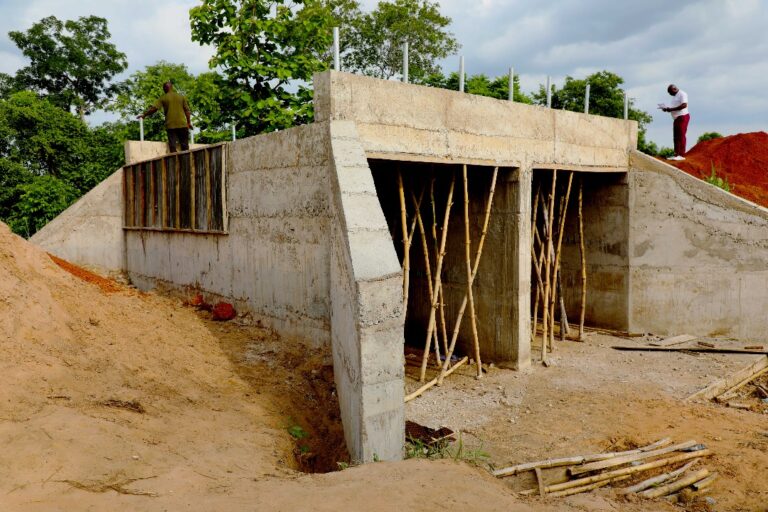
Infrastructure development: They have completed the construction of critical culverts in LGAs such as Vandeikya, Gboko, Otukpo, and Konshisha. Notably, the River Ushadaa Bridge in Mbangur-Mbadede, Vandeikya, has been completed. Other completed culverts include the box culvert at Ukyaagu, beside Ukyaagu Clinic in Vandeikya Township, which is completed; another one opposite the Sub-Treasury, Iornenge, which is also completed; a two-cell box culvert at River Atum, all in Vandeikya LGA; a two-cell box culvert at Ukpede Stream, Mbatser, in Konshisha LGA, which is also completed and ready for usage; and a single-cell box culvert at Uerku-Mba-Anku in Gboko LGA. Meanwhile, construction work on two culverts is ongoing in Otukpo LGA, with multiple culvert projects underway across various communities in the state.
Rural road expansion: He surveyed and designed work for 57 roads totalling over 534 km of rural roads, spanning all 23 LGAs, and has been completed, laying the groundwork for greater market access and connectivity for remote communities.
Institutional strengthening;
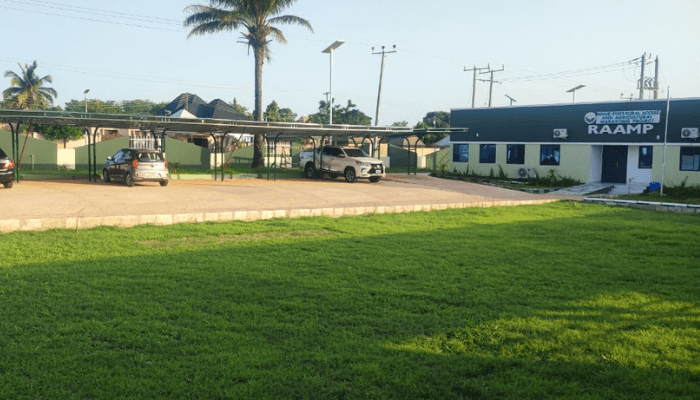
•The SPIU office has been remodelled into a modern workspace.
• A utility vehicle has been procured to boost staff mobility and monitoring efficiency.
• A solar powerhouse has been constructed to ensure an uninterrupted power supply, enhancing operational efficiency.
• BN-RAAMP now boasts a world-class conference facility to host planning sessions, stakeholder meetings, and training.
Farmer support initiatives: plans are underway to procure 2,000 motorcycles, 2,000 tricycles, and 3,000 mini-buses for farmers at subsidised rates, reducing post-harvest losses and improving market access.
Community welfare: Two motorised boreholes have been installed at the RAAMP office with public access points, easing water scarcity for nearby communities. Another has been sunk at Diiv Market Square, Shangev-Tiev, Konshisha LGA, to address the perennial water scarcity in the community.
All of these would not have been possible without His Excellency’s commitment, particularly the timely release of ₦1.5 billion as counterpart funding, which unlocked access to critical financing from the European Investment Bank (EIB) and RAAMP Scale-Up.
As we look back with pride and forward with hope, I extend warm congratulations to Governor Alia on behalf of the entire BN-RAAMP team. Your leadership continues to inspire and uplift, and we remain firmly committed to supporting your vision for a transformed, self-reliant, and prosperous Benue State.
The future is rural, and with you, Your Excellency, it is indeed bright.
With gratitude and solidarity
None of the donor partners indicated interest in supporting the project until after some years with serious interventions; this has delayed our activities so much, leaving us behind other states.
The second serious challenge is insecurity; hence, agricultural activities cannot be carried out in many communities that have been sacked by armed herdsmen, and the high aim has been affected.
Insecurity has affected most projects, which include spot improvements, construction of bridges and culverts, building of stores and warehouses, establishment of internet services/trainings of youth and women for exposure to international trade and export orientation, job creation for the women and youth, provision of water via solar-powered boreholes, etc.
Though the Benue State Government is tirelessly working on how to bring insecurity to its barest minimum, and since then, many communities have returned to their various ancestral homes.
Stephen Numbeve, the Benue State coordinator of the Rural Access and Agricultural Marketing Project (RAAMP), on the occasion of Nigeria’s Independence Day, heartily felicitates with the government and the good people of Benue State and extends his warmest greetings and congratulations to the Executive Governor of Benue State, Hyacinth Iormen Alia; his Deputy, Sam Ode; and the Speaker of the Benue State House of Assembly, Alfred Emberga, as they lead the state with dedication, vision, and a deep commitment to the welfare of the people. Emphasising that they will continue to applaud the people-oriented leadership of the current administration and remain firmly in solidarity with the Governor in the collective mission to improve rural infrastructure, boost agricultural productivity, and enhance the quality of life for all Benue citizens.