



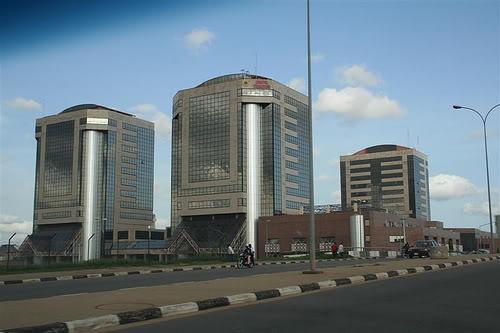
The recently released forensic audit of Nigeria’s state oil firm by PricewaterhouseCoopers’ (PwC) which said the Nigerian National Petroleum Corporation (NNPC) accused of corruption, should pay $1.48 billion to the government is so incomplete that it leaves room for a potentially much larger hole.
The PwC audit of the NNPC failed to account for proceeds of gas sales, even though it was part of its scope of the engagement, as set out in the Terms of Reference.
Business Day’s review of the terms of reference for PwC shows that it includes examining records of monthly crude oil and gas production in barrels/metric tonnes, and the average selling price of crude oil and gas on monthly basis.
Other objectives of the audit per the engagement letter include looking at the schedule of buyers of crude oil and gas, showing detail of purchases (volume and value), foreign sales of crude oil and gas (USD) and mandates sent to CBN by NNPC to transfer crude oil and gas revenue to the Federation Account, among others.

The audit firm PwC claimed it did not examine gas production records because: “the allegations on unremitted funds relate to revenues accruing from crude oil sales.”
The Nigeria Extractive Industry Transparency Initiative (NEITI) audit of the petroleum industry from 2009 to 2011 released in 2013 said there was a non-remittance of $4.84 billion dividend payments over a two-year period from the NigeriaLiquefied Natural Gas (NLNG) to the Federation Account.
Nigeria exported some 19.6 million metric tons of LNG in 2012, the fourth-largest output worldwide, according to data compiled by research firm IHS.
Qatar was first with 74.2 million metric tons, while Australia exported 19 million metric tons.
Nigeria LNG Limited is jointly owned by the NNPC (49 percent), Shell (25.6 percent), TotalLNG Nigeria Ltd (15 percent) and Eni (10.4 percent).

The NLNG Plant has a capacity of 22 million tons per annum of LNG and 4 million tons per annum of LPG.
A 146 – page report by Nuhu Ribadu, the former head of the anti-corruption agency the Economic and Financial Crimes Commission (EFCC) covering the years 2002 to 2012, released last November, concluded that oil majors Shell, Total and Eni made bumper profits from undercutting Nigeria on gas prices.
NLNG, had paid the country for gas at cut-down prices before exporting it to international markets, the report said.
“The estimated cumulative of the deficit between value obtainable on the international market and what is currently being obtained from NLNG, over the 10 year period, amounts to approximately $29 billion,”
the report said.
Shell owes Nigeria’s government N137.57 billion ($874 million) for gas sold from its Bonga deep offshore field, the report said, while oil majors owed $58 million between them for gas flaring penalties. They were also not adhering to newer higher fines.
The report also alleges NNPC had short-changed the Nigerian treasury of billions dollars over the last 10 years by selling crude oil and gas to itself below market rates.
The PWC report showed that total gross revenues generated from FGN crude oil lifting’s was $69.34bn, however only $50.81 billion was remitted into the Federation accounts.
Business Day’s findings when looking at the full report, shows that the balance of $18.53 billion consisting of NNPC operating and other costs, are open to potential abuse by the corporation, due to weak internal controls.
An example of this is the $810 million (N160.3 billion) third party payments (including training course fees, estacode and consultancy fees, and other vendor payments), reported by NNPC for the audit period spanning January 2012 to July 2013.
Another major area for potential obfuscation is the 46 percent of proceeds of domestic crude oil revenues for the review period which was spent on operations and subsidies.
According to the report, while the NNPC reported and defrayed all costs incurred by its loss making subsidiaries, the profit making subsidiaries and dividends received were excluded from the data the corporation provided to PwC.
This suggests that there are other sources of net revenues available to the corporation, not currently disclosed.
“A proper estimate of the actual potential excess remittance/under-remittance can only be arrived at if all revenues and all costs of the Corporation and all its subsidiaries are accounted for in a consolidated position. A detailed review of this was beyond the scope of our mandate,” PwC said in the report.
PATRICK ATUANYA & SOJI AKINYELE



