As a starry-eyed teenage undergraduate at Ahmadu Bello University, I was, like many others, a revolutionary socialist pan-African idealist. The famous speech by General Murtala Mohammed at the OAU Summit of January 1976 was the high watermark. We called the bluff of America, Henry Kissinger and the West. A few of us seriously considered following the example of Yoweri Museveni, the famed political scientist from the University of Dar es Salaam, who spent his summers as a guerrilla fighter with FRELIMO in Mozambique. He had even written a famous essay on the strategy and tactics of revolutionary warfare.
In the early eighties, I left Nigeria still a diehard pan-Africanist. As a graduate student in Paris, I hang out with the exile remnants of the ANC and often visited the home of Duma Nokwe, one of the revered stalwarts of the ANC and a contemporary of Nelson Mandela’s. I met the trade unionist Cyril Ramaphosa and struck up an instant feeling of solidarity with him. The Boers were their enemies and ours too.
Today, the world has changed. South Africa is a free nation. After bitter civil wars, Angola and Mozambique are making progress in nation building and development. Cape Verde has remarkably attained the status of a middle-income nation, but Guinea-Bissau still remains in the woods. Nigeria spent over US$10 billion and lost 5,000 of its soldiers to restore peace in Sierra Leone and Liberia. With this expenditure in blood and treasure, I doubt if we have a modicum of goodwill in all those countries we helped to liberate. We are, at best, an object of derision.
After two decades abroad, I came back home in 2005 a sober-minded realist. I have had opportunity to visit every corner of our continent. I love Africa, in spite of the fact that Africans hate Nigerians. I am no longer a pan-Africanist — if by this is meant someone who subscribes to the doctrine of summary unification of Africa. I believe pan-Africanists to be well-intentioned but misguided. I embrace the ideals of regional integration so long as it is not imposed from above. It has to be a bottom-up process; a fusion based on sound economic and financial underpinnings. I believe in the Africa of peoples, not of politicians mouthing empty slogans. We must all join hands in working for the unity of Africa, but it must be based on reciprocity and genuine solidarity.

A few weeks ago, I was in the beautiful Caribbean island of Grenada. During a state visit in 1974, our then Head of State General Yakubu Gowon found the country in the grips of a paralysing strike. When he inquired about the cause of the unrest, he was told that public-sector workers had not been paid for a year. There and then, Gowon underwrote the entire bill — the equivalent of US$20 million in today’s value.
In 1976, a committee headed by Adebayo Adedeji articulated the concept of Africa as ‘the centrepiece’ of Nigerian foreign policy. This new focus was the basis of renewed actions in support of liberation movements in southern Africa, with Nigeria taking on a new role as de facto leader of the ‘frontline states’ in the United Nations. I respect Adedeji as an economist, but his foreign policy thinking was disastrous. Any statesman that makes anything else other than his country’s fundamental interests as ‘the centrepiece’ of its foreign policy is doomed.
During 1983—85, foreign policy thinkers led by scholar-diplomats such as Bolaji Akinyemi and Ibrahim Gambari developed the theory of ‘concentric circles’ as an alternative framework of foreign policy, having felt that the idea of ‘Africa as centrepiece’ was much too general to be of operational relevance. The notion of concentric circles gave priority first to national interest, then to the neighbouring ECOWAS, and then thirdly to Africa and the rest of the world. The administration of General Ibrahim Babangida took major steps to boost relations within the West African sub-region through the vehicle of personal diplomacy. Bilateral agreements were strengthened during visits while grants were provided in several instances.
Nigeria has spent over US$60 billion in financial assistance to various African and Caribbean countries. So-called ‘rescue operations’, consisting largely of grants, were made to countries ranging from Benin Republic to Zimbabwe, Cape Verde, Guinea, Senegal, Niger, Togo, Liberia and Mali. A strong element of such assistance has been by way of concessional oil resources, largely consisting of oil sales below world market prices.
Established in 1986, the Technical Aid Corps (TAC) emerged as a foreign policy tool to promote goodwill, perhaps in imitation of John F. Kennedy’s American Peace Corps scheme. From 1987 to date, Nigeria has sent over 3,000 personnel to 40 countries. It is a model for South-South cooperation in international economic relations.

Nigeria has also invested in regional finance institutions such as the African Development Bank and others. Our subscriptions currently stand at UA197.86 million, representing a voting power of 8.974 percent. The Nigeria Trust Fund (NTF) was created in 1976 with an initial capital of US$80 million and was replenished in 1981 with US$71million. The NTF deploys its resources to provide financing for projects of national or regional importance with the aim of fostering economic and social development of the low-income countries whose peculiar social and economic conditions require non-conventional term financing. It lends at a 4% interest rate with a 25-year repayment period, including a five year grace period. Today, the NTF has a total resource base of $432 million. The Nigerian Technical Cooperation Fund (NTCF) was developed in 2004 as a grant window to complement the resources of the NTF, consisting of some US25 million drawn from the net income of the NTF.
It is time we re-assessed our economic diplomacy and the entire machinery underpinning it. It is foolish to spread largesse everywhere and not demand something in return. Of course, there will always be a place for international humanitarianism, but we must stop pursuing chimeras. We have to put Nigeria first.
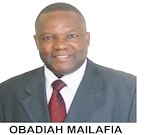
By: OBADIAH MAILAFIA