Nigeria is making frantic efforts to ensure that agriculture and allied services play a key role in its quest for economic and revenue diversification.
This is as a result of the humongous negative impact of drop in oil prices on the Nigerian economy, which includes recession and unemployment.
To support the current diversification drive and mitigate the impact of oil price, Natnudo Foods recently entered into an agreement with the Central Bank of Nigeria (CBN) to be the anchor of the central banks Anchor Borrowers Program for poultry farmers through its Natupreneur scheme.
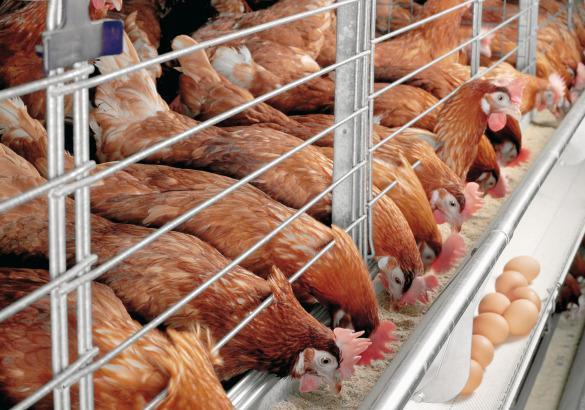
The Natnupreneur broiler out-growers scheme which is currently running with 1,156 farmers with the capacity to produce 3million birds every five weeks is set to make the country self-sufficient in chicken production within the next few years.

Under the scheme, poultry farmers are provided loans in form of inputs and are guaranteed a market for their birds at an off-taker price by Natnudo Foods, initiators of the scheme.
Currently, the scheme has the potential to employ over one million people in addition to an existing 5,000 people working directly and indirectly in various capacities.
“We want to increase food supply to the Nigerian market and add to the Federal Government drive for food security,” Albert Begerano, chief operating officer, Amo Group said during a tour of journalists on the natupreneur facilities.
“The idea of the natupreneur scheme is to expose smallholder farmers in the poultry subsector to modern technology in the industry thereby helping them to reduce their expenses and increasing their production to boost efficiency.
“We also provide them with a market for their product so that they can make profit and remain in business,” Begerano said.

He noted that the scheme is growing very fast across the country.
Currently, Africa most populous country needs 1.5 million metric tonnes of poultry products annually to meet local demand. Official figure shows that local farmers are only able to produce 450,000 metric tonnes, leaving a wide gap of more than 1.05 million metric tonnes.
The huge gap has made smuggling of poultry products; especially chicken and turkey a big business for importers of these products.
As a result, the government placed ban on the importation of poultry products. But most of the bans placed on poultry products have not been effective and have made no real impact on actual foreign imports as most of the products still find their way into various markets across the country.
To bridge the demand and supply gap and attract youths into farming, the out-grower scheme provides technical support to farmers through training and working with them to ensure profitability.
“This would make farmers who have abandoned their poultry farmers go back to farming because of how profitable the scheme is and this would help jack up the country’s production as more farmers return back to the business,” said Francis Toromade, head-policy and strategy, Amo Group.
“Our plan is to empower farmers by ensuring they have good returns on their investments and that is the reason we have decentralised the whole process,” Toromade added.
Alaba Yinusa, farmer satisfaction representative under the Natupreneur Scheme said that since the inception of the scheme about 4.3 million birds have been bought from framers under the off-taker agreement with over N4billion made as payment for it.
Yinusa stated that the scheme has the capacity to process 2million birds in a single cycle of production, stating that chicken production has a huge turnover with about six cycles in a year.
The out-grower scheme also train farmers on boi-safety measure to protect their farms from been affected by zoonotic diseases like the highly pathogenic Avian Influenza.
“Bio-security is very vital and important. We have standard operation procedures for sanitation to ensure that standards and quality are met,” Toromade said who was earlier quoted.
He called on governments at all levels to be more proactive in curbing the menace of smuggling chicken products into the country.
Remi Tomori, chief executive officer of Honeydew Farms, a farmer under the natupreneur scheme said she is very glad to have entered the scheme, stating that she does not have to look for buyers anymore as the scheme has an already market for her products.
Tomori stated that she makes a profit of 10 and 13 percent on each cycle and makes a cumulative of 50 percent profit margin on five cycles in a year.
Josephine Okojie