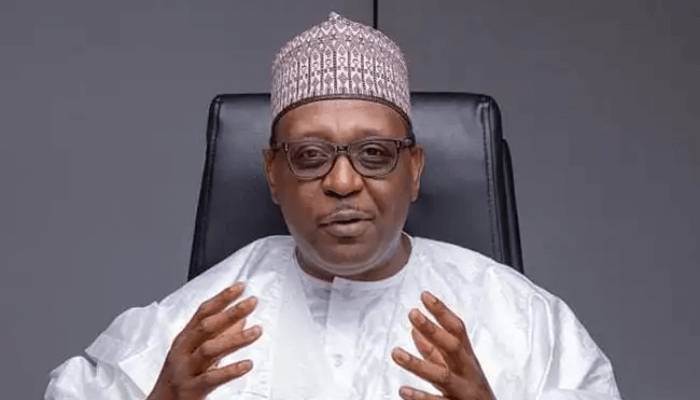
Muhammad Pate, coordinating minister of Health and Social Welfare has called on health workers to prioritise the welfare of Nigerians as the ongoing industrial action by resident doctors enters its twelfth day.
Speaking at the 2025 Joint Annual Review (JAR) Conference organised by the Federal Ministry of Health and Social Welfare, Wednesday in Abuja, Pate urged health professionals across the country to place the “Nigerian person at the centre of attention” in all their actions, stressing that every dispute within the sector could be resolved if the interest of patients remained the focus.
The minister acknowledged the long-standing challenges in the sector, particularly those relating to workforce shortages, remuneration and welfare, but assured that the government is taking steps to address them.
He informed that the government had also approved over ₦50 billion to settle outstanding arrears and meet the needs of various health professionals in the last few months.

Read also: 91 hospitals, 11,000 doctors, 19 demands – Inside NARD’s indefinite strike
The minister added that government is constructively engaging with health professional leaders to resolve long-standing issues responsibly. “Our call to all health workers is simple: put the Nigerian person at the centre of attention. If we do that, all other issues can be resolved”, he urged.
Pate further informed that more than 20,000 frontline health workers have been recruited into federal tertiary hospitals over the past year, helping to fill critical gaps in service delivery.
He noted that the new hires were made within existing budgetary provisions by removing administrative bottlenecks, including delays in obtaining employment waivers.
The minister’s remarks come amid the indefinite strike declared by resident doctors, who form the backbone of Nigeria’s hospital workforce. The strike, now in its twelfth day, has crippled services in many public hospitals, leaving patients stranded and intensifying pressure on the healthcare system.

In his remarks, Iziaq Salako, minister of State for Health, said the government was also addressing the wider socioeconomic challenges affecting health delivery, including poverty and rising living costs, through its Power of Health initiative.
“We are also addressing the challenge of ever-growing poverty and high costs through the Power of Health initiative. In the long run, we see trust restored in the government’s ability to deliver on promises to enhance national stability and security for a healthy and productive nation,” Salako said.
He explained that the government’s Basic Health Care Provision Mechanism required stronger implementation of health insurance strategies and greater mobilisation of capital at both state and federal levels.
Salako, further stressed the need for increased private sector investment in health commodities, manufacturing equipment, and the local production of life-saving drugs and vaccines. He also called for investment in research, data, and professional development to strengthen governance, service innovation and community-level health security.
“We need to see additional private sector investment in health commodities, manufacturing equipment, home manufacturing, production of life-saving medications and vaccines, as well as investment in societal and professional intelligence to help improve health-system governance, service innovation, and community security,” he said.
The minister urged stakeholders to reflect on the country’s health progress and recommit to building a system that serves all Nigerians.
“I urge us to examine our progress, accomplish new projects, celebrate successes, acknowledge failures, and chart the path forward with renewed commitment towards better health for all Nigerians, not just those who are sick, but those who are well,” Salako added.