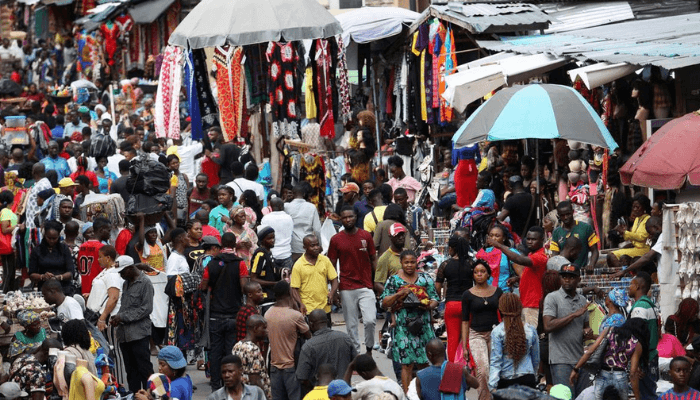
At the SPAR in Ilupeju, I watched a middle-aged woman stare at a pack of spaghetti for nearly three minutes. She picked it up, examined the price tag, shook her head, and muttered, “This thing was N500 just last year.” She eventually bought it, but not without expressing visible frustration at paying N1200 for something her memory insisted should cost much less. This was price memory in action, a uniquely Nigerian psychological phenomenon that turns every purchase into a negotiation with the past.
In most economies, consumers have relatively short price memories, especially for low-involvement purchases. Behavioural economists like Monroe & Lee (1999) have documented how quickly people adapt to new price levels, typically within 3-6 months for routine purchases. But Nigeria operates under different rules. Our price memory is not just longer, it’s more emotionally charged, more socially reinforced, and more commercially consequential than anywhere else.
The Nigerian Price Archive
Every Nigerian consumer carries what I call a “Price Archive”, This is a remarkably detailed mental database of what things cost, not just now, but across multiple time periods. And it’s not about nostalgia. It’s an economic tracking system that influences current purchase decisions in ways that confound traditional pricing strategies.

A 15-month study tracking price perception across 1,800 Nigerian consumers revealed that 89% could accurately recall the prices of common household items from 12 months prior, with 67% maintaining accurate price memories extending back three years. For comparison, similar studies in developed economies show price memory accuracy drops to below 40% after just six months.
What makes Nigerian price memory unique is not limited to its duration; it comes with emotional intensity and functionality.
The Inflation Trauma Response
To understand Nigerian price memory, we must understand its origins in our relationship with inflation. Unlike economies with relatively stable price levels, Nigeria has experienced multiple periods of dramatic price volatility that have created what economists call “inflation trauma”. This is a heightened sensitivity to price changes that persists long after the triggering events.
The naira devaluations of 2016 and 2020, fuel subsidy removals in 2023, and periodic commodity price shocks have created a consumer psychology where price increases aren’t just economically challenging, they’re emotionally triggering. Each price shock gets encoded not just as market information but as a psychological reference point that continues to influence decision-making years later.

“I still remember when a bag of rice was N8,000,” explains Mrs. Adebayo, a civil servant in Lagos. “Now it’s N75,000, and every time I buy rice, I’m angry about it. Not just the current price, I’m angry about every increase that brought us here.”
This response creates what I call “Layered Price Resentment”, where current prices carry the emotional weight of every previous increase, making consumers not just price-sensitive but price-grieved.
Social Price Memory Networks
Nigerian price memory is amplified by social reinforcement mechanisms that don’t exist in more individualistic societies. Prices aren’t just personal economic information; they are social conversation currency that gets validated, compared, and reinforced through daily interactions.
WhatsApp family groups, office conversations, and market interactions create what I call “Social Price Memory Networks”, where individual price recollections are continuously calibrated against collective memory. This social validation system prevents price memories from fading naturally and creates collective pressure against accepting price increases.
In a personal WhatsApp group I belong to, price complaints appear in 34% of all non-business group messages, with historical price comparisons mentioned in 67% of price-related discussions. These are social rituals that reinforce collective price expectations and legitimate individual resistance to current pricing.
The Reference Price Complexity
Traditional consumer psychology describes “reference pricing” as the mental benchmark consumers use to evaluate whether a current price represents good or bad value (Winer, 1986). Nigerian consumers don’t have a reference price; they have a reference price system with multiple, competing benchmarks:
The Golden Age Price: The mythologised “good old days” price that represents peak affordability (usually 5-10 years in the past).
The Crisis Price: The emergency peak price during scarcity periods serves as a worst-case comparison.
The Peer Price: The price paid by someone in their social network, often carrying more weight than market reality.
The Moral Price: The price consumers believe reflects fair value, independent of market conditions.
This complex reference system explains why Nigerian consumers can simultaneously acknowledge that current prices are “reasonable for today’s market” while refusing to psychologically accept them as legitimate.
Regional Price Memory Variations
Price memory patterns vary significantly across Nigerian regions, reflecting different economic experiences and cultural attitudes toward commerce:
Lagos Pattern: Lagos consumers show faster acceptance of new price levels (average adaptation time: 4 months) but maintain the strongest comparative price memory. They’re more likely to accept current prices while continuously referencing historical alternatives.
Northern Pattern: Consumers in northern cities show longer price memory persistence (average: 18 months) and more sustained resistance to price increases, particularly for food commodities with cultural significance.
Eastern Pattern: Eastern Nigerian consumers demonstrate the strongest social price memory patterns, with group price validation playing a more significant role in individual price acceptance than in other regions.
Business Implications of Price Memory
For businesses operating in Nigeria, understanding price memory is crucial for strategic pricing decisions:
Price Communication Strategy: Simply announcing new prices without acknowledging price memory creates unnecessary friction. Successful businesses develop “price memory bridging” strategies that help customers transition from old to new price expectations.
Incremental vs. Dramatic Pricing: Research shows that multiple small price increases create less price memory resistance than single large increases, even when the cumulative effect is identical.
Historical Price Anchoring: Some businesses successfully leverage positive price memories by explicitly referencing periods when their products offered exceptional value, creating positive historical anchors.
Tope Awotona, founder of Calendly, recognised this principle early: “When we raised our prices, we didn’t just announce the change. We reminded customers of the value they’d received at previous price points and showed how current pricing still represented exceptional value compared to alternatives.”
The Psychological Coping Mechanisms
Nigerian consumers have developed sophisticated psychological mechanisms for managing price memory-induced stress:
Price Compartmentalisation: Separating “then prices” from “now prices” as belonging to different economic realities, allowing functional acceptance without emotional reconciliation.
Value Rationalization: Focusing on improved quality, service, or features to justify price increases, even when actual improvements are minimal.
Substitute Shopping: Maintaining psychological price integrity by switching to alternative products rather than accepting price increases for preferred items.
Delayed Gratification: Postponing purchases in hopes that prices will return to “remembered” levels, even when economically irrational.
The Digital Disruption of Price Memory
E-commerce and digital payments are beginning to alter Nigerian price memory patterns in interesting ways. Online shopping creates less emotionally charged price memories than physical market transactions, possibly because digital prices feel less “real” or socially validated.
However, price comparison apps and social media sharing of deals are creating new forms of price memory that may be even more persistent than traditional patterns. Screenshots of “good prices” become digital artefacts that extend price memory indefinitely.
Price Memory and Inflation Psychology
Understanding Nigerian price memory offers insights into broader inflation psychology. Unlike technical economic definitions of inflation, Nigerian consumers experience inflation as a series of personal betrayals; each price increase violates the implicit contract they believed existed between themselves and the products they regularly purchase.
This emotional dimension of inflation helps explain why monetary policy transmission mechanisms work differently in Nigeria than in economies with shorter, less emotionally charged price memories.
Strategic Response for Nigerian Businesses
The most successful businesses in Nigeria don’t fight price memory; they work with it:
Acknowledgement Strategy: Explicitly recognising customer price memory concerns rather than pretending they don’t exist.
Value Bridge Strategy: Clearly communicating what has changed to justify price increases, helping customers understand the gap between memory and reality.
Historical Value Strategy: Highlighting periods when current prices actually represent better value than remembered alternatives when adjusted for quality or service improvements.
Price Memory Reset Strategy: Using major product improvements or rebranding to create legitimate reasons for customers to establish new price memory baselines.
The Future of Nigerian Price Memory
As Nigeria’s economy matures and price volatility potentially decreases, price memory patterns may evolve. However, the social and cultural reinforcement mechanisms that sustain Nigerian price memory suggest it will remain a significant factor in consumer psychology for the foreseeable future.
Younger Nigerian consumers, particularly those with international exposure, show somewhat weaker price memory patterns, suggesting potential generational change. However, recent economic shocks have reinforced price memory psychology even among younger demographics.
The Economics of Memory
Nigerian price memory represents more than consumer psychology—it reflects our collective relationship with economic uncertainty, social solidarity, and the meaning of value in a rapidly changing society.
For businesses, understanding price memory isn’t just about pricing strategy—it’s about recognising that every price is simultaneously a current economic transaction and a conversation with customers’ accumulated economic experience.
The persistence and intensity of Nigerian price memory may seem like a barrier to business growth, but it’s also an opportunity. Businesses that acknowledge, respect, and work with customer price memory build deeper relationships and more sustainable pricing strategies than those that ignore this fundamental aspect of Nigerian consumer psychology.
In a world where prices change rapidly but memories persist indefinitely, success belongs to businesses that understand the difference between what customers pay, what they remember paying and the complex emotional landscape that bridges the gap between the two.