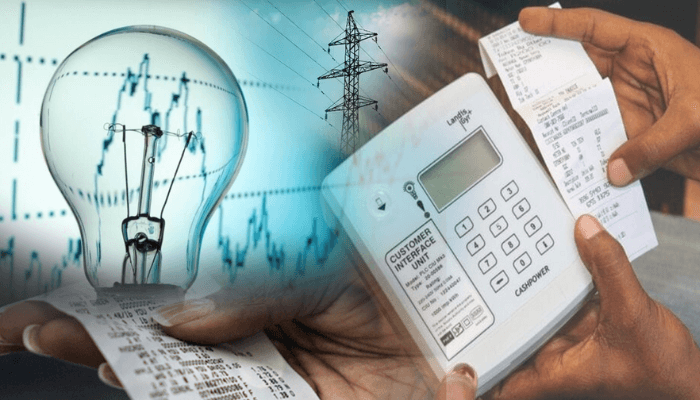
For most Nigerians, electricity remains an elusive promise, flickering at best, failing at worst. Despite decades of reforms, billions of naira in investments, and multiple policy resets, the national grid continues to collapse, and blackouts remain a routine part of daily life. Behind this persistent dysfunction lies a deeper crisis: a pricing system that masks the true cost of electricity. Now, with mounting debt, investor fatigue, and rising demand for reliable power, the federal government is pushing a bold and, some say, overdue proposal, cost-reflective tariffs. But will higher electricity prices finally energise a broken system or simply shock already struggling citizens? As tensions rise, this feature explores what’s at stake, who stands to gain or lose, and why getting the tariff question right may be Nigeria’s last real chance to power progress.
“While stakeholders in the power sector welcomed the news, many Nigerians, particularly consumers, have expressed strong opposition”.
This year, conversions have further increased following the federal government’s announcement of plans to introduce cost-reflective tariffs within the next few months to stabilise and improve the country’s electricity supply. This was disclosed by the Special Adviser to the President on Energy, Olu Verheijen, during an interview in January 2025 at the Mission 300 Africa Energy Summit in Dar es Salaam, Tanzania. She argued that the country’s power prices need to rise by about two-thirds for many customers in order to reflect the actual cost of supply.
According to Verheijen, higher electricity tariffs must be balanced by subsidies for less affluent consumers. These changes are necessary to fund essential maintenance, improve reliability, and attract private investment in power generation and transmission. She emphasised that transitioning to cost-reflective tariffs is critical at this time to enable the sector to generate sufficient revenue, attract private capital, and protect the poor and vulnerable.
While stakeholders in the power sector welcomed the news, many Nigerians, particularly consumers, have expressed strong opposition. The proposed increase would raise electricity tariffs by over 66 per cent, from ₦116.18 to ₦193.63 per kilowatt-hour. Many argue that such a hike would significantly impact household budgets and increase production costs for manufacturers.

Segun Ajayi-Kadir, Director General of the Manufacturers Association of Nigeria (MAN), stated that the proposed tariff increase would be detrimental to the competitiveness of Nigerian products and businesses. He argued that it would further escalate production costs and worsen current inflationary pressures. He noted that no nation can achieve substantial industrial development without energy security—defined as timely access to sustainable and cost-effective energy.
Read also: Power and privilege: How Nigeria’s electricity tariff regime deepens social inequality
To keep electricity prices affordable, the government has been subsidising electricity consumption by over 60 percent. The cost of this subsidy is estimated to have reached ₦6 trillion over the last 10 years—₦2.4 trillion in 2024 alone.
The subsidy regime has led to several negative consequences, including high fiscal costs, poor infrastructure, and worsening wealth inequality. It has also been blamed for the lack of investment in the power sector and for inadequate access and reliability of power supply.
Energy experts argue that cost-reflective tariffs are essential to stabilising the sector and encouraging investments. The subsidy system has hindered the sector’s growth, particularly as the government has often failed to fulfil its commitments to pay subsidies to stakeholders.

Explaining the current subsidy arrangement, Sunday Oduntan, Executive Director of Research and Advocacy at the Association of Nigerian Electricity Distributors (ANED), pointed out that only customers in Band A pay the full cost of electricity. The government subsidises up to 67 percent of the cost for consumers in Bands B to E. However, he noted, the government has failed to pay these shortfalls, resulting in mounting debt.
“Today, only people in Band A pay the true cost of electricity. If you are in Bands B, C, D, or E, the government is subsidising your electricity consumption by as much as 67 percent, which means you are not even paying up to half of what you should be. And the so-called subsidy is not being paid by the government—it has become a shortfall that continues to pile up,” Oduntan said.
This implies a massive debt has accrued over the past decade and a half, owed to Distribution Companies (DisCos), Generation Companies (GenCos), and gas suppliers, exacerbating liquidity issues in the energy sector. These liquidity challenges particularly affect the GenCos and DisCos, the latter of which bear the brunt of consumer dissatisfaction during outages or service disruptions.
In June 2023, the GenCos, under the Association of Power Generation Companies (APGC), voiced their concerns over inadequate debt servicing by the Federal Government. They warned that operations could be halted due to their inability to meet financial obligations to gas suppliers, lenders, employees, and investors. In response, the government announced it had disbursed ₦205 billion to settle debts owed to the GenCos in August 2024. Additionally, it reported paying US$120 million to gas suppliers to boost liquidity in the sector.
In February 2024, the Minister of Power, Adebayo Adelabu, confirmed that Nigeria owed ₦1.3 trillion (approximately US$838.56 million) to power generation companies. Of this amount, 60 percent was owed to gas suppliers, alongside a legacy debt of ₦2 trillion (around US$1.3 billion) also owed to gas firms.
This debt burden underscores the government’s urgency to eliminate the electricity subsidy regime—similar to its decision in 2022 to remove fuel subsidies. Experts warn that failure to do so would stifle growth and deter existing and potential investors, including major gas producers such as Seplat Energy and Accugas Limited. Given that gas is Nigeria’s primary feedstock for electricity generation, its availability is critical for ensuring energy security and supporting the transition to a greener economy, where gas is recognised as a key transition fuel.
To achieve its 2060 net-zero emissions target, the federal government must improve power sector liquidity. Nigeria’s Energy Transition Plan, launched in August 2022, relies heavily on natural gas as a transitional fuel.
However, further investment in the sector may be compromised by persistent liquidity constraints unless urgent reforms are implemented.
Implementing cost-reflective tariffs is undoubtedly a complex task. Significant challenges exist, particularly regarding public concerns over affordability and the potential financial strain on households already grappling with high poverty levels and inflation. Moreover, the existing regulatory framework requires significant improvements to ensure transparency and equity in tariff adjustments.
In conclusion, resolving the liquidity crisis in Nigeria’s power sector hinges on aligning electricity tariffs with the actual cost of supply. While the road to cost-reflective tariffs is fraught with challenges, a carefully designed and well-implemented strategy could usher in a more reliable and sustainable electricity supply—ultimately benefiting the Nigerian economy and its citizens.