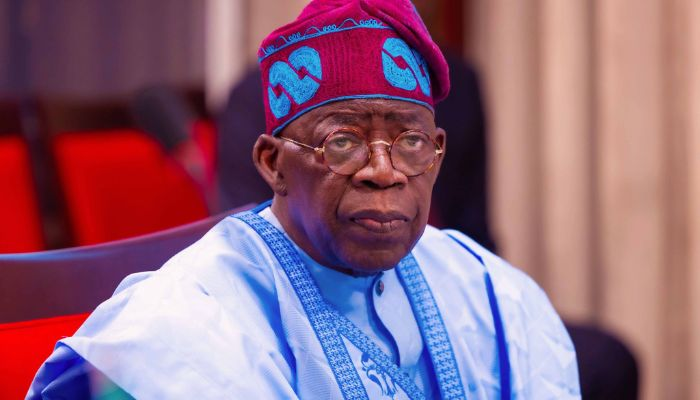
President Bola Ahmed Tinubu has made no secret of his ambition to steer Nigeria toward a $1 trillion economy. It is a vision both bold and necessary for a nation of over 220 million people, endowed with natural resources and entrepreneurial energy. But ambition, however noble, is powerless without power.
Quite literally, Nigeria cannot industrialise in the dark. It cannot digitise in the dark. It cannot compete, diversify, or attract serious capital in the dark. And yet, today, that is precisely the condition under which the country’s economy struggles to function. The crisis in Nigeria’s power sector is not a policy issue. It is an existential one. If left unaddressed, it will consume every other reform, rendering tax policy, investment incentives, infrastructure, and human capital development impotent.
The numbers are sobering. Nigeria, with over 220 million citizens, produces less than 6,000 megawatts of electricity, with effective distribution often below 4,000 MW. By contrast, South Africa, with one-third the population, generates more than 50,000 MW even in its own moment of crisis. Lagos alone requires over 10,000 MW to power its industries, businesses, and homes. Ogun, its manufacturing twin, suffers no less. This industrial corridor—the very belt expected to lift Nigeria into middle-income status—operates on diesel generators, punishing costs, and unpredictable outages.
The economic consequences are staggering. Manufacturers spend 40–60 percent of operational expenses on self-generated power. Small and medium-sized enterprises—Nigeria’s largest employer—operate at the mercy of darkness. Foreign investors are wary of committing to a country where factories run on diesel, clinics operate with flashlights, and grid failure is a daily event. Nigeria is taxing its real economy to subsidise dysfunction.

So far, President Tinubu’s reforms—commendable though they are in some areas—have only skimmed the surface of the power problem. Yes, the Electricity Act of 2023 was a landmark, giving states the authority to generate and distribute power independently. Yes, embedded generation projects have been announced, and yes, the president is no stranger to energy reform, having initiated a 270 MW Independent Power Project as governor of Lagos. But national transformation requires more than incrementalism. It requires leadership, urgency, and a mission.


Mr President, power is the foundation of your trillion-dollar economy. It is not another sector. It is the lifeblood of them all.
Declare a National Power emergency

What Nigeria needs now is not another policy memo. It needs a declared national electricity emergency—not as a PR move, but as a framework with enforceable mandates. Set a clear, audacious target: 20,000 MW within four years. Mobilise a Presidential Power Task Force with executive authority to align ministries, cut through regulatory bottlenecks, and accelerate energy investment.
Every state should be required to submit a power access roadmap. Ministries must integrate electrification into all capital projects. Public procurement should prioritise energy-efficient infrastructure, from schools to hospitals. Nigeria needs targets. It needs accountability. And it needs urgency.
Fix the transmission trap
The Transmission Company of Nigeria (TCN), still federally controlled, is the weakest link in Nigeria’s power value chain. Billions have been sunk into grid expansion with little to show. Power is generated but cannot be wheeled to where it’s needed. The national grid remains fragile, opaque, and bureaucratically inert.
The solution is clear: unbundle and concession transmission to capable, performance-bound investors. Introduce private sector efficiency, not just in generation and distribution, but in the arteries that connect them. If Nigeria could liberalise telecoms in 2001, it can liberalise transmission in 2025.
Read also: Why Nigeria can still achieve a one-trillion dollar economy by 2030
Break the subsidy addiction
The current electricity subsidy regime is both unaffordable and ineffective. Tariffs are too low to cover the cost of production, leading to massive losses, underinvestment, and worsening service. At the same time, those who do not pay—due to grid unavailability or default—are effectively subsidised by those who do.
The president must face this fiscal paradox head-on. If tariffs must reflect cost, so be it—but couple them with smart, targeted subsidies for the poorest households. Blanket distortions must go. Nigeria cannot attract power investors into a market where tariffs are politicised and payments uncertain.
Enforce accountability in DisCos and gas supply
Distribution companies (DisCos) have, in many cases, failed to meet performance benchmarks since privatisation. If they cannot deliver, revoke licences and bring in competent operators under transparent rules. On the generation side, over 70 percent of power plants are gas-based, yet supply remains erratic due to vandalism, pricing disputes, and infrastructure failure.
Fixing the gas-to-power value chain must be a priority. Secure pipelines, deregulate gas pricing, and ensure that GenCos can get paid—and pay their suppliers. The power sector cannot work when every actor in the chain is broken, broken, or both.
Build a national energy signature project
Symbolism matters. Nigeria needs a flagship power project—not a plan, not a study, but a functional, bankable energy asset that comes online during this administration. It could be a regional solar farm, an industrial CNG cluster, or a gas-powered hybrid plant in Lagos or Kano. But it must be real, it must deliver megawatts, and it must prove that Nigeria can build what it says.
The Tinubu Power Timeline


Coordinate the states
The Electricity Act has created room for state-level initiative, but many governors are waiting for Abuja’s cue. Without coordination, Nigeria risks replicating inefficiency at subnational levels. President Tinubu should establish a Power Coordination Council—a federal-state-private platform to align plans, finance, and infrastructure. In a federation, silence from the centre becomes chaos at the periphery.
The clock is ticking
Nigeria’s competitors—Ghana, Egypt, and Kenya—are moving faster. Investors are watching closely. Tinubu has staked his presidency on economic transformation. But growth will not come from slogans or summits. It will come from plugging Nigeria into itself.
Without power, there is no prosperity. Without electricity, there is no trillion-dollar dream. The time for tinkering is over. What remains is execution.
Mr President, history will not remember what you promised. It will remember what you powered.
Dr. Oluyemi Adeosun, Chief Economist, BusinessDay Media