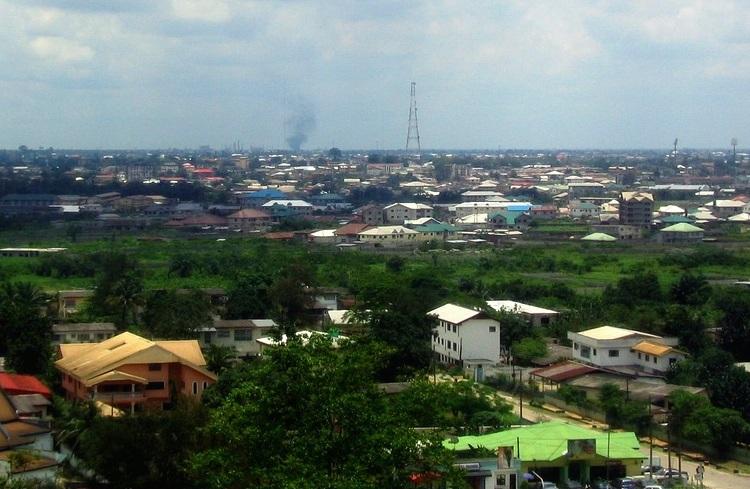
The sudden disappearance of soot in Port Harcourt and the entire Rivers State environment which most residents are celebrating may rather be a sign of greater doom. This is because researchers have found that the soot particles have reduced in size and have become even deadlier.
The research conducted by the Centre for Environment, Human Rights and Development (CEHRD) and just released in Port Harcourt, the state capital, says soot became smaller because of improved methods of kpo-fire (heating of crude oil to become diesel and fuel). As a result, the particles have become smaller and most times unseen, but now easier to penetrate the eyes and skin for greater harm.
The report was presented in Port Harcourt as part of studies on impact of oil spill in Ogoni and what to expect from the clean-up. It was presented by Sam Kabari, executive director, CEHRD, who said the illegal refiners have since improved their heating techniques but soot still goes into the atmosphere ready to poison humans.
Soot is indicated as a mass of impure carbon particles resulting from the incomplete combustion of hydrocarbons.

Kabari report said illegal refining must be put to a stop because of the huge damage to humans that it causes.
“The damage is outrageous. People are simply breathing in petroleum. Remember that the UNEP Report asked that re-pollution must stop if coastal clean-up must take place. The clean up must adopt a holistic approach If coastal pollution due to artisanal refining continues, the efforts would be wasted. It pollutes coastal forests,” Kabari said.
“The boys have improved a lot and the soot has gone into smaller particles these days but more dangerous. They now burn with oxygen and this breaks it down to smaller particles the eye may not see. The result is even more deadly. There is no competent lab to test soil in the Niger Delta. The ones present give result in 0.0005 which reports that the soil is ok, whereas labs that detect in smaller granules would find out what is wrong.
“There should be a scientific threshold to test soil and need to have labs and experts in the Niger Delta to be able to be capable. Some think it’s due to the level of equipment in the labs in the region. There is need to demand that labs should report in micrograms per kilogram instead of in grams per kilogram,” he said.
The research also revealed that nitrates are found in fish and cassava in Ogoni areas where the research was focused. Nitrates and nitrites are said to be essential compounds, but they can become hazardous if they form nitrosamines. Nitrosamines can form if you cook nitrates or nitrites at high heat. There are different types of nitrosamines, and many can increase the risk for cancer, according to scientists.

Kabari said oil is found 30 cm deep in the soil, an indication that crude oil has permeated into the deeper levels of the soil in the area, a situation that may pose a challenge to contractors handling the clean up.