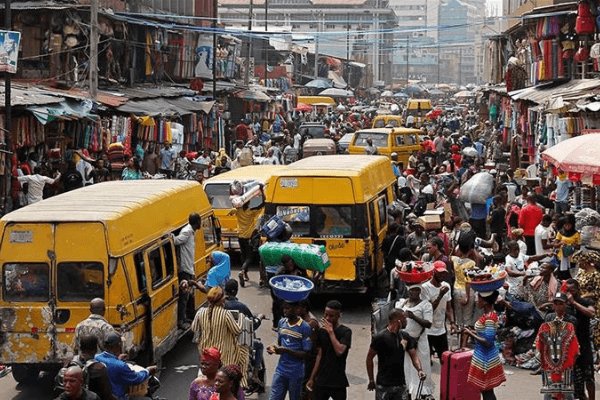
There are rising concerns that the obvious disconnect between government policies and implementation is resulting in worsening multidimensional poverty in Africa’s most populous economy.
Those who spoke with BusinessDay say Nigeria’s federal and sub-national governments have good policies relating to youth and women empowerment, funding, employment and support for small businesses, but implementing them has been difficult basically due to lack of the much needed political will.”The missing link is a disconnect between government policy and implementation,” Tony Ejinkeonye, executive director, Business Development, Esilknet Africa, said.
Another disconnect is where the different MDAs have interlinking roles that either complement or are incompatible with their primary mandates. “A case in point is where you want to enhance competitiveness for business but at the same time pushing the FIRS and the Customs to collect more revenue,” he said. The concerns come as the United Nations Development Programme recently tapped 98 million Nigerians as multi dimensionally poor, increasing from 86 million in a decade.
Mariam Uwais, immediate past senior special assistant in the Presidency on social safety programmes, called for more coordination in the overall approach in the government’s social safety intervention schemes to achieve more results.
“Scaling up the impact of the social safety schemes of the government and the overall sustainability to achieve greater outcome is what we’ve been pushing through a bill to ensure there is long-term effect in what we do, given the rising poverty concerns in the country,” she told BusinessDay, noting a pending bill that would see to the sustainability of the programme for impact. Joe Abba, country director, DAI and a public sector reform expert, does not understand why programmes midwifed by the office of the Vice President cannot be domesticated in a way that relevant MDAs of government become a driving force to fast track sustainability and grow impact.
“There is also a need to further discuss in a kind of national dialogue on adoption of state policy to drive the domestication of our social safety programmes to ensure greater impact.”
The UNDP report also notes that when compared to the national poverty line, which measures income/consumption, a larger proportion of Nigerians (51%) are multidimensionally poor than those that are income poor (46%).
Speaking with BusinessDay on the concerns raised by the report, Chijioke Ekechukwu, economist and former director-general of Abuja Chamber of Commerce and Industry, said Federal Government’s Economic Recovery and Growth Plan (ERGP) was still weak and cannot address the kind of poverty levels in the country.
”ERGP, as currently packaged, should be a subset of a bigger economic reconstruction and recovery plan. ERGP is shallow, and implementation is not adequately executed, monitored for compliance and outcome and it lacks sanctions,” he said.

Poverty is a result of the size of the per capita income of our country, he said, saying, “With the size of our GDP and the growing size of our population, poverty will be prevalent.”
For him, job creation should be the panacea to poverty, and government must make all sectors to work again.
“The Maritime sector used to employ thousands of Nigerians. The textile sector and general manufacturing sectors once employed thousands. Aviation sector lost thousands of employees. Palm oil, general agricultural sector, and many other sectors also lost thousands of staff.
“Let these sectors work again. Funds should be made available and at very low rates to Entrepreneurs and potential ones too,” he said.
He said the majority of government’s policies targeted at fighting poverty or promoting social safety still lacked priority in human capital.
“In government’s social safety programmes, for instance, which comprises of N-Power, Growth Enhancement and Empowerment Programme, GEEP, Homegrown School feeding and Conditional Cash Transfer (CCT), little attention is given to building the human capital to ensure beneficiaries don’t go cap in hand begging if the scheme is not sustained.” Celestine Okeke, lead partner, Small and Medium Enterprise Advocacy Initiative, told BusinessDay that the missing link in government’s policies and programmes in fighting poverty had been absence of structured approach to galvanising all resources needed to drive development across all sectors and also continued failure to manage politics and governance harmoniously.
Laoye Jaiyeola, CEO of Nigerian Economic Summit Group, told BusinessDay that coordination in government’s response in its social investment scheme was key in arriving at a holistic response.
“Access to basic health, education, would make numerous interventions of the government bring in more results. We must stop addressing concerns in silos. This is where the Ministries, departments and agencies of government could play a role in owning initiatives such as this midwived by the office of the Vice President.
”More coordination in the scheme, and how do we holistically address question of the poor to get a holistic answer? We must tie in education, health concerns in such initiatives to get a holistic response,” he said.