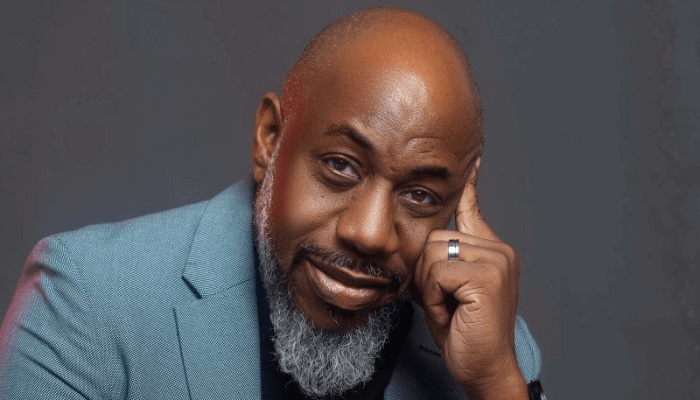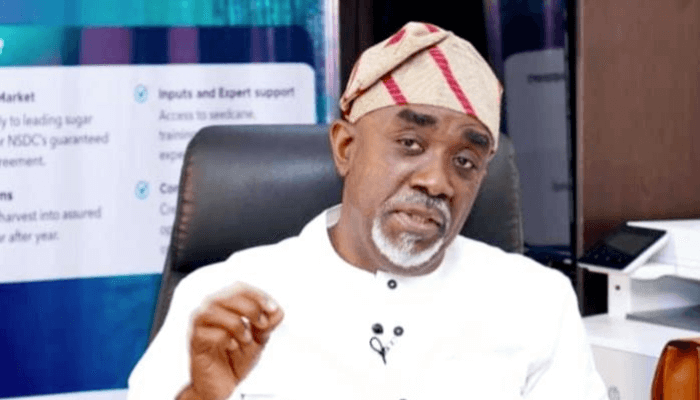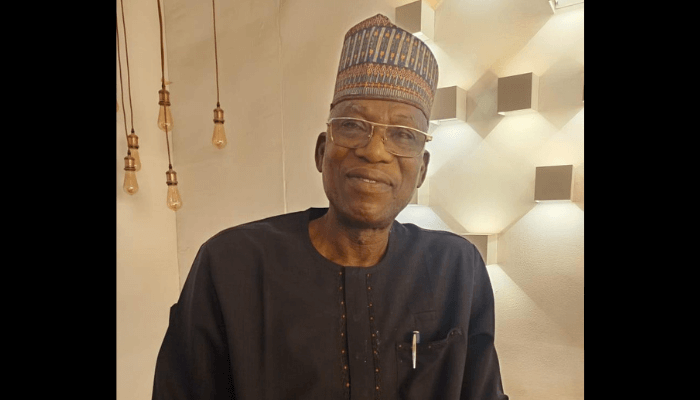
Baba Adisa Bolanta (rtd), a former Assistant Inspector General of Police (AIG) in charge of Zone 6, Calabar, Cross River State, has said that insecurity in Nigeria can only be effectively tackled through strong political will and collective action among security agencies. Bolanta, who also served as Commissioner of Police in Oyo, Sokoto, Kebbi, and Imo States, stated this during an interview with some journalists in Ilorin, Kwara State. He spoke extensively on national security concerns and the challenges confronting the newly appointed Minister of Defence. The retired AIG stressed that success in the fight against terrorism, banditry, and other criminal activities depends largely on effective collaboration and synergy among the various security agencies, as well as strong coordination by their supervising ministries. According to him, fragmented efforts and lack of cooperation among security institutions weaken the overall security architecture, while unity of purpose and intelligence sharing will significantly enhance operational efficiency. SIKIRAT SHEHU brings excerpts of the interview:
How would you assess the current security architecture that the new Minister of Defence inherited?
Well, what we have on the ground now is a rigid arrangement with predominance of the military. And you know, the security issues we are having is not just one requiring a military solution. Most of them are act of criminality that needs an agency that is trained in that respect to take charge of. So, what I expect now is that there will be improved collaboration among the various security agencies and the military.
And that will not just be among the agencies, there will be that synergy among the various ministries. We have the Defence Ministry, we have the Ministry of Police and Health, we have the Ministry of Interior, we have the Ministry of Justice, we have the Information Ministry, that is a national orientation agency. There will be increased collaboration. You see, in the Ministry of Interior, we have the Immigration Services, the Ministry of Finance, we have the Customs, and we have the EFCC. All these teams have to have a bite in what we are doing to help our country. It’s not something that one agency or two agencies can do. No, no, no. It has to be a collective fight. And if that fight is to be successful, there must be that strong synergy and collaboration among the various agencies and their commanding ministries.

Are you saying this synergy is not there right now?
It is there, but it is not what is expected. It is not one that can lead us to greater success in our fight against banditry and other
forms of criminality.
Where are the bandits from? Are they from outside, or are they among us?
You know, I said something now that it’s not going to be just an agency collaboration.ost of these people that are worrying us in the core banditry, some of them are not Nigerians. Some of them are foreigners from our neighbors. And there is an agency that is responsible for the movement of people in and out of the country. There is an agency that is responsible for regulating the flow of goods and commodities into the country. So, all these things we have to take into account. Some of them are local, they are our people. Some of them are foreigners that are taking advantage of our porous borders. And then they discover that this place, because of what is happening globally. That is global warming, and you have decreased rainfall in that place. The wetter part is the southern part, which is our country. So, they are moving in here. And they are moving in unchecked. That is why we have this influx. And when you have influx, you are bound to have people that will come with contraband. Contraband in this sense, include arms, ammunition, and don’t forget that our immediate neighbours, Niger, Chad, Burkina Faso, and up north, Libya, are in turmoil. Even though Libya has been able to overcome their problem, but you have two governments. One in the East, one in the West. So, all those factors have to be factored in when we are looking at our own security problems.

Should feeding of animals by herders become so criminal?
You see, maybe when we are redefining our national security system, we have to factor in some factors, like the environmental factors. What I mean by the inflows from the North is this. This climate change has affected a lot of countries. Some have more rainfall than what they have been having before. Others, they have complete reduction. I know what that means is that there is bound to be movement of people from that area where there is no means of living. They have to look for other places where they can continue with their life. If you look at our northern neighbours, especially Niger, Chad, Boko Haram, all these people are experiencing what I’m saying now. It is natural for people to move to places where they can get shelter.
Most of them are coming because of what is happening there. Others are taking advantage of our humility, our generosity to come and participate in what they are participating in.
Sir, what should Nigerians expect from the new Defence minister in terms of a vision and priorities for national security?
What we should be expecting from him is a strong leadership. Our problem is multidimensional. It has been persistent. It has been on the ground for a long time. What we should be expecting from our new minister is his leadership on three pillars. One, to ensure better coordination among the military, the police, the DSS, and all other security agencies. There is also this need for the defence not just to be reacting.
They should be proactive. We should have a system of checking what is happening in other places. Some people went about thinking what was happening in other places can never happen here. But it is now happening to us. That is what the minister should focus on. His operations should be technologically driven.
Not just sending men, sending troops. They should be technologically driven. We have the issue of an integrated communication system. Not our analogue system we were using before. What you need to do is to link up with a service provider like MTA, Airtel, or others. That is what we should be looking at. It cannot be disrupted. Unlike the analogue one, it cannot be disrupted. And then an enhanced intelligence gathering.
That one too should be technologically driven. All these things we may not be able to do it on our own. We need the support and assistance of those who have done this successfully. That is the focus I think the minister should focus on. Those are the areas I think we should focus on. I am not a military man, but I know those are core areas.
Is Nigeria’s current military capacity, like manpower, equipment and intelligence, adequate to address today’s security challenges?
Well, I would say they are adequate. But there is a need for improvement in manpower, in equipment, in training and intelligence network. You see, it is not just manpower that is important. When you are talking about security and military operations. You see, it is not just manpower. What you have, the equipment you have, is very, very important.
I would like to digress back to the 80s. In the 80s, especially, during the Shagari regime. Shagari, looking at our neighbours and looking at our environment, he decided that he has to upgrade the equipment of the military, the police and other security agencies. And by the time the man had finished, the Nigerian military was not only the best in the sub-region, that is West Africa’s sub-region, no country in Central Africa, apart from Angola, can match our military capability. we have the equipment, we have the manpower. And that was why we were able to intervene decisively in Liberia and Sierra Leone in the 90s. So that is the importance of those, of equipment. And intelligence, too.
There is a need to improve on it. And improving on intelligence, especially when we are talking about internal security issues, there must be that strong synergy between the military, the police, the DSS, the NIA, all those intelligence gathering agencies. There must be that strong synergy among all of them. And the involvement of the locals, too.
There is a need for the local to also be involved. That is local intelligence gathering. If you look at the war in Ukraine, the Ukrainians, they are no match to the Russian military. The Russian military might crush that country in less than two weeks. But what we discovered is that before the war, the citizens were amply briefed on what to do. So, when the attack came, it was the people who said they knew where to go. We saw Russian troops along the road. So that is another way of enhancing intelligence, involving the locals. That is grassroots intelligence gathering.
In that wise, are you supporting the traditional rulers getting more constitutional role in national security?
There is a need for that. But if you look at it, who are the grassroots, the closest institution to the grassroots? It is the traditional rulers. Like if I have a problem in my place now, the next place I go is the palace and say, this is my problem. Or if there is a dispute between me and another person over a land matter, first of all, I go to the palace, before you start thinking about going to court. So, there is a need for that institution to be recognized in our constitution and given a role, given a task, and sanctioned too. If any of them fail, they too should be sanctioned.
Sir, the North East insurgency, or let us say banditry, has persisted for over a decade. What should be done differently under the new leadership?
The insurgency in that place has international dimension. It is not just a war between Nigeria and Boko Haram. There is that international connection there. You have these people, this war that is, you have these people from Somalia, etc, all of them are linked. So we should be thinking beyond what we are doing now.
We should be thinking beyond that. That is the field of oppression, confronting these people and pushing them out of our priority. There should be other areas where we should focus. The defence minister can get the support and cooperation of the minister of Finance.These people cannot operate without money.
They cannot operate without money. And the money they are getting is not just from Nigeria alone. It has international dimension. So we should be able to track the flow of funds to them. If a country is at war and the source of income to that country is cut off, the ability to work will be greatly reduced. The same thing with this insurgency. If we are able to cut off their source of funding, eliminate that source of funding, the whole thing will die down gradually.
Why has insecurity persisted in the North West too?
You know, there is one thing, when you are talking about threats, you know, like I said our problem is multi-dimensional, complex threats require diverse strategies. Issue of counter-terrorism, banditry, communal violence and criminal act of criminality have their own team approaches on how to deal with them. So, and everything is a military solution. As I said before, the military training is different from that of the police and immigration training. So, since what we have in that place is basically act of criminality that has grown haywire, it is no more than that.
Act of criminality that was left unchecked over a period of time. That is why it is becoming so difficult to curtail. Today, we have overburdened the military. And you know, let me say one thing, military intervention in internal security management is in two folds. That’s what we call MACA. That is, military assistance of civil authority. That is assisting the government when there is large-scale destruction caused by natural disaster, maybe like flood, fire disaster, earthquake, like tsunami.
You know why the military is coming? Because they have specialized equipment to do that. They have the aircraft, they have the aircraft, the navy, they have the ships, they have the helicopters, they have the army, they have the construction equipment, they have the engineers, they can do emergency bridges.
The second one is called MACP, military assistance to civil power. What does that mean? When there is a riot of magnitude that one cannot explain, and has gone beyond the scope of the police to compete, like election, like this insurgency that is happening, the military will come in to aid the government.
And while doing that, it will be in close collaboration with the police, who is primarily tasked with effecting law and order, and by extension, internal security. And it is not a permanent feature. So, what is happening in the North is basically acts of criminality that has been allowed to manifest over a long period of time. What the military needs to do is, not the military solution, intelligence gathering.
These people, some of them may be Nigerians, but they have carried the act of criminality to a level that cannot be condoned. And that is why military intervention is always decisive, swift. After the incident, who will be there? The police. So, if we want the crisis that’s in the northwest to die down, we have to not only involve the military, but there must be strong collaboration that will involve the military, the state government, the respective state governments, the police, the judiciary.
Since this thing started more than a decade ago, I have not heard that so-and-so number of bandits have been charged to court or sentenced to life imprisonment, or 10 years imprisonment. Nobody has ever heard that. No. And because there is no consequence. So, if we want this crisis in those areas, even in part of north central addressed, we must have those synergies, and we must stand firm that this is what we want. I want to give you an example, this type of what is happening, banditry is just like gang warfare. Everybody has carved a region.
There is a country called murder capital of the world. That is Honduras. Honduras used to be a very, very dangerous country. But the government came in, and said we have to put a stop to this. It’s not possible to stop it. What the government did for us was to establish a very complex maximum security prison. So, after doing that, they have to reform their judiciary.
Whatever case they make, they have to go to the judiciary. What next did they do? There was this synergy between the military and the local police, and wherever they are going, it is a joint oppression, joint raid, joint intelligence gathering. Then, when they get this, they jointly analyze, and they will now plan where we are going. It’s not that one agency will just go, and the military will go separately, or the police will go, or any other agency. No, no, no, no. That should be a collective action.
And I want to tell you, they’ve not been able to curtail or eliminate that in that country, but at least it has reduced to some degrees. And the international community are applauding the government. I think they conducted their election some time ago. In fact, the US president was saying that if So-so’s person did not win, they are going to cut off aid into that country. But that was the person that introduced that measure. So, it’s the same thing here.
There is no consequence in Nigeria. You can do anything and go free. People can continue to kill, maim, nothing will happen, even when they are arrested. So, that is the thing. So, there is a need for that comprehensive change in the modus operandi that is operating in that North-West.
It should be a collective fight, not only the military, the police, the state government must be there. Then the judiciary, the whole judiciary must be there and must be open.
Talking about collaboration with police, but accusation fingers are being pointed at police officers for engaging in corruption. How do you defend that?
When you say that the police are not fighting against corruption, I don’t think that is true. I want to tell you, the Nigerian police force is the only agency that has an in-house system to deal with their personnel. If you are a police officer, there is a system that will try you like a formal court.
Views are being expressed that foreign collaborations are behind insurgency in Nigeria. Do you subscribe to that?
Of course. You can’t rule it out. The most prosperous nation even in Africa is Nigeria. So, you can’t rule out that envy. And not only that, Nigeria is a country that if you go to the north, across the boundary, you still have the same tribal group as you have in Nigeria, in that country. If you go to the west, Republic of Benin, the same thing, you see Yoruba in Republic of Benin, you see Yoruba in Nigeria. The same thing, if you go to the east, Calabar area, the other side, you have the same. And another thing is that we are a threat to some of those developed countries.
If we are able to harness our resources, Nigeria would be one of the richest. We’re talking about one of the 10th or 9th richest country in the world. And remember too, in 1990, when President Babangida deployed our troops to Liberia, the deployment, the action of our troops, we mimic what the Americans could do, what the British could do, what the French could do.
So, are we not a threat? We are a threat. Yes. So, what they want is to destabilize us. So, you cannot rule out that. And remember too, when this insurgency in the North started, we are about three years into that insurgency, Nigeria was frantically fighting to get weapons to fight insurgency. Even when we have the money, they didn’t give us. It was when late President Buhari came into power, when the thing has already escalated and we’re already enmeshed in that trouble was when we could get weapons. So, why are we saying it is not possible? It is possible and it is correct.
As we have an insecurity across borders now, across African borders, how important is collaboration with ECOWAS and neighbouring countries?
It is very, very important that there will be good working relations between our neighbours, not only our neighbours, all the countries within our sub-region, that is West Africa and Central Africa too, like Cameroon, Chad, Gabon and a host of others is very, very important. That is regional cooperation. Already in West Africa, we are supposed to have an
ECOWAS and then we have the military wing of it too, that normally deploys assets to assist neighbouring countries or members of ECOWAS, like what happened recently in Benin, where some military personnel attempted to stage a coup against the government and it was the assistance of Nigerian troop that crushed that coup. And that brings to focus the need for Nigeria to further enhance our military capability.
I did mention what happened in the past too, because we have that capability, we still have it now, the ODI is a need for significant improvement. We should be able to intervene in faraway Senegal if there is a need for us to do that. Our aircraft, fighter aircraft, should be able to strike and we should have the platform to carry troops, both air assets and naval assets, to carry our troops to go and to force it.
Like what is happening in the Caribbean now, it is because of that American military capability.
So, true, we have, but I want to say it is not enough. I’m not a military man, but from what I’ve been told, it is not enough. We should have improved military capability, because what happens to our army, will determine what will happen to us.
As a retired assistant inspector general of police. You served as commissioner of police in major tribes of the country. Kindly share your experience with us?
Well, it is good to move out of your own local area. That is when you know what others are doing. You know, I remember when I was going for my youth service in Igbo land. My mom said, please don’t talk to any girl. And they said they used to cut the nose of their mother-in-law. You see? But when I got there, I discovered that it’s a different thing. You know, very friendly. In fact, they love non-indigenes just as they love themselves. I went to the north too.
I discovered same thing. In fact, Nigeria, we are lucky that we are all together like this. We are very, very lucky. Our diversity is a blessing to us. It is our strength. I’ve traveled everywhere and I discovered that we are just the same thing. Language is only the difference. We are all Nigerians. So, it’s just to do more at uniting and improving our relationship.