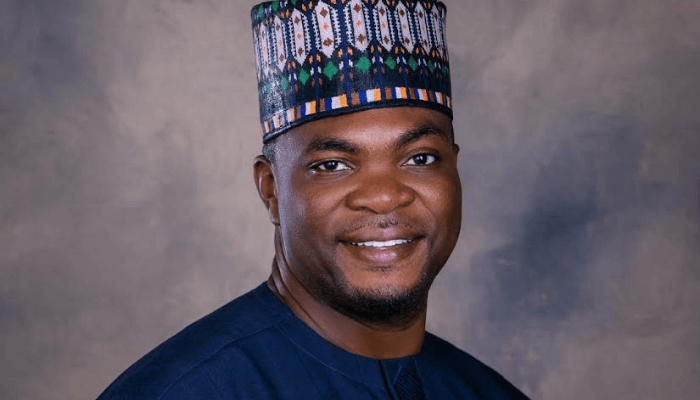
Ezekiel Adamu, founder and CEO of The Balmoral Group, has transformed Nigeria’s events and hospitality sector over the past two decades. With a degree in Computer Science from the University of Luton, a Master’s in Financial Decision Analysis from the University of Portsmouth, and a Doctor of Science (D.Sc. Hons.) in Business Administration & Corporate Governance, Adamu combines academic rigor with hands-on entrepreneurship. Since launching Balmoral Events and Halls in 2006, now expanded into a diversified hospitality and live-experience conglomerate, he has delivered landmark events such as L.I.F.E Festival, Wonderland Lagos, COPA Lagos, and Marlian Fest. In this interview with KENNETH ATHEKAME, Adamu shares his insights on the Nigeria creative industry Nigeria’s business environment.
You built Balmoral from a single events outfit in 2006 into one of West Africa’s largest hospitality and live-experience conglomerates. What was the defining insight that convinced you Nigeria needed this kind of infrastructure?
When we started, the insight was simple: Nigeria had demand but lacked infrastructure. People wanted world-class conferences, concerts, and exhibitions, but there were no trained personnel or venues built to global standards. I realised the opportunity wasn’t just running an events company it was creating an end-to-end experience infrastructure company. That conviction became the foundation of Balmoral.
You transitioned from Schlumberger into entrepreneurship. What early corporate lessons shaped the way you run a diversified hospitality empire?

Schlumberger taught me discipline and the non-negotiability of systems. I learned the importance of data-driven operations and global standards, and how to build processes that work even without my physical presence. That mindset has been critical in scaling Balmoral.
Nigeria’s business environment is volatile. How do you navigate policy shifts, currency fluctuations, and infrastructure challenges?
My leadership philosophy is built on three pillars: Agility — adapting quickly to policy or market changes; Resilience— focusing on long-term growth rather than short-term gains, and Stakeholder Value— treating customers, staff, partners, and regulators as collaborators.
We embrace volatility as an operating condition, not an excuse.
What opportunities do you see for scaling foreign investment in Nigeria’s creative sector over the next decade?
Destination events, sports tourism, creative festivals, and exhibition infrastructure are prime areas for growth. International investors seek scale, structure, and predictability. Formalizing the sector could attract multi-billion-dollar flows.

What behavioural trends have you observed among Nigerian consumers that shape Balmoral’s events?
Nigerians are driven by: immersion- wanting to be part of the experience; community- events must connect people; status expression- experiences are a form of self-storytelling, and value-for-money across social classes.
These insights guide how we design every experience.
What must Nigeria fix policy-wise and infrastructure-wise to unlock the full potential of its events economy?
We need modern, world-class event venues, clear regulatory frameworks for safety and licensing, and creative industry incentives similar to tech. Policy clarity alone could double the sector’s GDP contribution.
Balmoral has adopted technologies like AR/VR, e-ticketing, and analytics. What business problems were these innovations addressing?
They tackled issues like counterfeit tickets, inaccurate demand forecasting, weak customer data, operational inefficiencies, and crowd-safety gaps. Technology improves transparency, efficiency, and audience experience.
How do you balance Nigerians’ love for spectacle with operational realities like power, logistics, and safety?
Safety is non-negotiable. We use a triangular decision model for events: creative ambition, operational feasibility, and safety compliance. Spectacle is important, but not at the expense of life or reputation.
Sportainment is a growing focus for Balmoral. Why is it the next big frontier for African youth?
Africa has a youthful population, nearly 60 percent are under 25. Sportainment sits at the intersection of sports, music, gaming, and urban culture. It delivers narrative, community, and spectacle while creating youth employment and retaining talent within Africa.
How do you make African-born events globally exportable?
You need a universal story, operational excellence, scalable commercial structures, and partnerships with international distribution networks. With those foundations, global expansion becomes natural.
The Balmoral School of Events trains the next generation of talent. What skills gaps exist, and how are you addressing them?
Gaps remain in technical production, safety management, venue operations, experiential design, and digital systems. Our school trains youth to global standards, preparing them to export their skills internationally.
The creative sector is often criticized for lacking structure. What does a professional, export-ready events workforce look like?
It’s process-driven, digitally fluent, safety-conscious, customer-obsessed, and creatively intelligent. Professionalism is not just skill, it’s mindset, structure, and accountability.
What advice do you have for young Nigerians trying to transition from “hustle culture” to structured entrepreneurship?
Hustle starts a business; structure sustains it. Build processes, document your work, separate personal finances, and create systems that can outlive you.
During COVID-19, Balmoral converted its venues into mobile isolation centres. What did that teach you?
It showed that infrastructure must be flexible, private-sector agility can save lives, and CSR is most impactful when it leverages core competencies.
Finally, what policy reforms would most dramatically improve running large-scale events and hospitality businesses in Nigeria?
Unified national safety codes, single-window licensing, tax incentives for creative infrastructure, and government-backed insurance schemes are critical to unlocking a world-class experience economy.