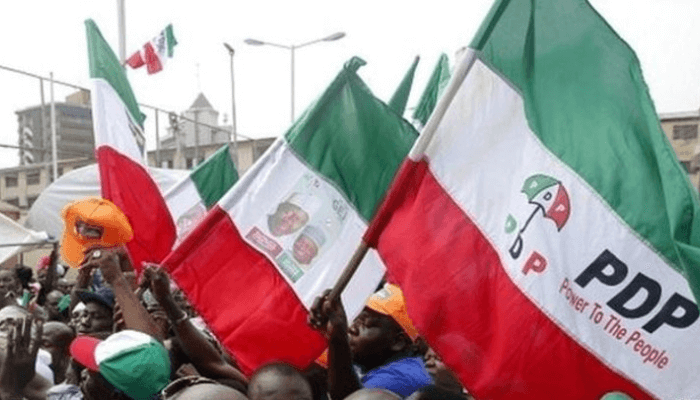
Recently, the People’s Democratic Party (PDP), in conjunction with about 34 other political parties signed a Memorandum of Understanding (MoU) to field a common presidential candidate for the 2019 general election. But will it work?
A political coalition is a temporary alliance of distinct parties to capture political power. In Nigeria, however, the challenge is that disparate parties are forced to form mergers with the capture of political power as their common objective.
Nigeria’s political parties have at different times formed alliances to capture power, but have had limited success in achieving cohesion.
In 2013, one specific coalition enjoyed success. Four leading political parties: the Action Congress of Nigeria (ACN); Congress for Progressive Change (CPC); a faction of the All Progressive Grand Alliance (APGA), and the All Nigerian People’s Party (ANPP) merged to form the ruling All Progressives Congress (APC) which eventually dislodged the People’s Democratic Party (PDP) from power in the 2015 general election.

Three years after capturing power, the coalition has faltered with political bigwigs from the party jumping ship back to the PDP and others forming a splinter group within the APC.
Read also: ‘The Obidient Phenomenon- Media agenda setting on Nigerian politics
As for the current coalition formed by the PDP, cracks have already emerged. Few days after the signing of the agreement, Mike Omotosho, the national chairman of the Labour Party (LP), and Yusuf Sanni, the national chairman of the Advance Democratic Party (ADP), in separate statements distanced their parties from the coalition, saying the PDP was composed of individuals who were responsible for the current woes bedeviling the country.
Ayo Kusamotu, a political strategist, said that the coalition may suffer cracks within its ranks over its choice of presidential candidate. The PDP, which is spearheading the coalition, is expected to present a candidate from the numerous aspirants in its fold, namely: former Vice President Atiku Abubakar, Sule Lamido, Ahmed Makarfi, Kabiru Tanimu Turaki, and a host of others.
However, these smaller political parties which formed part of the coalition are also keen to present presidential candidates for the election. The question is, which of these politicians would be willing to sacrifice his ambition for the success of the coalition? The answer will likely destroy the union.

There is also the perception that since the incumbent President, Muhammadu Buhari hails from the northern part of the country and would be completing one term in 2019, the north would feel short-changed if Buahri is removed and another individual from any area other than north emerges. With the coalition, the north will still insist on completing another term of four years.
The PDP itself leading a coalition to wrest power from the APC has also received some knocks as many Nigerians see the party as the brain behind the country’s current economic woes. This is why some have advocated for a name-change. But a coalition formed solely to win political party without a coherent ideology may not find enough sympathisers.