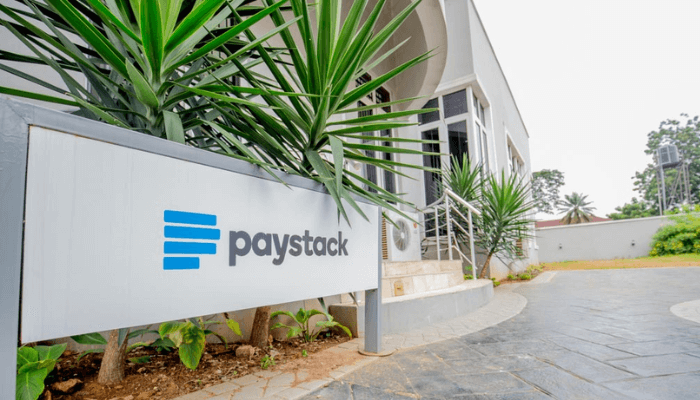
Paystack, the Nigerian fintech acquired by U.S. payments giant Stripe, has restructured its operations under a new holding company, The Stack Group (TSG), as it pushes deeper into consumer payments, banking and new technology ventures beyond its core merchant payments business.
The new structure places Paystack alongside its consumer payments app Zap, Paystack Microfinance Bank (MFB) and a venture studio, TSG Labs, under a single holding company, signalling a more formal shift from a single-product firm into a multi-brand technology group.
While Stripe’s $200 million acquisition in 2020 made Paystack a wholly owned subsidiary, TSG introduces a different ownership model. The holding company is jointly owned by Shola Akinlade, Paystack’s chief executive officer, Stripe and Paystack employees, known internally as “Stacks.” The company declined to disclose the shareholding breakdown.
“The beauty of this model is that it rewards the people who are building the company, while also maintaining the global backing of one of the leading payments companies through this foundational partnership with Stripe,” said Amandine Lobelle, chief operating officer of TSG.

The launch of TSG comes as the group records profitability and positive monthly cash flow, after Paystack grew payment volumes more than twelvefold since its acquisition by Stripe. Akinlade said the new structure reflects longer-term ambitions.
“TSG signals a larger scope of ambition for us and sets the tone for the next decade of our company,” he said.
Founded in 2016, Paystack built its business by offering a cheaper and more reliable alternative to Nigeria’s online payment processors. It became the first Nigerian startup to graduate from U.S. accelerator Y Combinator and, within four years, secured one of Africa’s largest tech exits when it sold to Stripe.
Read also: How Paga increased transaction volumes in four years
Since then, the company has expanded across seven African countries and now processes trillions of naira in payments each month. Over the past year, it has steadily moved beyond merchant payments, launching Zap to target consumer payments and Paystack MFB to deepen its role in banking and fund flows.

TSG formalises that expansion by separating Paystack’s core payments franchise from newer businesses, allowing each unit to pursue independent strategies without diluting focus or complicating relationships with merchants, regulators and partners.
“What we realised is that we’re evolving from being a single-product company to a multi-brand technology group. That means moving from payments alone to multiple brands and multiple types of technology,” Lobelle said.
The holding company model also allows regulatory risk to be ring-fenced, as payments, banking and consumer finance products operate under different compliance regimes. Under a holdco structure, fines or regulatory actions affecting one business would not spill over to others.
TSG Labs, the group’s venture studio, will focus on building new products using emerging technologies such as artificial intelligence and stablecoins, both within and beyond financial services. Lobelle said the group remains committed to fintech but sees broader opportunities in Africa’s digital economy.
The holding company will have its own board, separate from those of its subsidiaries, in line with governance and regulatory requirements. Each business will maintain operational autonomy, with leadership structures determined by its stage of growth.
Paystack joins a growing list of Nigerian fintechs, including Moniepoint and Interswitch, that have adopted holding company structures to support multi-business expansion, acquisitions and experimentation.
Despite entering highly competitive consumer payments and banking markets, the company said it is not fixated on rivals. “We operate with the mindset of an infinite game,” Lobelle said, adding that the focus remains on solving problems faced by African businesses.
Whether the new bets will succeed remains uncertain, but Paystack said the new structure gives it the flexibility to pursue them without undermining its core payments business.
“Having worked with thousands of businesses across the continent since 2016, it is clear there are significant opportunities to support African companies beyond payments. TSG gives us the structure to tackle those challenges more directly,” Akinlade said.