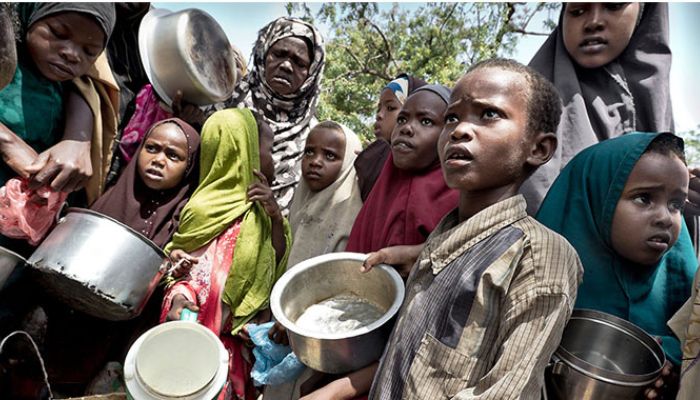
Armature Musa, Kaduna State nutrition officer, has said that a total of 30,089 children across the state’s 23 local government areas (LGAs) were treated for severe acute malnutrition (SAM) in 2025 through the Integrated Management of Acute Malnutrition (IMAM) programme.
She, however, noted that 60,193 children with SAM were admitted across the 23 LGAs within the same period.
Musa disclosed this on Wednesday in Kaduna while presenting the state of nutrition in Kaduna at a one-day meeting with the wife of the governor and spouses of the 23 LGA chairpersons.
The meeting was organised to strengthen advocacy, leadership commitment and resource mobilisation for effective nutrition interventions at the grassroots.

Read also: Experts warn of rising malnutrition, drug-resistant infections as threats to public health
Musa said Nigeria recorded a worsening malnutrition trend between 2018 and 2023/2024, with stunting rising from 37 to 40 percent, wasting from seven to eight percent and underweight from 22 to 27 percent, while overweight declined from two to one percent.
She, however, said Kaduna, with a stunting rate of 40.7 percent according to the 2023/2024 National Demographic and Health Survey, performed best in the North-West.
She noted that although the state outperformed neighbouring states, the burden of malnutrition remained high and required sustained investment.
Musa explained that stunting in Kaduna declined from 48.1 to 40.7 percent, indicating progress in reducing chronic malnutrition, while wasting increased from 4.8 to 5.9 percent and underweight rose from 22.1 to 24.7 percent.

According to her, this trend points to worsening acute malnutrition and an overall deterioration in children’s nutritional status.
She said IMAM interventions focused on early identification through regular screening, treatment and rehabilitation of children with severe acute malnutrition in specialised centres, as well as community engagement through awareness campaigns and support groups.
She identified major challenges, including the low activity of nutrition steering committees chaired by wives of local government chairmen and inadequate funding for nutrition activities at the state and local government levels.
Other challenges, she said, included a lack of ownership and commitment to community nutrition services by some LGAs, as well as inadequate IMAM coverage, with only about 64 percent of wards providing services.
She recommended strengthening LGA steering committees through enhanced technical support and regular meetings; improving leadership engagement through performance reviews and nutrition scorecards; securing dedicated state and LGA nutrition financing; and scaling up IMAM services to uncovered wards.