



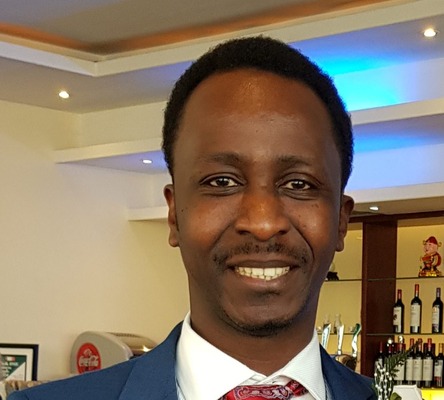
Kayode Emola, deputy national leader (Diaspora) of the Yoruba Self-Determination Movement, has revealed that 141 out of 193 countries globally currently allow diaspora voting, and Nigeria, should not lag behind.
He stated this in an interview recently at a recent diaspora town hall meeting on the heels of Nigeria’s 2027 election, noting the significance of Nigeria’s diaspora population and the growing momentum for diaspora voting.
“We contribute significantly to the global economy and send billions in remittances home. It’s only fair that we have a say in who governs our country, our states, and even our local councils”, he said.
Read also: Diaspora voting: Nigeria’s missing power play

The movement which Emola leads seeks to educate and mobilize expatriates while urging the Independent National Electoral Commission (INEC) and lawmakers to push for reforms that would enfranchise millions of Nigerians abroad.
“It’s not too much to ask,” Emola said. “We’ve seen civil rights movements around the world centred on voting. The issue for Nigerians is not just voting, it’s whether those votes will count.”
Emola emphasised Nigeria’s global footprint, noting that its diaspora contributes billions in remittances annually and plays a vital role in the global economy.
“We should not be sidelined. We deserve a say in who governs our country, our states, and even our local councils,” he argued.
But Emola’s vision goes beyond voting rights. He proposed formal representation in Nigeria’s legislature, suggesting continentally distributed reserved seats in the National Assembly. “Diaspora voices must be part of the legislative process, not just heard during elections. That’s when development will truly begin to trickle down.”

Read also: Coalition calls for immediate passage of legislation on diaspora voting
Despite widespread support for the idea, Emola acknowledged the political inertia that has stalled progress. “Every country has found its own way to make it work. Nigeria must engage with its diaspora and ensure the process is ethical and transparent. People need to feel that their voice matters, not just their money.”
He pointed to the National Assembly as the critical arena for change. “An enabling law must be passed. But it’s not just about government-led initiatives. Civil society and diaspora organisations must rally together to promote a culture of voting.”
Emola also highlighted Nigeria’s low voter turnout, citing that only 20–30 million people voted in the last election, less than 15 percent of the population. “We need broader participation, and the diaspora must be part of that.”
Read also:Diaspora remittances must be matched by political recognition, inclusion – experts
On logistical challenges, Emola remained optimistic. Drawing from his experience as a presiding officer in Nasarawa State in 2011, he recalled overcoming technical hurdles through preparation and training. “Where there’s a will, there’s a way. Nigeria often finds excuses not to act, but it’s possible.”
He criticized the last-minute approach often taken by electoral bodies. “If materials and personnel are prepared well in advance, we can run elections that Nigerians, home and abroad, can be proud of.”
Emola concluded with a sobering reflection, “Right now, many in the diaspora feel let down by those voting in Nigeria. If we’re given the chance to participate, perhaps we can help bring about the change the country so desperately needs.”


![UN Security Council members vote on a resolution by Russia and China to delay by six months the reimposition of sanctions on Iran during the 80th UN General Assembly in New York, September 26, 2025 [Eduardo Munoz/Reuters]](https://businessday.s3.eu-west-1.amazonaws.com/wp-content/uploads/2025/09/Untitled-design-2025-09-28T131646.234-1-small.png)



