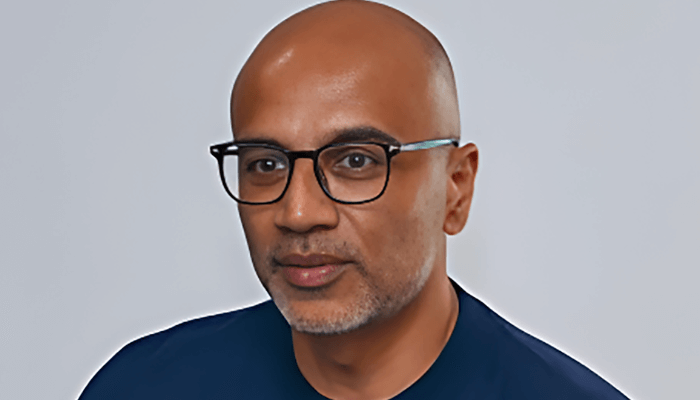
The Regional President MENEAT (Middle East, Near East, Africa and Turkey) at Japan Tobacco International, JTI, Akhil Bhardwaj, was in Nigeria recently at the head of a team from its Geneva, Switzerland headquarters that included the Global Senior Vice President, Corporate Affairs & Communications, Lucine Ovumyan. JTI operates in 130 countries, with 46,000 employees worldwide. With JTI as the second largest tobacco company in Nigeria, the visit was an opportunity to review its operations against the backdrop of a tough operating environment. Akhil spoke with a select group of journalists in Lagos. JOHN SALAU brings the excerpts:
JTI is a major player in the global tobacco industry. Give us a sense of how big JTI is and how Nigeria fits into your global strategy.
That’s a great question because, to be honest, not a lot of people recognise the name JTI. They may recognise our brands and the products that we sell but not necessarily the company behind them. So, I will take you a step back in time and really to our parent company, which is Japan Tobacco, JT, headquartered in Tokyo. It used to be the former monopoly of the tobacco and salt industry in Japan. We were a domestic company owned by the Ministry of Finance, with a strong connectivity to the government. Over the course of the years, JT decided to expand globally through a series of acquisitions.
“When I say growth, we are looking at foreign exchange, inflation, GDP and other economic fundamentals.”

So, JT Group is today a huge conglomerate. We have a tobacco division called JTI, we have a pharmaceutical division, and we have a processed foods division. We represent the tobacco division, and we’re recognised through our global brands. We have the second and third largest tobacco brands in the world with Winston and Camel. We operate in 130 countries. And as you said, we have 46,000 employees.
It’s amazing how large your business is. But with some multinationals now exiting Nigeria due to the economic challenges, from forex to inflation to insecurity, what is your view of the Nigerian market, and how important is it for you? Are you optimistic about doing business in Nigeria?
That’s a very good question. We have witnessed this exodus of some global companies that have been here for a long time, and some of us have been surprised by these moves. But I look after a region known as MENEAT; that’s the abbreviation for Middle East, Near East, Africa, and Turkey. And in this region, it’s not uncommon to face some of these challenges. In fact, around the world, we have economic challenges in one way or another. Although I think it’s quite deep in Nigeria at this moment and in recent years. But we are used to this volatility, and if you look around the world, even in the West, you see some volatility economically. People everywhere are feeling the pinch. So, if you ask me, Why haven’t you exited, or why are you staying? I will want you to understand that we have a view of what the future looks like for Nigeria. When we make any investment, we understand that there will be good times and there will be bad times in any economy. We try to take the long path in terms of thinking about what the next 10, 15, 20, or even 30 years look like. It’s part of our Japanese heritage that we can take a long-term view.
What we are seeing is that Nigeria needed reform. It was very clear that you are facing several pressures, and fundamentally your government is trying to drive economic recovery and growth. That is easy to say but quite difficult to achieve. We are encouraged by the policies that have been put in place by the current government. Encouraged, because they are driving a reform agenda. And all those decisions that have been taken are not easy. There will be some pains in the short term, but we have a cautiously optimistic view that these changes will manifest in a recovery of growth in the midterm. Now, will it be a straight line? Maybe not for us as an organisation, but we have this positive feeling that the longer-term horizon for Nigeria is still one of growth. When I say growth, we are looking at foreign exchange, inflation, GDP and other economic fundamentals. Will society feel better in the future than it does today? We have an optimistic view on that, and therefore we are here for the long term. You know, you must be able to ride the waves.
JTI has been operating in Nigeria for about 16 years. What would you say have been your contributions to the economy, and what is your investment plan in Nigeria?

I would say we have been in an investment phase over the last 16 years while trying to fundamentally understand Nigeria better. And 16 years in the history of Nigeria is not very long, but it’s long enough to get a good picture of how we should be operating here. So, we are the second largest in the tobacco industry here. We are the second largest excise taxpayer, which is a huge contribution to government revenue.
But more importantly, we contribute to the employment of more than 3,000 people directly and indirectly, which is critical for a thriving economy. We have spent 16 years investing in building our business, our people and our brands. So, we feel pretty good about that side of it. But also, what encourages me the most is that Nigeria is, for several reasons, a source of talent for us. We have lots of talents that we export to other parts of the world to develop their own careers, to help us in those parts of our business and then to bring all that knowledge back to Nigeria in the future. And that’s an important part of our strategy.
Read also: Nigeria needs a 30-year transformative perspective plan – Part 2
I see you have done quite a bit already. Are there any future investments that we should take note of?
Well, we continue to invest every year, and that’s not abating at this moment. As others are thinking about exiting, we are constantly having conversations about growth and how we can drive the business forward and ride on some of the turbulent waves that we’ve had in the past.
So, the business is in the investment phase. But generally, in other parts of the world where we operate, we also make community investments, which is very important to us. We feel very strongly about ensuring we operate in countries as a responsible corporate citizen. And I think we can talk about millions of dollars that we invest every year to support our communities. In 2023, JTI invested over USD 42 million in community development initiatives. The JTI Foundation has helped communities around the globe to become safer and more resilient to natural and man-made disasters. But, unfortunately, in Nigeria, we are not allowed to do so at this moment due to regulation, but if that were to change, we would be very keen to do the same here.
As Regional President, you oversee JTI’s operations across several markets. If you were to advise the Nigerian government, what would be your recommendations on improving the business environment, drawing from your experience across various jurisdictions?
That’s a very tough question. In the MENA region, we have about 40 countries and 40 operations. So, it’s very different, as everyone faces diverse issues. But the position that I take is that governments are elected on a mandate. And it’s the responsibility of the government to set that mandate. We believe we can make an important contribution once a government has set its direction if we are invited to the table on a consultation basis to see how we can move that policy agenda forward in the best way for sustainable growth, and that’s usually the posture that I take in any country.
As with any business, a predictable and stable operating environment ensures we can plan better and more sustainably. This is why we are always keen to engage with governments to offer our views on proposed policy decisions, based on our experiences of doing business across a diverse range of countries. We always do this in an open and transparent way. It is the role of governments to set their own agendas to secure the future success of their countries, but certainly the Nigerian government’s focus on reforming the economy and investing in a robust, innovative infrastructure will help create an environment in which businesses like ours can grow.
I don’t think there is an industry that is more regulated than yours. How is JTI responding to the tobacco industry’s global scrutiny, from stiff regulations to high taxation and other operational restrictions?
Regulations and taxation are not new to our business, and JTI has continued to demonstrate strong, sustained growth whilst also ensuring we comply with any legislative requirements. The tobacco industry shares common goals with regulators: everyone should be informed about potential health risks, and children should not smoke or vape. Balanced and proportionate regulation of the industry is therefore necessary and right.
Our industry is changing, but our commitment to consumer choice remains. We are transforming to provide a wider portfolio of quality products, including those with the potential to reduce the risks associated with smoking, such as heated tobacco, nicotine pouches and e-cigarettes. Across the globe, we strive to provide fulfilling moments by delivering scientifically substantiated reduced-risk propositions to our consumers. Good regulation is based on a fair consultative process, where all points of view are considered, even if some are ultimately rejected. This is what we continue to advocate for in our industry. Our commitment to compliance is total, and we will continue to play by the rules and operate responsibly while contributing meaningfully to society in line with our purpose of creating a better future.
From your visit and interactions in Nigeria, what strikes you most about Nigerians as a people and Nigeria as a country and an investment destination?
When I became Regional President of MENEAT in 2023, the first market I visited was Nigeria. I had a great time here. The tradition now is that every year, the first visit is to Nigeria, and to be honest, the reason is because you get this boost of energy. With 40 countries, I try to visit quite a few of them every year, which means almost every week you are travelling to one. But when we are here, we indulge ourselves in trying to understand how people are feeling, how society is feeling, and how our employees are feeling.
I live in Geneva, Switzerland, which has a very different feel from Nigeria. And it’s interesting that despite the economic hardship that people are facing here, there is a high level of optimism. I feel so welcome when I come here. The energy levels are so high. The music is incredible. The food is incredible. The long conversations about soccer teams are incredible, and you leave energised. You never leave Nigeria feeling deflated; you feel a spring in your step.
Our faith and confidence in this country remain very strong, and we will continue to support our business here to grow in a very sustainable way. I am excited to see our future success in this market.