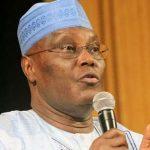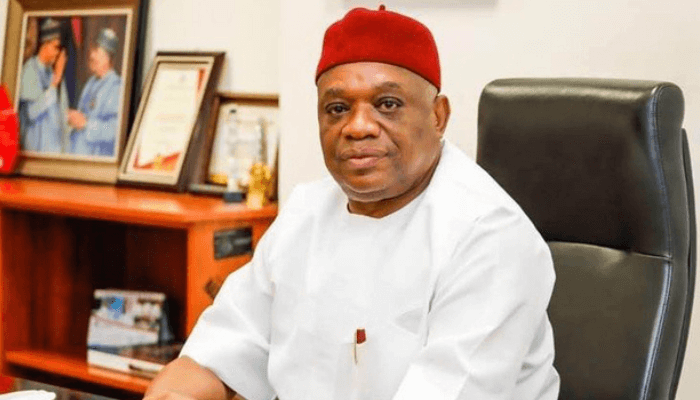
More than 30,000 civilians have been killed and thousands of livelihoods destroyed since separatist agitations linked to Nnamdi Kanu and the Indigenous People of Biafra (IPOB) began in the south-east, Senator Orji Uzor Kalu has said, warning that the region cannot afford further escalation following Kanu’s recent life imprisonment.
Kalu, who represents Abia North in the Senate, made the disclosure on Sunday while speaking on Channels Television’s Sunday Politics, days after a federal high court in Abuja sentenced the IPOB leader to life imprisonment on multiple terrorism charges. According to him, public discussions have focused heavily on security casualties, while the massive civilian deaths and economic devastation remain largely underreported.
The former Abia governor said countless families, traders, and small business owners have been wiped out financially by years of sporadic violence, enforcement of illegal sit-at-home orders, and fear-driven economic shutdowns. He argued that the human and economic cost of the agitation is far greater than many Nigerians realise.
Read also: Opinions divided in South East over Nnamdi Kanu’s conviction

Kalu urged political leaders across parties to de-escalate tensions and channel their energy toward securing a political resolution to the crisis. “This is not the time for noise-making or fighting. It is a time for sober reflection,” he said. “Over 30,000 Igbos were killed. People who had shops lost their businesses. The problem of Nnamdi Kanu is what we need to solve through a political process.”
He said he has been quietly engaging the federal government to explore avenues for a non-violent resolution and hinted that key Igbo stakeholders have previously recommended dialogue over confrontation. Kalu cited examples from his personal encounters, including the story of his late mother’s friend whose rice business was looted, leaving her bankrupt and unable to pay a N4.2 million debt. “Nobody talks about the people whose lives were shattered,” he lamented.
The senator advised residents of the south-east to “stop being emotional” and instead unite around a diplomatic path that could pave the way for Kanu’s release. “I want us to settle down, go on our knees, and find a way that the man can be released. It’s part of my job to do it,” he said.
Reflecting on past interventions, Kalu recalled urging former President Muhammadu Buhari to grant Kanu bail in 2017 as part of his conditions for joining the All Progressives Congress (APC). He also defended Justice James Omotosho, the federal high court judge who convicted Kanu last week, saying criticisms of the ruling were misguided. “Nobody should question the decision of Justice Omotosho. If you are displeased, you go to the appellate court,” he said.
Read also: Ohanaeze condemns life sentence on Nnamdi Kanu, calls for calm

Kalu criticised Kanu’s courtroom conduct as “unruly,” adding that defendants must respect judicial processes regardless of the outcome. He contrasted this with his own experience when he received a 12-year conviction during a corruption trial. “I never insulted the judge,” he said.
Kanu was sentenced to life imprisonment on counts relating to terrorism acts, threats, and enforcement of sit-at-home directives, which the court ruled amounted to terrorism under Nigerian law. Additional sentences of 20 years and five years on related charges were issued without the option of a monetary fine.