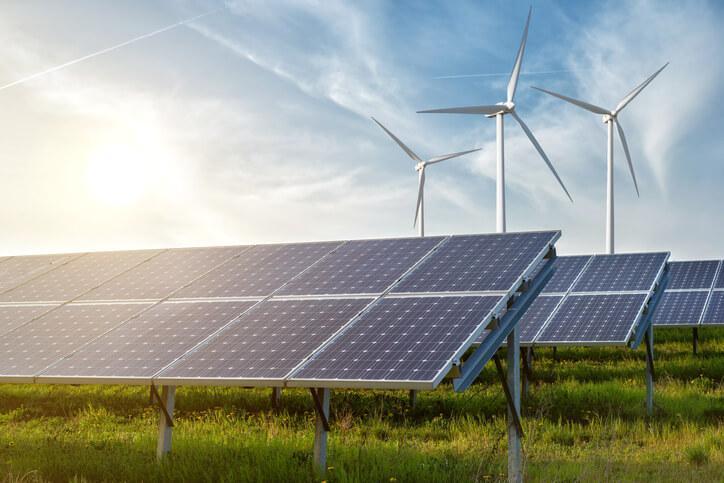
As a growth market, the renewable energy insurance sector has attracted significant capital, leading to a soft market and many challenges for insurers. Premium has developed in line with installed capacity in the industry which has grown at an annual rate of around 8 percent since 2010. However, recent loss trends in many segments of the renewable energy industry have raised concerns over deductible and rate adequacy, analyst at Allianz Global Corporate & Specialty (AGCS) said.
Carl Angelo Dill, Senior Underwriter, Renewable Energy, Allianz Global Corporate & Specialty (AGCS), said from large hurricane losses to PV plants in Puerto Rico during Hurricane Maria in 2017 to fires devastating onshore wind turbines and repeated theft claims, the renewable energy industry suffers from frequency as well as severity events. Apart from this, challenges include a mix of risk engineering, price modeling, digital distribution and comprehensive product innovations, above and beyond traditional insurance solutions.
He also noted that risk consulting and engineering are challenged by rapidly evolving technologies requiring close monitoring of different elements like new wind turbines being developed and upgraded in ever shorter cycles. Keeping up with international engineering standards as well as certifications for equipment (e.g. type certification) and projects is also challenging. Predictive maintenance and data analytics will drive innovative concepts for the evolving risks, eventually opening up opportunities for tailored insurance solutions.
Digital distribution continues to be influenced by the smaller size but higher numbers of risks. While utility-scale PV and onshore wind plants can reach installed capacity in the gigawatt range, many installations are on the smaller end which requires more efficient handling. PV and onshore wind continue to be standardized (e.g. through broker facilities and digital trading platforms), larger, more complex segments, like offshore wind, geothermal or concentrated solar power require thorough, case-by-case underwriting.

Renewable energy requires a comprehensive insurance product offering due to complex financing and ownership structures. Traditional products often are bundled across project phases and lines of business, while non-traditional products, such as protecting against a lack of wind or sun, aren’t fully exploited by customers yet, requiring further product integration. If implemented before financial closing, these can reduce financing costs and free-up capital. Other products cover upfront decommissioning costs for assets and lower capital requirements at the start of a project.
Traditional insurance solutions cover renewable energy “all-risks” across multiple products and lines of business, as well as across project phases – planning liability for architects and engineers during the development phase; cargo all-risks and delay in start-up (DSU) during the transport phase; erection all-risk, advance loss of profit and project liability products during the construction phase; and operational all-risk, BI and public- and product-liability covers, as well as environmental liability, during the operational phase.