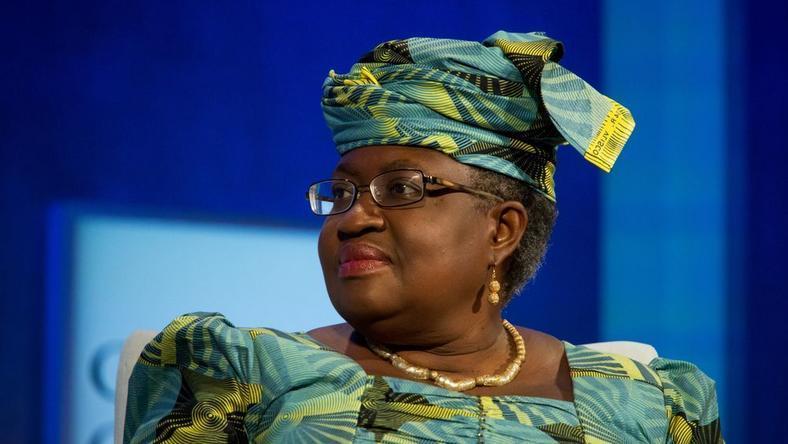
The rejection by the United States of Dr Ngozi Okonjo-Iweala as the next Director-General of the World Trade Organisation is disappointing. That the rejection came despite the unanimous decision of the WTO’s selection committee, is unfortunate. Yet, the sad truth is that Okonjo-Iweala cannot get the WTO top job without US support.
Thus, the outcome of last week’s US presidential election, which is unknown as I write, is significant. For it will determine whether Dr Okonjo-Iweala becomes the WTO’s next DG and thus the first African and first woman to lead the world trade body.
Truth is that the re-election of President Donald Trump, whose administration has already rejected Okonjo-Iweala for the WTO top job, would make it impossible for her to get the job. But the election of former vice president Joe Biden could help to resolve the selection impasse. Yet, even so, the process could run for months and months!
In August, I warned in this column that while Okonjo-Iweala’s awe-inspiring CV and global profile could win her the DG job, high politics could scupper it. All WTO members, particularly the powerful one like the US, EU and China, would make their choices based on strategic considerations: their perception of each candidate’s qualities, their relationship with his or her country and the values they want to project by supporting a particular candidate.

READ ALSO: RE: Lagos State judicial panel of enquiry and restitution for victims of SARS-related abuses (1)
The WTO is unlike the World Bank or the IMF. It is a member-driven organisation, with limited powers for its head. All major decisions are made by the membership as a whole on the basis of a one-member-one-vote rule. But while, in theory, every member has a veto and can block a decision; in practice, only the power members, that is, the economic superpowers, can effectively sustain a veto. Also, although, under its treaty, the WTO can select its DG by voting, in practice, the WTO does not vote – or has never voted – to choose its DG. All past DGs were selected by consensus, without a formal vote.
For instance, in 1999, the WTO could not choose between Dr Mike Moore of New Zealand and Dr Supachai Panitchpakdi of Thailand. But instead of voting to decide the winner, it took the unprecedented decision to split the term of office between them, with Dr Moore doing a term of three years, from 1999 to 2002, while Dr Supachai also did a term of three years, from 2002 to 2005! Neither could go for a second term nor have his term extended.
But the WTO regarded term-sharing as a precedent that should not be repeated. So, it introduced a process of successive rounds of consultations to identify the candidate best placed to attract a consensus, although, in theory, it could have recourse to a vote as a last resort.
In May this year, following Roberto Azevêdo’s announcement that he would resign as WTO Director-General on 31 August 2020, a year before the expiry of his mandate, the WTO launched the selection process to appoint a new Director-General. A troika of the most senior chairs of WTO committees was asked to conduct three rounds of consultations to identify the candidate “around whom consensus could be built.” The Troika held private one-on-one meetings with each WTO member, simply asking: “Who are your preferences?”

After the first and second rounds, the original eight candidates, three of who were African, were reduced to two, namely: Nigeria’s Dr Okonjo-Iweala and South Korea’s Ms Yoo Myung-hee. On October 28, the chair of the Troika, David Walker of New Zealand, announced that, after due consultations, Dr Ngozi Okonjo-Iweala was “the candidate best poised to attain consensus and become the 7th Director-General.” But no such consensus can exist without the United States, the world largest economy and WTO’s single largest financial contributor.
Well, the US shattered any illusion of a consensus by formally declaring that it could not endorse the selection of Dr Okonjo-Iweala by the Troika. Rather, the US said Ms Yoo, who it described as a “bona fide trade expert”, was the best person for the job, arguing that the WTO should be “led by someone with real, hands on experience in the field.” According to US officials, Ms Yoo, who has 25 years trade experience and currently serves as South Korea’s trade minister, would be able to “hit the ground running.”
To be sure, concerns about Dr Okonjo-Iweala’s lack of trade expertise were raised throughout the selection process. But no one doubted that she would make it to the final round. Her global status and outstanding experiences as former managing director of the World Bank and former finance minister of Nigeria, credited with tough reforms and with tough negotiations to secure debt relief for Nigeria, were enough to make her one of the two final candidates. The question was who the second candidate in the final round would be.
There were speculations that the second final-round candidate would be Dr Amina Mohamed of Kenya, a trade expert and WTO aficionado. If Dr Mohamed had been one of the last two candidates, the possibility of veto-wielding would have reduced. The US would probably still have vetoed Okonjo-Iweala’s selection, but it would have supported Dr Mohamed because of her trade experience and the strong ties between the US and Kenya.
Understandably, WTO members did not want to have two Africans in the final round. Rather, they opted for an African and an Asian, even though most of them, particularly the European Union, shared the “Africa’s turn” sentiment and also wanted a superstar, who may not be a trade guru, to be the DG of the WTO. Okonjo-Iweala fitted the bill!
However, by pitting a Nigerian against a South Korean in the final round, WTO members increased the possibility of veto-wielding. This is because Japan and China would never have supported a South Korean due to regional tensions, and the US would never have preferred a Nigerian to a South Korean, given its strong strategic alliance with South Korea!
But, given that Dr Okonjo-Iweala is a US citizen, why would the US government act against the interests of its own citizen? By obtaining US citizenship last year, so late in her long US-based career, Okonjo-Iweala would probably have expected and is entitled to expect, that her US citizenship would boost the US support for her international ambitions.
Well, for President Trump, what mattered was not Okonjo-Iweala’s citizenship, but what she stood for. She may be an American citizen, but her affiliations and contacts in the US – Harvard, MIT, World Bank, Twitter etc – are what Trumps describes as “global special interests” and utterly rejects.
Furthermore, unlike Ms Yoo, who relied on the traditional government-government approach, Dr Okonjo-Iweala relied less on the Nigerian government but more on sophisticated public relations campaigns and high-level endorsements from liberal-multilateralist world leaders that President Trump loathes.
So, apart from her perceived lack of trade expertise and her Nigerian nationality, Okonjo-Iweala is simply not on the same wavelength with Donald Trump and couldn’t have received his administration’s support!
But what next? Well, Okonjo-Iweala’s best hope is for a Biden administration. Were President Trump re-elected, albeit unlikely, the US would never endorse Okonjo-Iweala for the DG job? If the WTO were to have recourse to voting, which would be an exceptional departure from the customary practice of decision-making by consensus, the US, under Trump, could withdraw from the WTO as it did the World Health Organisation.
The question is: Are WTO members willing to sacrifice the US, the world’s economic superpower, for Dr Ngozi Okonjo-Iweala, a global icon? The answer is no! So, the solution lies in winning over the US, under President Biden. Either way, Okonjo-Iweala needs America to become the DG of the WTO!
I wish her well!