Oil gained on Monday and still held close to its highest since early February after a Libyan oil field was shut down, as Saudi Arabia pledges further curb structured in line with the Organisation of Petroleum Exporting Countries (OPEC) led effort to cut global supplies.
Saudi Arabia hopes OPEC and its allies will be able to relax production curbs next year and create a permanent framework to stabilize oil markets after the current agreement on supply cuts ends this year.
“It’s a very good initiative; however the world is on an energy transition from fossil to non-fossil oil, so all these are temporary arrangement to ensure countries maximize their benefits from higher oil prices,” said Adeola Adenikinju, a gas policy analyst for the World Bank and professor of economics at University of Ibadan.
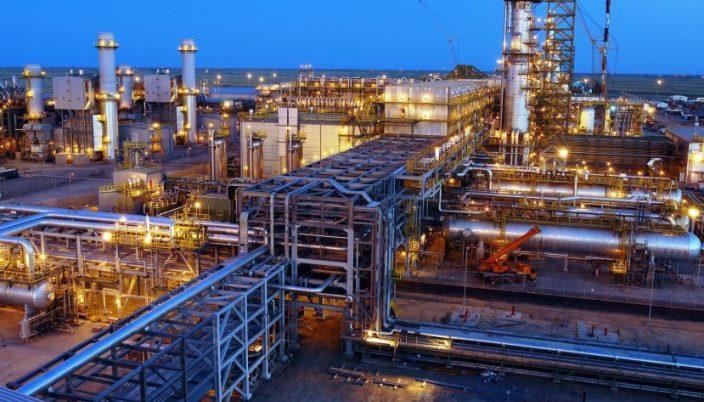
Saudi Arabia completed the largest chemicals facility constructed in a single phase anywhere in the world worth $20billion last year.
It stands as a powerful statement of intent by Saudi Aramco, the state oil company, to adapt to a changing energy environment and as a symbol of what a reformed Saudi economy could look like.
At the centre of his reform programme is a stake sale in Saudi Aramco to international investors, proceeds from which will be funnelled into non-oil sectors such as technology, tourism, healthcare and mining.
Increasing investment in chemicals aligns the company with the ambitious economic overhaul being pushed by Crown Prince Mohammed bin Salman to wean the kingdom off what he has called its ”
dangerous addiction to oil “.
Futures in New York rose as much as 0.6 per cent, after rising 3 per cent the previous two sessions. Libya’s crude loadings from the Mellitah terminal will be “modified” after protests impeded output at the El-Feel field.
Brent for April settlement was up by 4 cents to $67.35 a barrel on the London-based ICE Futures Europe exchange. The contract on Friday climbed 92 cents, or 1.4 per cent, to settle at $67.31. The global benchmark crude traded at a $3.70 premium to WTI.
Libya’s National Oil Corporation (NOC) said it had declared force majeure on the 70,000 barrels per day (bpd) El Feel oilfield after a protest by guards closed the field; El Feel was shut after guards withdrew from the field to push demands over pay and other benefits.
“When there is a supply disruption, prices are always trying to rebalance on a higher level, Jubril Adedayo, Energy analyst at Ecobank research said.
Adedayo added, “The good thing for Libya is it’s not a forced production halt caused by militants but by security guards demanding non-payment or payment increase.”
News of a production halt at the El-Feel field helped cap a weekly drop of more than 3 per cent, after reports showed storage tanks at the Cushing, Oklahoma hub are at their lowest levels since 2014 as exports of US crude surge.
Energy Information Administration (EIA) showed that U.S. crude inventories unexpectedly fell 1.6 million barrels last week. Crude stocks at the Cushing, Oklahoma, delivery hub for U.S. futures fell 2.7 million barrels last week.
The rapid decline in US stockpiles and growing demand for crude from the country’s booming shale fields are helping reassure the market that production cuts led by OPEC are working.
“The U.S stockpiles is a number that always fluctuate; so it’s not always a very independent way of projecting crude oil prices,” Adedayo said by phone.
It was the first time in 2018 that the U.S. hasn’t seen a significant production increase, and because it has occurred counter-seasonally this is typically at a time when crude demand tends to soften.
Hedge funds and money managers upped their bullish wagers on U.S. crude oil for the first time in four weeks, data showed on Monday.
Libya is an OPEC member which was allowed to increase production, exempt from the group’s effort to reduce output to eliminate a global glut.
“The situation in Libya is temporary; however Nigeria will continue to benefits from higher oil prices,” Adenikinju concluded.
Brent crude stood at $67.17 per barrel (pb), Thursday, according to Bloomberg data.
DIPO OLADEHINDE