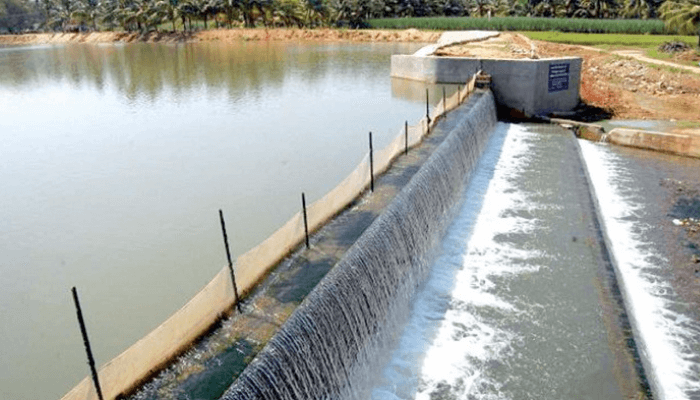
When Adedeji Ashiru took over as managing director of the Ogun-Oshun River Basin Development Authority (O-ORBDA) in May 2024, he inherited a crisis decades in the making. The Oyan Dam, commissioned in 1983 to combat drought, boost agriculture, and generate electricity, now stands as a symbol of wasted potential—producing zero megawatts, fueling floods, and leasing its reservoir to fish farms while irrigation projects lie abandoned.
One year into his tenure, stakeholders are demanding urgent action. From powerless communities to flood-ravaged neighbourhoods and farmers struggling with erratic water supply, the pressure is mounting on Ashiru to deliver. His in-tray is daunting: restore hydropower, revive irrigation, and stop the annual flooding that displaces thousands.
A dam in disrepair
Built to generate 9MW of electricity and irrigate 3,000 hectares of farmland, the Oyan Dam has failed on both fronts. Investigations reveal that it currently generates zero power. The hydropower turbines have been non-functional for years, depriving the national grid of much-needed electricity. Dependent irrigation projects like the Middle Ogun Scheme meant to support food security, have remained moribund for over nine years. In September last year, though, the project was revisited, some of its obsolete infrastructure jettisoned, while newer ones are said to now be connected.

Read also: Ogun to build IDP camps as Oyan Dam flooding sacks communities
Poor water management turns the dam into a flood trigger, with catastrophic overflows in 2019, 2023, and 2024. Meanwhile, the O-ORBDA has leased reservoir space to aquaculture firms—Premium Aquaculture, Durante Fish Industries, and Ejide Farms—prioritising private profits over public welfare.
Read also: Food inflation: FG urged to revamp river basins to boost farming
Floods, fury, and failed promises
Downstream communities bear the brunt. In Isheri North, Lagos, resident Akintola Omigbodun has tracked flood patterns since 2007. His findings? The O-ORBDA’s water releases, often timed to protect fish farms, worsen flooding.

“The dam was supposed to protect us, not drown us,” says Olanrewaju Falade, chairman of the Lagos/Ogun River Basin Communities Association. “Every year, homes are destroyed, roads vanish underwater, and lives are upended—while the O-ORBDA blames ‘52 ungated tributaries.’”
Stakeholders said they hope Ashiru will not ignore the warnings they have issued to several leaders of the establishment before him. A recommended 2009 Environmental Impact Assessment (EIA) for floodplains was never conducted. A 2023 stakeholders’ summit also recommended proactive reservoir drawdowns, but these were never implemented. A 2024 plea to Ashiru to lower water levels before rains was disregarded, leading to another flood disaster.
The reform roadmap
Having seen the issues, Ashiru must act on five fronts to salvage the O-ORBDA.
First, he needs to work with all relevant stakeholders to revive irrigation for food security. He needs to speed up work on rehabilitating the Middle Ogun Irrigation Project and expand farmland access.
Read also: Flood: Isheri residents seek Ogun, Lagos’ intervention
He needs to fix flood management as it affects a lot of Nigerians, both directly and indirectly. In a letter written to the River Basin’s MD earlier in the year, several ideas were shared as to how this can be achieved. For example, Omigbodun shared a water release plan that suggests that the dam management should lower reservoir levels to 49m by August and cap releases at 18M m³/day in September. There are also suggestions that the management should relocate fish farms downstream to free up flood control capacity.
The communities affected by the flood control arm of the dam will also benefit from a high level of transparency and accountability. They want a daily publication of the dam data on water levels and releases. And they are looking to have a community consultative committee for real-time feedback. Ashiru and his team also need to work with Lagos and Ogun states to dredge the Ogun River and build embankments. He could also work to secure ecological fund backing for flood mitigation infrastructure.
Hydropower currently contributes about 20 percent of Nigeria’s 5,000MW grid supply, with a potential estimated at 14,000MW.
Experts said Nigeria’s grid needs every megawatt it can get from hydropower in a race to close energy access in a country where at least 86 million Nigerians lack access to power.
They said this could be a form of partnership with the office of the Ministry of Power — or private investors—to reconnect.
A litmus test for leadership
Ashiru’s early pledge to prioritise “lives over fish farms” raised hopes, but implementation has lagged. With the 2025 rainy season approaching, communities are bracing for another crisis.
“The O-ORBDA must choose: Will it serve the public or private interests?” asks Falade. “We’ve had enough meetings. We need action.”
For Nigeria’s food security, power supply, and flood resilience, Ashiru’s next moves are critical.