Okra soup is one of Nigeria’s greatest gifts to the world. There is hardly any continent that does not have Okra, the foodies who love Okra just cook it in different ways, through various methods.
Òbẹ̀ Ilá ati Omi Atá is Nigeria’s slippery treasure ready for UNESCO’s table in kitchens across Nigeria. Okra is common across the country, from Lagos, to Abeokuta, Ilorin, Ibadan, Abeokuta, Benin or Aba, Owerri, Enugu, Gboko, Sokoto, and other parts of the country.
The familiar sound of a knife slicing through fresh green okra in Nigeria, West Africa, many parts of Africa and beyond, signals comfort, heritage, and nourishment.
Òbẹ̀ Ilá àti Omi Atá is more than a meal. It is a cultural archive, a culinary science lesson, and a nutritional powerhouse steeped in centuries of tradition.

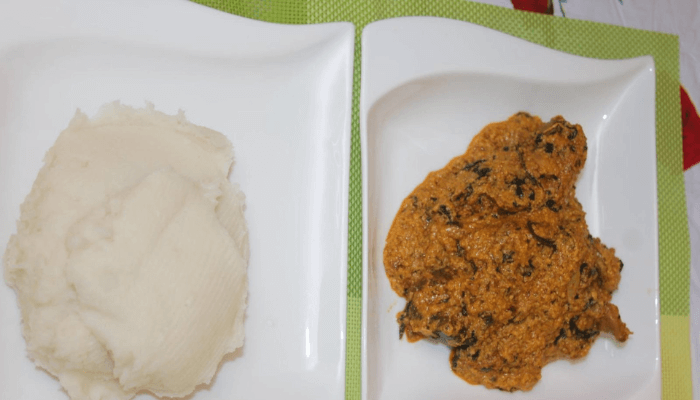
Okra sauce can be served with amala, eba, semo, fufu, pounded yam or tuwo.
Okra sauce has long been a staple among the Yoruba, and has spread across other ethnic groups – Hausa, Edo, Igbo, and many minority groups across Nigeria.
Its preparation techniques, communal cooking practices, and intergenerational transmission make it a strong candidate for UNESCO’s Intangible Cultural Heritage List.
But what makes this humble dish truly stand out is its nutritional excellence, health benefits as well as its nutritional value, preserved through indigenous cooking methods that prioritise freshness, speed, and minimal processing.
The macromutrients embedded in Okra include calories, carbohydrates, protein, healthy fat, dietary fibre and many others. It is however pertinent to note that Okra is naturally low in calories and high in soluble and insoluble fibre, making the sauce filling and gut-friendly.

The micronutrients include vitamin C, which is high and supports immunity and skin health. Vitamin A (beta-carotene) is known for eye health and reproduction. Vitamin B9 is rich in folate, which is good for pregnant women. Others are Vitamin K for blood clotting and bone support. Also included is Vitamin B1, B2, B3 and minerals like magnesium, which is high in (nervous system and muscle health), calcium which is moderate in (bones and teeth) health, potassium which is high in management of heart function and blood pressure). Iron and Zinc are good for immune support.
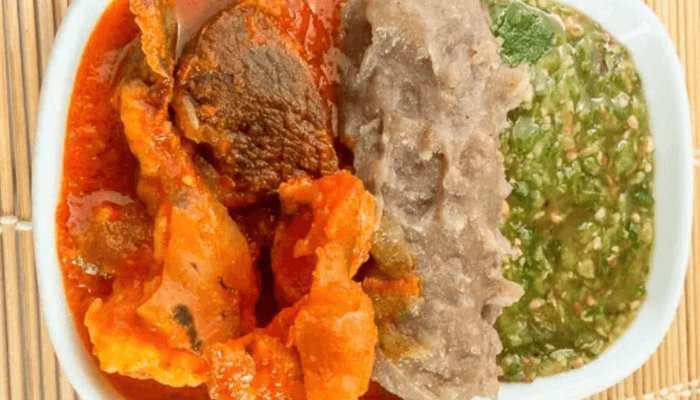
When cooked with fresh fish, fresh shrimp, crayfish, ponmo, and all kinds of assorted meats, all combine to make Okra sauce a great soup.
Okra offers several health benefits: it aids in blood sugar control by slowing glucose absorption, supports digestive health through soluble fiber, promotes heart health with its fiber and palm oil content, provides anti-inflammatory and antioxidant properties through polyphenols, supports fertility with high folate levels, and helps with weight management by being low in calories while maintaining flavour.
A typical pot of Òbẹ̀ Ilá àti Omi Atá includes fresh okra, a fresh pepper blend (omi ata), onions, palm oil, smoked fish, stockfish (optional), crayfish, fresh fish, locust beans (iru), and seasoning with local spices. Each ingredient contributes to the dish’s nutritional value and cultural significance.
Culinary Heritage Value of Òbẹ̀ Ilá as a UNESCO-Worthy Food
1. Deep-rooted cultural identity
For the Yoruba, Òbẹ̀ Ilá amd Ata is tied to identity. It appears at weddings, naming ceremonies, market feasts, and communal gatherings. The Hausa prepare variations like miyan kubewa, while Edo and Igbo adapt it into regional fusions.
2. Indigenous preparation methods
Hand-cutting okra for desired texture, pounding in a wooden mortar, cooking fast to retain slime, and blending omi ata in traditional clay pots are practices preserved from one generation to another.
3. Community & family transmission
Grandmothers teach daughters; daughters teach sons; food vendors teach apprentices. This unbroken chain fits UNESCO’s criteria of “intergenerational transmission.”
4. Supports local agriculture
Okra, pepper, and locust beans are farmed across Nigeria, sustaining rural farmers and local markets. The economic ecosystem around the soup is strong.
5. Diversity of preparation
The dish combines Gbegiri and Ila (Abula), alongside plain Ila with a pepper base and Northern-style miyan kubewa, showcasing creativity, adaptability, and regional specificity.
6. Nigerian diaspora identity
Across the UK, US, Canada, and Europe, okra soup is one of the most easily recognized symbols of Nigerian cuisine, thus preserving identity abroad.
7. Sustainable food practice
Okra farming is environmentally friendly, drought-resistant, and low-maintenance—meeting UNESCO’s emphasis on sustainability.
Òbẹ̀ Ilá àti Omi Atá is more than comfort food.
It is nutrition, heritage, identity, and history, preserved lovingly in Nigerian kitchens for centuries.
As Nigeria pushes for the recognition of its culinary traditions on UNESCO’s Intangible Cultural Heritage List, okra sauce stands tall as one of the strongest contenders and a dish that draws families together, nourishes bodies, strengthens culture, and tells the Nigerian story with every spoonful.
Let’s visit the kitchen…
OBE ILA ATI OMI ATA (OKRA SAUCE)
Recipe for 5 servings:
4 cups okra (grated)
1 cup fresh red pepper (blended)
1 cup tatashe pepper (blended)
2 cups tomatoes (blended)
1 onion (crushed)
2 cooking spoons palm oil
12 pieces beef (cooked)
12 pieces assorted meat (shaki, fuku, edo)
12 pieces ponmo (cooked)
Salt and seasonings to taste
3 wraps iru (locust beans)
A pinch of kaun (potash)
Method:
• For obe ila, pour the grated okra into a deep pot.
• Add a little salt, seasonings and iru and kaun and bring to boil.
• Boil until the okra is crisp tender (one minute).
• Stir and set aside.
• Meanwhile, place a deep pan or pot on the heat, pour in the palm oil.
• Bleach and add the onion.
• After four seconds, add the peppers and tomatoes, including the salt.
• Stir and allow to steam for two minutes before adding the fish and meats.
• Stir and add the meat stock, cook for another five minutes and remove from heat.
• Dish the okra delicacy and serve the sauce on it.
• Enjoy with amala, lafun, pounded yam, eba or semovita.