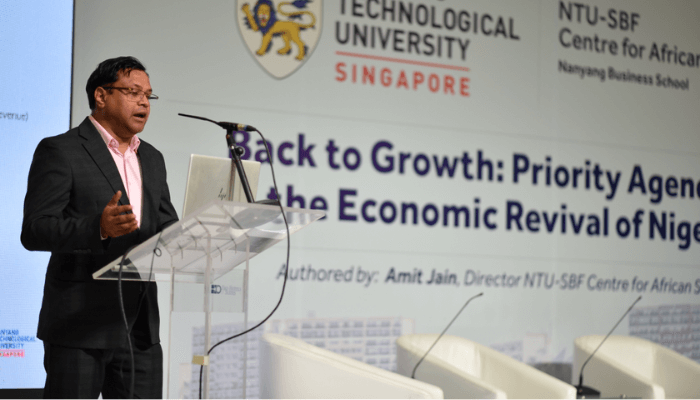
The NTU-SBF Centre for African Studies has unveiled a 10-year economic roadmap for Nigeria.
The plan was presented by Amit Jain, director of NTU-SBF Centre for African Studies while speaking about the report ‘Back to Growth: Priority Agenda for the economic revival of Nigeria’ on Monday in Lagos.
“Although there is little that Nigeria can do to affect the global oil price, it can take steps to attain fiscal stability, improve infrastructure, and restore investor confidence,” Jain said in his keynote address at the unveiling of the report.
He laid out a set of progressive reforms that, if carried out sequentially, could put Nigeria back on the path to sustained growth.

Jain outlined four critical factors likely to determine Nigeria’s economic performance over the next ten years which are the price of oil in the international market, fiscal stability, infrastructure, and investor confidence.
Read also: How to drive economic growth in Nigeria with digital technologies – sample roadmap for 2023 -2027
He also identified three essential conditions for sustained growth for the country. “Firstly, if international trade and the financial markets remain favourable to Nigeria, it would be able to borrow at concessional rates. Nigeria’s demographic dividend will not be felt unless the working-age population has the right skills to exploit opportunities in a changing world.
“And perhaps most important, is governance. Good governance is critical to ensuring durable economic growth,” Jain said, adding that it would help improve the business climate and repair the social contract between citizens and the state that has been damaged over the years.
The report noted that the priority for Nigeria over the next two years should be to achieve stabilisation.

“Ending fuel subsidy, tightening monetary policy, migrating to a flexible unified exchange rate regime, and curbing oil theft should stop a bad financial situation from worsening,” Jain said.