It has come to our notice that improving the lot of Nigerians and their standard of living is not just a moral imperative but an economic necessity on the part of our leaders. I once read an unpublished poem by an unknown poet, which read: “All in expectation; the year is coming to an end; children hopeful, new clothes to wear, new shoes to put on; plenty of white grains to consume; inflation beating hard; children unaware, what a time of adult gloom.”
The just-ended Easter celebration saw a family who could not afford any form of meat or chicken resort to fish that was cut into several pieces because the family was in expectation that no matter the economy, something special must come out of that kitchen (kudos to our Nigerian mothers out there for giving their families the best, irrespective of the economic situation).
Read also: Nigeria to become full petroleum exporting country in two years – PETROAN
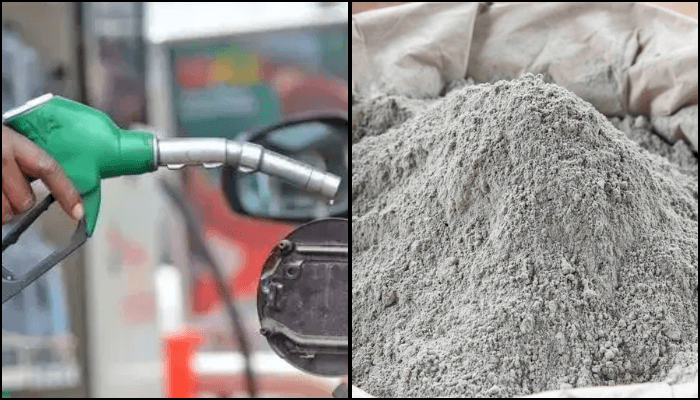
To a lot of Nigerians in the know, the liberalisation of the downstream petroleum subsector is one of the successes of the current administration. We all see that it has brought healthy competition to the sector – where petrol is sold at different prices by the different sellers because they got the product from their various sources at different prices. The dealers sell as they buy, making commuters buy the product where they prefer.

The reports are everywhere that the prices of rent have skyrocketed at different locations across the country, with one-bedroom apartments going as high as N1.2 million per annum in Alimosho Local Government Area of Lagos State. The same apartment goes as high as ₦5 million and above in Lagos Island, in a country where income is static in the midst of increasing prices of goods and services.
From the latest reports, in 2024, Nigerian cement manufacturers collectively reported a combined profit of ₦677.48 billion, an 18-percent increase from ₦576 billion in 2023. This growth was primarily driven by price adjustments due to rising operational costs (as they claim) and inflationary pressures. This is a product that is 100 percent Nigerian, with less import as a composite of less than 1 per cent.
The recent financials just released show nine Nigerian banks raked in a combined interest income of N14.26 trillion in 2024, according to an analysis of the audited financial results of the financial institutions, bigger than the cement’s without any value addition to their customers. This comes in the midst of the various deductions in electronics failed transactions across the banking sector – customers always at the receiving end.
It is difficult to pinpoint a single percentage for loans to the real sector against profits for Nigerian banks in 2024 without specific data from official sources. But several factors indicate that the real sector did receive a significant portion of loans, and profits for banks increased significantly due to rising interest rates – who pays the interest rate? The bank customer.
A situation where the customer is always made to bear the pain the inflation in the land has brought is unacceptable. From the buyer of just one bag of cement to the regular commuter and the ordinary bank customer who took his money to the bank due to financial inclusion and security purposes – the consumers have to pay for the sin they did not commit.

“But several factors indicate that the real sector did receive a significant portion of loans, and profits for banks increased significantly due to rising interest rates – who pays the interest rate?”
As the banks made trillions of naira from the interest on loans given to customers during the review period, manufacturers counted their losses, groaning under the weight of soaring borrowing costs totalling N1.3 trillion for the same period. Who bears the total cost? – The consumer.
The establishment of the Consumer Protection Council (CPC) under the Consumer Protection Council Act, Cap 25, 2004 Laws of the Federation of Nigeria, amended in 2015 by President Muhammadu Buhari, is to promote and protect the interests of consumers over all products and services. We know the CPC so far has helped to eliminate or reduce hazardous and substandard goods from the Nigerian market to the barest minimum. It also has worked to protect Nigerian consumers from manufacturer exploitation by enforcing the Consumer Protection Act, promoting consumer education and awareness, and helping to address consumer complaints and promoting the development and enforcement of quality standards, but in the area of fair trading practices, it has completely failed.
Read also: Petroleum dealers laud Tinubu for appointing technocrats into NNPCL
Imagine a product entirely made in Nigeria being above the reach of all, therefore contributing to the rise in house rents across the country, as homeowners complain of an increase in building materials being the major factor for increased rents. Compare the profits of the banks to the deductions, even from failed transactions, being made every day on the accounts of those Nigerians that recharge their phones for N200 through USSD codes; your guess is as good as mine – it is truly depressing.
Often, Nigerians are quick to blame the economic quagmire on the government. If the CPC is up and doing, especially in the nation’s pricing mechanism, manufacturers and service providers will reduce the rate of exploiting the consumers. As there is no logical reason why a bag of cement should be above N10,000, especially when compared with the profits of the players.
We advocate that the government enhance the nation’s monitoring departments across the board – the telecoms sector no longer cares about its poor service offering because the body set up to regulate it seems to be asleep. Just like the downstream of the petroleum industry, we also advocate liberalisation of the building materials sub-sector of the manufacturing industry. If there are more players there, it will force down prices and invariably lead to lower rents.