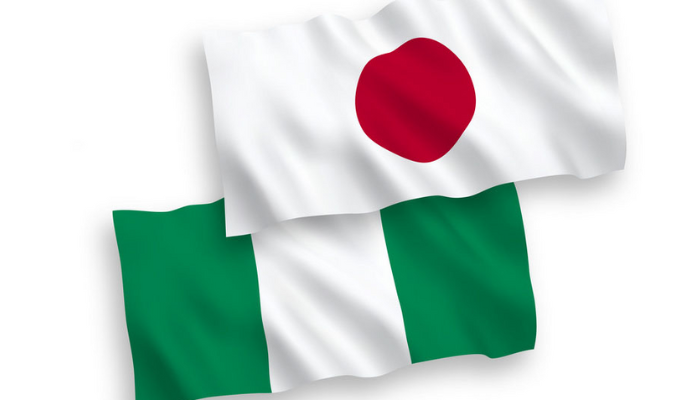
Japan has denied that it has plans to create a special visa category for Nigerians who want to relocate to Kisarazu, a city it recently designated as “hometown”.
Recall that at the 9th Tokyo International Conference for African Development (TICAD9) last week in Yokohama, Japan, the Japan International Cooperation Agency (JICA) announced the launch of the ‘JICA Africa Hometown’ to strengthen exchanges between African countries and Japanese local governments.
The Japanese government had named the city of Kisarazu as the designated hometown for Nigerians willing to live and work in that country.
Abiodun Oladunjoye, Director of Information, at the State House, said in a statement, that the new partnership, announced on the sidelines of the 9th Tokyo International Conference for African Development, “will create a special visa category for highly skilled, innovative, and talented young Nigerians who want to move to Kisarazu to live and work”

He stated that the development is part of its strategic efforts to deepen cultural diplomacy, promote economic growth and enhance workforce productivity.
The Japanese government had lamented the dwindling population and extolled Nigeria’s growing youthful population, while speaking at the just concluded summit.
The country said it is targeting artisans and other blue-collar workers from Nigeria who are ready to upskill will also benefit from the special dispensation visa to work in Japan.
But in a statement on Monday, the Japanese Foreign Ministry, while confirming the plans by the “JICA Africa Hometown”, to promote exchanges between the four Japanese cities and the four African countries, denied knowledge of the plans to issue ” special visa for those Africans willing to residents of those designated cities”
Read also: Japan names Kisarazu as hometown for Nigerians in new visa programme

The statement said this will be done through various activities, including the “organisation of exchange events involving JICA overseas cooperation volunteers”.
“On the other hand, there are no plans to take measures to promote the acceptance of immigrants or issue special visas for residents of African countries, and the series of reports and announcements concerning such measures are not true,”
It, however, said it would continue to issue appropriate statements on the subject.
Through the arrangement, Japan looks to strengthen exchanges with the four African countries by officially connecting municipalities with existing relations with those nations.
Florence Adeseke, Nigeria’s Charge d’Affaires, who is also the Acting Ambassador to Japan, and Yoshikuni Watanabe, the Mayor of Kisarazu, received the certificate from the Japanese government naming Kisarazu the hometown of Nigerians.
The four cities will foster a foundation for two-way exchanges for manpower development that will add value to the economic growth of Japan, Nigeria, and the other three African nations.
Read also: Nigeria, Japan strengthen mining ties in Tokyo
Local authorities are also hoping that the designations will increase the population of their cities, contributing to their regional revitalisation efforts.
Kisarazu was the official host town of the Nigerian contingent for the 2020 Tokyo Olympics. The team conducted their pre-games training camps and acclimatisation in the city before moving to the Olympic village, in the COVID-19 delayed Olympic Games.
In his opening address at the TICAD9, where he announced $5.5 billion in New investment in Africa, Japanese Prime Minister Shigeru Ishiba emphasised the importance of mutual understanding, local solutions, and collaborative efforts for Africa’s development.
The Prime Minister outlined Japan’s focus on private sector-led sustainable growth, youth and women empowerment, and regional integration.
Prime Minister Ishiba acknowledged the challenges of Japan’s ageing population but emphasised that locally rooted solutions are essential for Africa’s development.
“Japan is providing various cooperation and support for Africa. But first of all, Japan needs to know more about Africa. So, in creating solutions together, this co-creation at the TICAD 9, we focus on three important areas: private sector-led sustainable growth, Youth and Women, and Regional integration and connectivity within and beyond Africa”.
He appealed to African countries to assist Japan as it grapples with the challenges of a declining population and shrinking agricultural land.